

Jyotirgamaya.online is a venture of Divine Deeds Pvt Ltd
You can find us on






You can find us on
 Friday 11 September, 2026
Puja will be held at Mahalakshmi Temple Premises, Kolhapur, where all rituals will be performed on the Utsav Murti, and you can experience from your home!
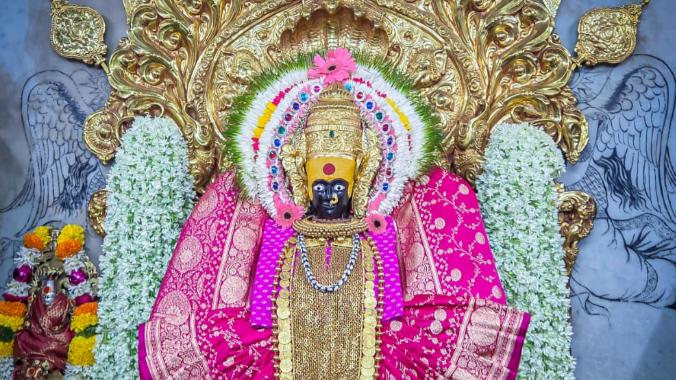
Devi Mahalakshmi, worshipped as Karveer Nivasini at Kolhapur Ambabai Temple, blesses devotees with wealth, prosperity, and family wellbeing. Every Friday of Shravan month is considered highly auspicious for her puja, and this year Maharashtra observes five such Fridays, with the second Shravan Shukravar marked as Varalakshmi Vratam, one of the most powerful days to seek her blessings. Through Jyotirgamaya, you can book authentic Mahalakshmi Puja and Abhishek at Kolhapur Ambabai Temple on any Shravan Friday, performed by experienced Vedic priests, following proper vidhi and sankalpa in your name and gotra. Whether you are facing financial struggles, seeking stability at home, or simply wish to invite abundance into your life, this seva helps you connect with Devi Mahalakshmi's energy on the most sacred Fridays of the year.


Invoking Mahalakshmi Ambabai blesses devotees with wealth, fortune, and divine prosperity in all aspects of life.

Sacred Abhishek removes sins and negativities, purifying mind and soul with Devi’s compassionate energy.

Kolhapur Ambabai is worshipped as the Kula Devata of many Bharatiya families, ensuring ancestral blessings and protection.

As one of the Shakti Peethas, worship here grants spiritual upliftment and freedom from karmic cycles.
About Sri Mahalakshmi Ambabai Temple, Kolhapur
Sri Mahalakshmi Ambabai Temple in Kolhapur, Maharashtra, is one of the most sacred temples of Bharat, dedicated to Devi Mahalakshmi, the giver of wealth, fortune, and prosperity. This holy temple is counted among the 108 Shakti Peethas, where the divine power of Adi Shakti is believed to reside eternally.
According to the Devi Bhagavata Purana, when Bhagwan Vishnu and Devi Mahalakshmi chose to stay on earth for the upliftment of humanity, Kolhapur became their chosen place. Hence this temple is also known as Dakshin Kashi, since devotees believe that visiting Ambabai here gives the same punya as visiting Kashi Vishwanath.
The main sanctum houses the beautiful stone idol of Devi Mahalakshmi, also called Ambabai. She is seated gracefully on a stone platform, holding lotus flowers in both hands, a symbol of purity and abundance. The idol faces west, unlike most temples, and it is said that Bhagwan Vishnu visits her every evening from Tirumala to seek her blessings.
Built in the 7th century by the Chalukya kings, the temple reflects timeless South Indian and Hemadpanthi architecture. The walls carry intricate carvings, Vedic motifs, and sculptures of various Devas and Devis, and every corner radiates devotion.
Every day, thousands of devotees visit Ambabai Temple to perform Abhishek, Kumkumarchana, and Deepa Seva. During Navaratri, Margashirsha Fridays, and now Guru Purnima, special pujas fill the temple with chants, bells, and deep spiritual vibration.
Why Shravan Shukravar is a Highly Auspicious Day for Lakshmi Seva
Every Friday of Shravan month is dedicated to Devi Mahalakshmi across most Hindu traditions, and this connection goes back to how the week and the month are structured in Jyotish. Shukra, the planet of wealth, beauty, and abundance, rules Friday, and Shravan is the month when devotion and fasting are believed to bear the fastest fruit. When Shukra's day falls within this sacred month, the combination is considered especially favourable for inviting prosperity and grace into the home.
Among the five Shravan Shukravar this year, 21 August 2026 carries added significance as Varalakshmi Vratam. On this day, Devi Mahalakshmi is worshipped in her form as Varalakshmi, the giver of boons, and is believed to bless devotees with wealth, good health, and family harmony in one seva. Many households treat this Friday as equal in importance to the major Lakshmi festivals of the year, since it falls at a time when both the planetary and lunar energies support steady, well guided abundance rather than sudden or fleeting gains.
Performing Abhishek to Devi Mahalakshmi on any Shravan Shukravar is considered a way to align your efforts with this seasonal energy of growth. Devotees who cannot travel to Kolhapur can still receive the temple's blessings by booking the seva online, with sankalpa performed in their name and gotra by the temple priests. This is why devotees consider the Shravan Fridays, and 21 August 2026 in particular, among the best days in the year to book Mahalakshmi Puja and Abhishek at Kolhapur.
Significance of Mahalakshmi Puja and Abhishek
Performing Mahalakshmi Puja and Abhishek at Kolhapur is not only a ritual but a deep act of surrender to the Divine Mother. Here Devi Mahalakshmi is worshipped as Ambabai, the eternal shakti of Bhagwan Vishnu, and the giver of Dhana (wealth), Dhanya (grains), and Sampada (prosperity).
Abhishek means the holy bathing of the deity with sacred items such as milk, ghee, honey, curd, sugar, and pure water. Each item stands for a form of devotion, purity, sweetness, strength, and surrender. Offered with full faith, this sacred bath is said to wash away sorrows and karmic burdens, in the same way ghee is offered and consumed in a yajna fire.
At Kolhapur, Abhishek to Devi Mahalakshmi is believed to open the path for both Bhukti (worldly comfort) and Mukti (spiritual freedom). It balances material desire and spiritual growth, bringing stability in income, protection from sudden loss, and success in new ventures.
In many Bharatiya families, Kolhapur Mahalakshmi is worshipped as the Kula Devata. Offering puja or Abhishek here strengthens family harmony, eases long pending financial or health troubles, and invites grace for generations. It is said that when a devotee performs this seva with a pure heart, Devi Mahalakshmi enters the home in subtle form, bringing shubha (auspiciousness) and sampatti (prosperity).
Ancient texts say Devi Mahalakshmi resides where there is shuddhata (purity), shraddha (devotion), and seva bhava (a spirit of service). This puja is therefore not only for wealth, but also for purifying the heart and connecting with her energy.
Through Jyotirgamaya, this seva is offered by Vedic priests who chant original mantras from Sri Suktam, Lakshmi Tantram, and Vishnu Puranam, mantras said to attract prosperity, peace, and protection for the devotee and family.
Types of Sevas Available at the Temple
At Sri Mahalakshmi Ambabai Temple, Kolhapur, several sevas and Abhishek options are performed as per ancient Vedic tradition. All pujas are conducted by experienced temple priests as per Shastra and temple rules. Devotees can book the following sevas through Jyotirgamaya:
Key Benefits of Performing This Puja
Performing Sri Mahalakshmi Ambabai Puja and Abhishek at Kolhapur is one of the most meaningful acts of devotion, especially when it falls on Guru Purnima. Devi Mahalakshmi is the giver of Aishwarya (prosperity), Saubhagya (good fortune), and Sampada (wealth). Her blessings bring balance between material success and inner peace.
How We Perform the Puja at Kolhapur
At Jyotirgamaya, every seva at Sri Mahalakshmi Ambabai Temple is performed with complete devotion and strict adherence to Vedic tradition. Each puja is carried out by experienced temple trained priests following original Agama and Shastra methods. It begins with sankalpa, where the name, gotra, and wish of the devotee are offered before the Devi, so the puja's blessings reach the devotee directly, even without being physically present.
Step by Step Process of Mahalakshmi Puja and Abhishek
Important Notes
Even if the devotee cannot be physically present, the priests ensure the puja is performed sincerely on their behalf, with full respect and intention. Through Jyotirgamaya, you can invite Devi Mahalakshmi's blessings for dhana (wealth), shanti (peace), and sampada (prosperity) into your life and home, on a Guru Purnima that arrives only once in a while alongside this temple's monthly seva.
Vedic Significance of Kolhapur Mahalakshmi Peetha
The Sri Mahalakshmi Ambabai Temple in Kolhapur is one of the 108 Shakti Peethas, making it one of the most spiritually powerful sites in Bharat. According to the Devi Bhagavata Purana and other ancient texts, Kolhapur was chosen by Devi Mahalakshmi herself to reside on earth and bless her devotees.
By performing puja at this sacred Peetha through Jyotirgamaya, devotees are assured that their offerings, prayers, and devotion reach Devi Mahalakshmi in an authentic and spiritually powerful manner.
In the spiritual realm, physical boundaries hold no power, ensuring a connection between you and the divine.

Experience the spiritual essence from the comfort of your home by tuning into live streams of the rituals performed by experienced priests.

If you miss the live event, a recorded video will be provided, allowing you to watch the sacred rituals at your convenience.

Receive blessed prasad delivered directly to your home, ensuring you remain connected to the divine blessings.

Participate in the rituals remotely without the need to visit the temple.

Stay spiritually connected through live and recorded rituals, with blessings brought to you through prasad delivery.
1
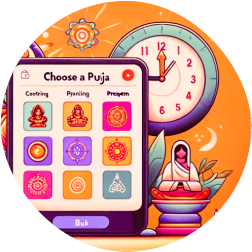
Select one or more main rituals as per your spiritual need.

2
Add optional offerings to deepen your spiritual experience.

3
Confirm securely so all selected rituals and offerings are included.
Receive Akshaya Blessings from Devi Mahalakshmi
Participate in this sacred seva and invite ever growing prosperity, positivity, and success into your life with the grace of Shri Mahalakshmi Devi. This year, that grace arrives on Guru Purnima itself. Offering Sri Mahalakshmi Ambabai Puja and Abhishek at Kolhapur through Jyotirgamaya is simple, convenient, and fully authentic.
Step 1: Select Your Seva Choose the type of puja you wish to perform, Abhishek Kumkumarchan, Abhishek with Naivedya, Mahapuja, or any other seva listed on the page.
Step 2: Fill in Devotee Details Provide your full name, gotra (if applicable), and any special wishes for the sankalpa, so the blessings are directed specifically to you or your family.
Step 3: Make Dakshina or Payment You can offer dakshina to Guruji according to your will and strength. One receipt allows one devotee's puja to be performed on the Utsav Murti.
Step 4: Puja Performance and Video Recording Our experienced temple priests perform the puja at Sri Mahalakshmi Ambabai Temple Premises, Kolhapur, with Panchamrut Abhishek, Kumkumarchan, and other offerings as per the chosen seva. Live streaming is not available, but a video recording will be shared within 2 to 3 days after completion.
Step 5: Receive Prasad and Blessings After the puja, you will receive prasadam, including kumkum and other items depending on your chosen seva.
Step 6: Invite Divine Grace into Your Life By performing the puja through Jyotirgamaya, you invite Devi Mahalakshmi's grace, bringing prosperity, peace, protection, and spiritual upliftment, on a day when Guru Purnima and Devi Mahalakshmi's blessings meet together.
FREQUENTLY ASKED QUESTIONS
Q. When is the Kolhapur Ambabai Mahalakshmi Puja in 2026?
The puja is performed on every Shravan Shukravar this year, falling on 14, 21, and 28 August, and 4 and 11 September 2026. Among these, 21 August 2026 holds special significance as Varalakshmi Vratam, considered one of the most auspicious Fridays for Devi Mahalakshmi puja. You can choose any of these Fridays based on your convenience while booking.
Q. Why is this year's puja date special?
This year, the temple's monthly Mahalakshmi seva and Guru Purnima fall on the same tithi. Guru Purnima marks the yearly peak of Guru Brihaspati's energy and the birth of Maharishi Ved Vyas. In Jyotish, Guru and Lakshmi are seen as closely connected, since lasting wealth is said to come where wisdom is present. A Lakshmi seva on this day is considered to carry a double blessing.
Q. Can I book this puja if I am not able to visit Kolhapur temple in person?
Yes. Jyotirgamaya arranges the entire puja on your behalf. Your sankalpa, name, and gotra are offered to Devi Mahalakshmi by the temple priest, so the blessings reach you directly, wherever you are.
Q. Will I get live streaming of the puja?
Live streaming is not available for this particular temple. A video recording of the puja is shared with you within 2 to 3 days after it concludes.
Q. What is included in the Abhishek?
The Panchamrut Abhishek includes bathing the idol of Devi Mahalakshmi with milk, curd, ghee, honey, sugar, and pure water. Each item represents a different form of devotion.
Q. Which seva should I choose?
Abhishek Kumkumarchan is a simple and shorter seva, ideal for a quick offering. Mahapuja and Mahapuja with Prasad are more complete sevas that include Naivedya and Vastra offering, along with additional prasadam such as the Shree Yantra and dhaga. You may choose based on your intention and budget.
Q. Do I need to be present at the temple or fast on this day?
No physical presence is required. Fasting is a personal choice and not compulsory for this seva, though some devotees prefer a simple sattvic meal on Purnima day.
Q. What prasad will I receive after the puja?
Depending on the seva chosen, you will receive kumkum, vastra, and in higher sevas, a Shree Yantra and holy dhaga, delivered to your home.
Q. Is this puja suitable for NRIs and devotees living outside India?
Yes. Since the puja is performed on the devotee's behalf with sankalpa, devotees from the USA, UK, Canada, UAE, Australia, and other countries can book this seva online and receive the video recording and prasad delivery at India address.
Q. Can this puja be performed for the whole family or only one person?
Each booking includes only the karta name in the sankalpa. If you wish to include blessings for the whole family, you may mention family members' names as part of your intention while filling in devotee details, and the karta's name and gotra will be used for the formal sankalpa.
Q. Why is Kolhapur Ambabai also called Karveer Nivasini?
Karveer is the old name of Kolhapur, and Nivasini means one who resides. Devi Mahalakshmi is called Karveer Nivasini because she is believed to reside permanently at this Shakti Peetha in Kolhapur.
Q. Is Kolhapur Mahalakshmi temple a Shakti Peetha?
Yes. Sri Mahalakshmi Ambabai Temple, Kolhapur, is counted among the 108 Shakti Peethas, sacred sites where the power of Adi Shakti is believed to reside.
27 August 2026
26 September 2026
25 October 2026


