

Jyotirgamaya.online is a venture of Divine Deeds Pvt Ltd
You can find us on






You can find us on

 Saturday 25 July, 2026
Puja will be held at Shri AdiNarayana Perumal Temple, Coimbatore, and you can experience from your home!
Devashayani Ekadashi, also known as Ashada Ekadashi or Hari Shayani Ekadashi, falls on the Shukla Paksha Ekadashi of the Ashada month and marks the day Bhagwan Vishnu enters yoga nidra for four sacred months known as Chaturmas. Performing seva on this day is considered highly meritorious, as Puranic texts describe it as one of the most powerful Ekadashis for seeking blessings, peace and spiritual upliftment. Devotees across India, including those living abroad in the USA, UK, Canada, UAE and Australia, book this puja to invoke the grace of Bhagwan Vishnu before He begins His cosmic rest.


On this Ekadashi, Bhagwan Vishnu begins His four month yoga nidra on Sheshnag in Kshirsagar, as described in the Padma Purana and Bhavishya Purana.

Devashayani Ekadashi marks the beginning of Chaturmas, a sacred four month period when many auspicious rituals pause until Bhagwan Vishnu awakens.

The Padma Purana names this tithi Padma Ekadashi and explains that worshipping Bhagwan Vishnu today grants freedom from past karmic burdens.

Skanda Purana states that fasting and seva on this Ekadashi purify the soul, remove sins accumulated over lifetimes and open the path to moksha.
The Puranic story of Devashayani Ekadashi is found in the Padma Purana and Brahma Vaivarta Purana, narrated by Bhagwan Krishna to Yudhishthira.
Once King Mandhata of the Ikshvaku dynasty ruled a prosperous kingdom, but a severe drought struck the land for three years. Crops failed, rivers dried up and the people suffered greatly. Troubled by the condition of his subjects, King Mandhata went into the forest to seek guidance and met Rishi Angira, a wise sage known for his knowledge of dharma.
King Mandhata asked the sage why such suffering had come upon a righteous kingdom. Rishi Angira explained that the current age was Treta Yuga, where only Brahmins were meant to perform tapasya, yet a Shudra in the kingdom was performing severe penance, which had disturbed the natural order and caused the drought.
Rather than punishing the man, Rishi Angira advised the king to observe Devashayani Ekadashi with full devotion, as its punya was said to be powerful enough to correct such imbalances and restore prosperity. King Mandhata, along with his ministers and subjects, observed the vrata with sincere devotion. Following the fast, rains returned to the kingdom, and the land flourished once again.
This story establishes Devashayani Ekadashi as a vrata capable of restoring balance, removing obstacles caused by past karma and bringing prosperity to those who observe it with faith, regardless of their circumstances.
How to Observe Devashayani Ekadashi
Devotees who wish to observe Devashayani Ekadashi traditionally follow a set of practices rooted in Vedic tradition. Those who cannot fast or perform the full vrata can still participate through puja and seva performed by priests on their behalf.
Traditional Observance Includes:
Devotees who cannot observe the fast due to health, age or travel constraints can book a seva through Jyotirgamaya, where our priests perform the complete ritual at the temple with the devotee's name and gotra included in the sankalpa.
Why Devashayani Ekadashi Puja Is Performed
Devashayani Ekadashi holds a special place among the twenty four Ekadashis observed through the year. It is believed that once Bhagwan Vishnu goes into yoga nidra, the universe enters a phase of rest and introspection. Devotees perform puja and seva before this period begins to seek blessings for health, prosperity, marriage harmony and removal of obstacles, since many important ceremonies are traditionally paused during Chaturmas.
Sadhus, grihasthas and devotees observe a strict fast on this day, and many undertake the Chaturmasya Vrata, a four month vow of discipline and devotion. Performing seva through Jyotirgamaya allows devotees who cannot travel or fast to still participate in this sacred occasion and receive the blessings of Bhagwan Vishnu through proxy puja performed by qualified priests.
Detailed Seva Descriptions
1. Devashayani Ekadashi Shriman Narayana Panchamrut Abhisheka Seva
This seva begins with a Panchamrut Abhisheka to Bhagwan Vishnu, using milk, curd, honey, ghee and sugar, followed by a Dravya Abhisheka with sacred substances. This ritual is known to cleanse negative karma and invoke peace and purity in the devotee's life.
Seva Includes:
2. Devashayani Ekadashi Shriman Narayana Sarva Seva
This seva combines the Panchamrut and Dravya Abhisheka with a full alankara of Bhagwan Vishnu using lotus flowers and tulasi leaves, followed by archana and naivedya offering.
Seva Includes:
3. Devashayani Ekadashi Maha Puja Seva
This is the most elaborate seva offered on this day, combining abhisheka, alankara, archana and a special naivedya of pancha phala and coconut, concluded with a grand tulasi haar samarpan to Bhagwan Vishnu.
Seva Includes:
4. Shri Vishnu Sahasranama Parayana/Pathan Seva
This seva involves the recitation of the Vishnu Sahasranama, the thousand sacred names of Bhagwan Vishnu, followed by archana, naivedya and mangalaarti. It is known to bring mental clarity, remove fear and grant overall wellbeing to the devotee and family.
Seva Includes:
Benefits of Devashayani Ekadashi Puja
Dos and Don'ts for Devashayani Ekadashi
Dos:
Don'ts:
Who Should Perform Devashayani Ekadashi Puja
This puja is beneficial for a wide range of devotees, particularly those seeking clarity, peace and removal of obstacles before the Chaturmas period begins.
For NRI Devotees
Devotees living outside India, including in the USA, UK, Canada, UAE and Australia, can book Devashayani Ekadashi Puja online without needing to travel to India. Our team performs the seva at the temple on the devotee's behalf, following complete Vedic procedure, with the devotee's name and gotra included in the sankalpa. Prasadam can be shipped to India address on request, and devotees receive photos or videos of the puja performed in their name.
In the spiritual realm, physical boundaries hold no power, ensuring a connection between you and the divine.

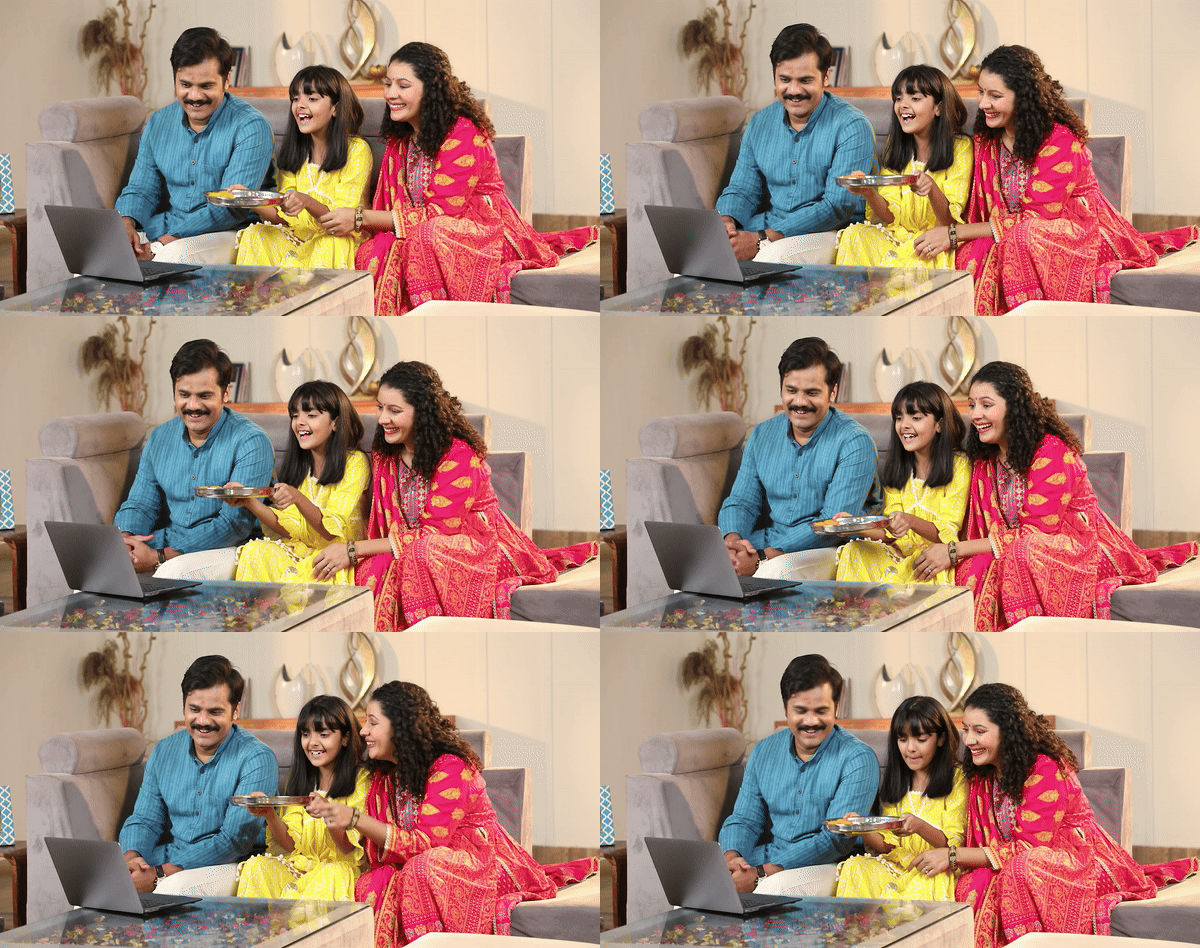
Experience the spiritual essence from the comfort of your home by tuning into live streams of the rituals performed by experienced priests.

If you miss the live event, a recorded video will be provided, allowing you to watch the sacred rituals at your convenience.

Receive blessed prasad delivered directly to your home, ensuring you remain connected to the divine blessings.

Participate in the rituals remotely without the need to visit the temple.

Stay spiritually connected through live and recorded rituals, with blessings brought to you through prasad delivery.
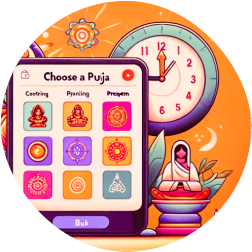
1
Select one or more main rituals as per your spiritual need.
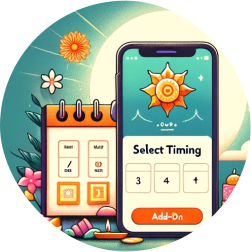
2
Add optional offerings to deepen your spiritual experience.
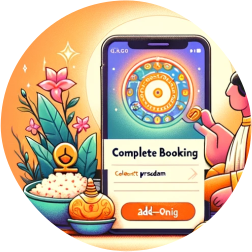
3
Confirm securely so all selected rituals and offerings are included.
Frequently Asked Questions
Q. What is Devashayani Ekadashi?
Devashayani Ekadashi, also called Ashada Ekadashi or Hari Shayani Ekadashi, is the day Bhagwan Vishnu begins His four month yoga nidra, marking the start of Chaturmas.
Q. When does Devashayani Ekadashi fall?
Devashayani Ekadashi falls on the Shukla Paksha Ekadashi tithi of the Ashada month, according to the Hindu lunar calendar.
Q. Why is Devashayani Ekadashi important?
It marks the beginning of Chaturmas and is considered highly auspicious for seeking blessings, cleansing karma and starting a period of spiritual discipline.
Q. Can I book this puja if I live outside India?
Yes, NRI devotees can book Devashayani Ekadashi Puja online, and our priests perform the seva at the temple with the devotee's name included in the sankalpa.
Q. What is Chaturmas and how is it connected to this Ekadashi?
Chaturmas is a four month period beginning on Devashayani Ekadashi, during which Bhagwan Vishnu rests in yoga nidra and many auspicious ceremonies are traditionally paused.
Q. Which seva should I choose for maximum benefit?
The Devashayani Ekadashi Maha Puja Seva includes the most complete set of rituals, but any seva performed with devotion carries equal spiritual value.
Q. Do I need to fast to receive the benefits of this puja?
No, fasting is a personal vow, and devotees who cannot fast can still receive the full benefits of the puja performed on their behalf by our priests.
Q. Will I receive proof that the puja was performed?
Yes, devotees receive photos or videos of the seva performed in their name, along with prasadam where applicable.
Please note: The temple mentioned above may change based on certain on-ground dynamics. However, please be assured that the puja will definitely be conducted in an appropriate temple without any compromise.
14 July 2027
2 July 2028
21 July 2029


