

Jyotirgamaya.online is a venture of Divine Deeds Pvt Ltd
You can find us on






You can find us on

 Tuesday 22 September, 2026
Puja will be held at Shri AdiNarayana Perumal Temple, Coimbatore, and you can experience from your home!
Parivartini Ekadashi, also known as Vamana Ekadashi, Jayanti Ekadashi, Padma Ekadashi and Parsva Ekadashi, falls on the Shukla Paksha Ekadashi of Bhadrapada month. On this sacred day, Bhagwan Vishnu is worshipped in his Vamana avatar, the form in which he humbled the demon king Bali and restored balance between the three worlds. It is also the day Vishnu turns his resting side while in Yoga Nidra during Chaturmas, which gives this Ekadashi its name. Devotees who observe this vrat and perform puja are believed to receive freedom from past sins, prosperity and steps closer to moksha. At Jyotirgamaya, our experienced purohits perform this puja with full Vedic vidhi on your behalf, so you can receive the blessings of Bhagwan Vishnu no matter where you live.


During Chaturmas, Bhagwan Vishnu rests on Sheshnag and turns from his left side to his right on this Ekadashi, hence the name Parivartini.

Vishnu took the Vamana form to measure the three worlds and humble King Bali, teaching humility and surrender to Bhagwan.

This Ekadashi falls within Chaturmas, a period the Puranas mark as highly punya rich for vrat, daan and Vishnu bhakti.

Scriptures state that observing this Ekadashi vrat with sincerity gives punya equal to performing an Ashwamedha Yagya.
What is Parivartini Ekadashi
Parivartini Ekadashi falls on the eleventh day (Ekadashi tithi) of Shukla Paksha in the month of Bhadrapada, usually in August or September. It is one of the most important Ekadashi vrats of the year because it falls during Chaturmas, the four month period when Bhagwan Vishnu is said to be in Yoga Nidra, a state of divine sleep and rest.
This Ekadashi carries two names for two reasons. It is called Parivartini because Bhagwan Vishnu, while resting on Sheshnag during Chaturmas, turns from his left side to his right side on this day. It is also called Vamana Ekadashi, Jayanti Ekadashi or Padma Ekadashi because it marks the day Vishnu appeared in his Vamana avatar. In some regions it is also known as Parsva Ekadashi or Jaljhilini Ekadashi. Devotees observe a strict vrat on this day, worship Vishnu in his Vamana form, and perform daan, believing it brings punya equal to the Ashwamedha Yagya and helps free the soul from past karma.
The Story of Vamana Avatar and King Bali
The katha of this Ekadashi comes from a conversation between Bhagwan Krishna and Yudhishthira, found in the Brahma Vaivarta Purana. King Bali, though born in a family of asuras, was a devoted follower of Vishnu, known for his honesty and generosity. His growing power had displaced Devraj Indra from Swarga, and Indra sought refuge at Vishnu's feet.
To restore balance without harming his beloved devotee, Vishnu took the small and humble form of Vamana, a Brahmin boy, and approached King Bali during a grand yagya where the king was giving away land to all who asked. Vamana asked for only three paces of land measured by his own feet. Bali agreed at once. Vamana then grew to a cosmic size, covering the entire sky with his first step and the whole earth with his second. With no space left for the third step, Bali humbly offered his own head. Pleased by this surrender, Vishnu did not send Bali away in disgrace. Instead, he granted him rulership of Patala Loka and promised to personally guard his kingdom, a promise still remembered as Vishnu turning to watch over Bali during his Chaturmas rest. This story is why the Vamana form of Vishnu is worshipped on this Ekadashi, and why humility, daan and surrender to Bhagwan are seen as its core teachings.
Sevas We Offer (Detailed)
1. Ekadashi Shriman Narayana Panchamrut Abhisheka Seva
This seva includes Panchamrut Abhisheka (a holy bath with milk, curd, honey, ghee and sugar) and Dhravya Abhisheka to Bhagwan Vishnu. It is ideal for the Sevakartha seeking purification of past karma and the simple blessings of Vishnu on this sacred Ekadashi.
2. Ekadashi Shriman Narayana Sarva Seva
A complete offering that includes Panchamrut and Dhravya Abhisheka, Sarvalankara with Lotus and Tulasi, Tulasi Pushpa Archana, Naivedya and Mangalaarti. This seva is suited for the Sevakartha who wants a full and traditional worship experience covering both spiritual merit and material wellbeing.
3. Ekadashi Maha Puja Seva
Our most elaborate offering, including Panchamrut and Dhravya Abhisheka, Sarvalankara with Lotus and Tulasi, Tulasi Pushpa Archana, Mangalaarti, Vishesha Naivedya of pancha phala and coconut, and a Grand Tulasi Haar Samarpan. Recommended for devotees seeking maximum punya and a deeper connection with Bhagwan Vishnu on this Ekadashi.
4. Shri Vishnu Sahasranama Parayana/Pathan Seva
This seva includes chanting of the Vishnu Sahasranama along with Archana, Naivedya and Mangalaarti. The Vishnu Sahasranama, the thousand names of Vishnu, is known to remove obstacles, calm the mind and invite peace and prosperity into the Sevakartha's life.
Puja Process
Benefits of Observing Parivartini Ekadashi
Scriptural References
The story and mahatmya of Parivartini Ekadashi are described in the Brahma Vaivarta Purana as a conversation between Bhagwan Krishna and Yudhishthira. The Vamana avatar itself is described in the Bhagavata Purana, where Vishnu takes the form of a dwarf Brahmin to restore balance between the devas and King Bali. The general glory of observing Ekadashi vrat throughout the year is also detailed in the Skanda Purana and the Padma Purana, both of which describe Ekadashi as one of the most purifying vrats in the Hindu calendar.
Who Should Perform This Puja
In the spiritual realm, physical boundaries hold no power, ensuring a connection between you and the divine.

Experience the spiritual essence from the comfort of your home by tuning into live streams of the rituals performed by experienced priests.

If you miss the live event, a recorded video will be provided, allowing you to watch the sacred rituals at your convenience.

Receive blessed prasad delivered directly to your home, ensuring you remain connected to the divine blessings.

Participate in the rituals remotely without the need to visit the temple.

Stay spiritually connected through live and recorded rituals, with blessings brought to you through prasad delivery.
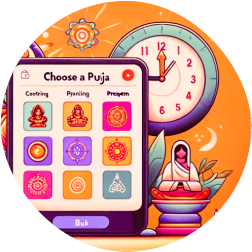
1
Select one or more main rituals as per your spiritual need.
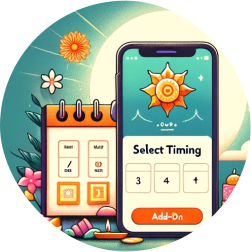
2
Add optional offerings to deepen your spiritual experience.
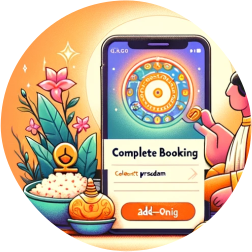
3
Confirm securely so all selected rituals and offerings are included.
Book your Parivartini Ekadashi Puja today and receive the blessings of Bhagwan Vishnu in his Vamana form, no matter where you are in the world. Our experienced purohits perform every seva with complete Vedic vidhi, and prasad and puja details are shared with you after completion.
FAQs,
Q. What is Parivartini Ekadashi?
Parivartini Ekadashi is the Ekadashi of Bhadrapada Shukla Paksha, when Bhagwan Vishnu turns his resting side during Chaturmas and is worshipped in his Vamana avatar.
Q. Why is it also called Vamana Ekadashi or Jayanti Ekadashi?
This Ekadashi marks the day Vishnu appeared as Vamana to humble King Bali, hence the names Vamana Ekadashi and Jayanti Ekadashi. It is the same Ekadashi known by both names.
Q. What is the difference between Parivartini and other Ekadashis?
Parivartini Ekadashi is unique because it marks the day Vishnu changes his resting side during Chaturmas, while also celebrating the Vamana avatar, combining two significances in one Ekadashi.
Q. Can I get this puja performed without being present?
Yes, our purohits perform the complete puja with proper sankalpa in your name and gotra, and prasad details are shared with you afterward. This is especially helpful for NRI devotees.
Q. Which seva should I choose for Parivartini Ekadashi?
The Ekadashi Maha Puja Seva is our most complete offering, but the Panchamrut Abhisheka Seva and Sarva Seva are also meaningful choices depending on your preference and time.
Q. Is fasting compulsory to receive the benefits of this puja?
No, while fasting is traditional, participating through puja and daan on this day is also considered highly punya rich, especially for those unable to observe a strict vrat.
11 September 2027
30 August 2028
18 September 2029


