Swayamvar Parvati Puja Complete Guide - The Most Powerful Puja for Removing Marriage Obstacles
By: Pratima Argade
20 June 2026 at 7:19 PM
Swayamvar Parvati Puja - The Most Powerful Puja for Removing Marriage Obstacles and Why Every Unmarried Person Should Know About It
There is a story at the heart of this puja.
Not a myth in the dismissive sense that modern people sometimes use that word. A teaching. A story that carries within it a specific and practical understanding of what it takes to overcome the obstacles that stand between a soul and the marriage it genuinely desires.
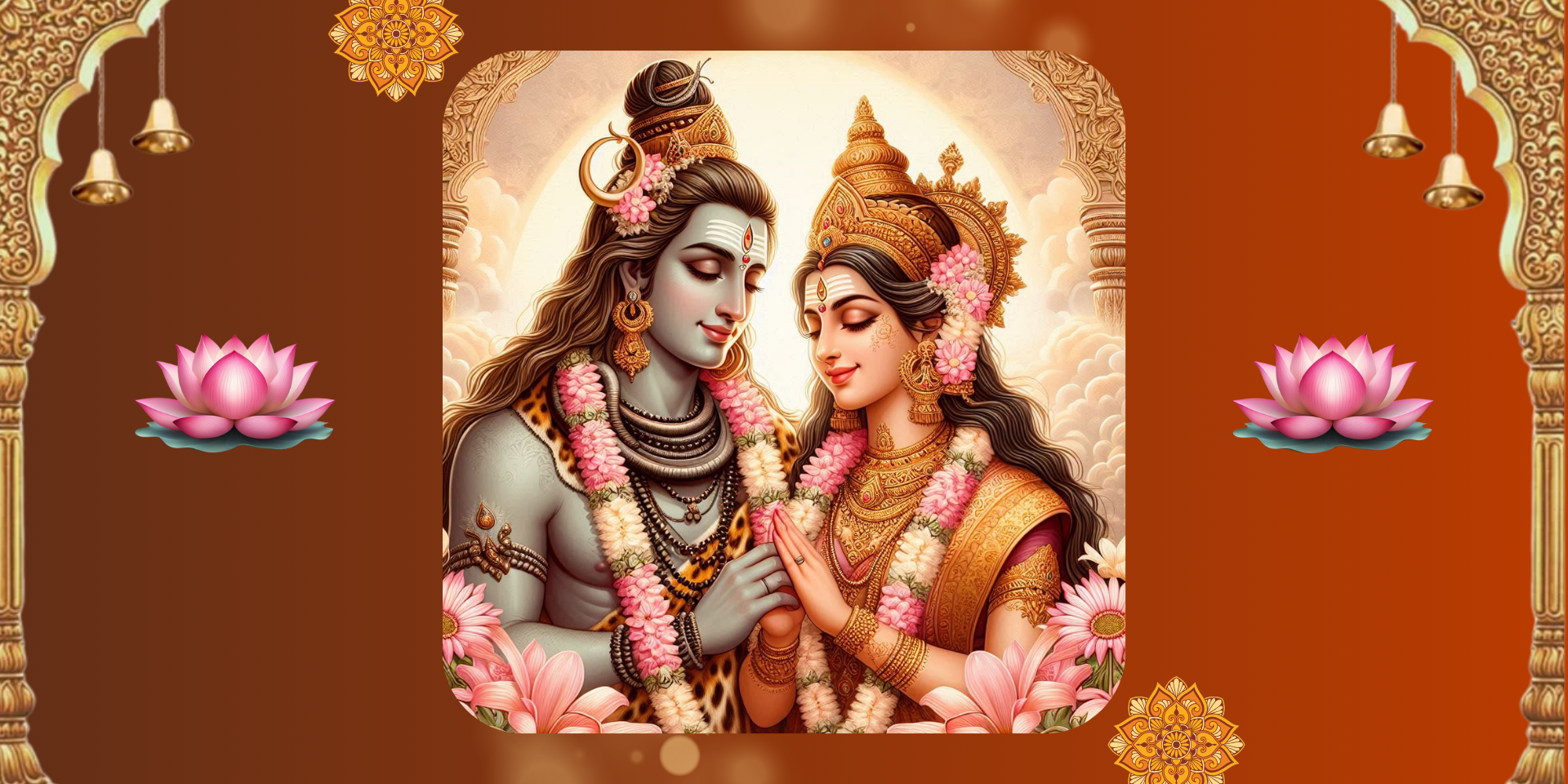
The story is this. Maa Parvati, the daughter of the mountain king Himavat, fell in love with Bhagwan Shiva. Not the comfortable, socially approved love that parents arrange for their children and that communities celebrate with uncomplicated happiness. A love that was opposed at every turn. Her own father, Himavat, did not consider Bhagwan Shiva a suitable match. Bhagwan Shiva himself was not available in the ordinary sense. He was absorbed in meditation, indifferent to the world and its offerings, including the offering of Maa Parvati's love.
The obstacles were real. They were significant. By every ordinary measure of the situation, this marriage should not have happened.
But Maa Parvati did not accept the ordinary measure of the situation. She performed tapasya. Sustained, intense, deeply sincere tapasya. She renounced comfort. She sat in meditation through seasons of heat and cold. She persisted when every external sign suggested that her persistence was futile. And through that persistence, she did not just win Bhagwan Shiva's heart. She transformed the entire cosmic situation. She created the conditions through which what seemed impossible became not just possible but inevitable.
Swayamvar Parvati Puja is the ritual invocation of that specific divine energy. The energy of sincere, sustained, obstacle-overcoming devotion that transforms impossible marriage situations into completed ones.
What Is Swayamvar Parvati Puja
The word Swayamvar in Sanskrit means self-choice, from Swayam meaning self and Var meaning husband or the one chosen. In ancient Indian tradition, Swayamvar was the ceremony in which a woman of noble birth chose her own husband from among assembled suitors, rather than having the choice made by her family.
The most famous Swayamvar in the Puranic tradition is the Swayamvar of Mata Sita in the Ramayana, where the condition for winning her hand was the lifting of the divine bow of Bhagwan Shiva. Bhagwan Ram fulfilled that condition and won Mata Sita.
Swayamvar Parvati Puja, in its name, invokes Maa Parvati's own quality of self-determination in marriage. Not in the sense of defying dharma or family. But in the sense of the specific quality of active, sincere, committed spiritual seeking that Maa Parvati demonstrated. She did not passively wait for the right circumstances to arise. She actively created them through the power of her tapasya and her devotion.
In Vedic practice, Swayamvar Parvati Puja is performed by invoking Maa Parvati in her specific aspect as the one who overcame all obstacles through tapasya and devotion and who ultimately achieved the most sacred and most celebrated marriage in the entire dharmic tradition. The puja seeks to invoke the same divine grace that Maa Parvati herself received and to channel it toward the removal of the specific obstacles that are preventing marriage in the life of the person seeking it.
The Story Behind the Puja and Why It Matters
Understanding the story of Maa Parvati's tapasya is not just devotionally enriching. It is practically important for understanding why the puja works and what quality of intention is needed for it to work most effectively.
The Shiva Purana tells the story in beautiful and instructive detail.
Maa Parvati, from her earliest childhood, was drawn to Bhagwan Shiva with a love that was not of this world's making. The sage Narada confirmed for her family that her destiny was Bhagwan Shiva himself. But when she approached Bhagwan Shiva directly, presenting herself and her love, he did not respond. He was in samadhi. Deep in the absorption of meditation. The world, including the offering of Maa Parvati's love, did not penetrate his stillness.
At this point in the story, the obstacle was not external. It was not family opposition or social disapproval. The obstacle was the indifference of the very one she sought. An indifference so complete that even the gods could not penetrate it.
A lesser soul would have accepted this indifference as a verdict. Would have turned away and found a different path. But Maa Parvati did not. She went to the forest. She performed tapasya of extraordinary intensity. She gave up food. She gave up water. She gave up even the fallen leaves from the trees as nourishment, earning herself the name Aparna, the one who did not eat even leaves.
And through this tapasya, she did not merely attract Bhagwan Shiva's attention. She created a quality of spiritual heat and spiritual power, what the Vedic tradition calls Tapas, that transformed the cosmic situation itself. Bhagwan Shiva could no longer remain indifferent. The force of her sincere devotion pierced through his samadhi in the way that nothing else could.
He appeared before her. And what followed was the most celebrated divine union in all of dharmic tradition.
The teaching of this story for those performing Swayamvar Parvati Puja is specific and profound. The puja is not a magic shortcut. It is an invocation of the specific energy of sincere, sustained devotion that transforms impossible situations. And the devotion must be genuine. The Shiva Purana is clear that Maa Parvati's tapasya worked because it was completely, uncompromisingly sincere. Not performative. Not conditional. Not offered with one eye on the result.
Who Should Perform Swayamvar Parvati Puja
Swayamvar Parvati Puja is specifically and most powerfully relevant for the following situations:
People who have been waiting for marriage for a long time despite genuine desire and genuine effort. Proposals come but never complete. Relationships begin but do not reach marriage. The waiting has been long and the ordinary explanations feel insufficient.
People whose kundali shows multiple doshas affecting marriage. When several astrological challenges are present simultaneously, Swayamvar Parvati Puja provides a comprehensive spiritual remedy that addresses the cumulative weight of multiple doshas rather than targeting only one specific dosha.
People whose marriage path has been blocked by karmic factors such as ancestral karma, broken relationship karma or the effects of Pitru Dosha. These deeper karmic blocks require a puja with the specific power to work at the karmic root of the obstacle, and Maa Parvati's tapasya energy is specifically capable of that level of karmic penetration.
People experiencing repeated rejection in the arranged marriage process, where proposals keep falling through at the final stage without clear explanation.
Couples whose marriage has already been fixed but who are encountering last-minute obstacles, family resistance or unexplained complications in the final stages of the marriage process.
Women specifically, since Maa Parvati's story is the story of a woman's active, courageous and ultimately triumphant seeking of her chosen partner against all odds. The resonance between Maa Parvati's situation and that of an unmarried woman seeking marriage through genuine obstacles is the most direct possible.
Men for whom Guru, the husband-karak, is weak or afflicted. Since Bhagwan Shiva is the presiding deity of this puja and Bhagwan Shiva governs the auspiciousness of marriage for men as well as women, the puja is equally relevant for men.
When Is Swayamvar Parvati Puja Most Effective
The power of any puja depends on the muhurta, the auspicious timing, in which it is performed. For Swayamvar Parvati Puja specifically, the following periods are considered most powerful:
- Navratri periods. Both the Chaitra Navratri in spring and the Sharada Navratri in autumn are periods of maximum divine feminine energy. Performing Swayamvar Parvati Puja during Navratri, particularly on the fifth tithi which is associated with Maa Skandamata and on the sixth tithi which is associated with Maa Katyayani, carries particular potency for marriage-related intentions.
- Mondays. Monday is the day of Bhagwan Shiva, the divine husband whom Maa Parvati's tapasya was directed toward. Performing the puja on Mondays, particularly on the full moon Monday, Poornima Somavara, is considered especially auspicious.
- Pradosh Kala. The Pradosh period, the time approximately one and a half hours before and after sunset on the Trayodashi, the thirteenth tithi, of both the bright and dark fortnights, is the most sacred time for Bhagwan Shiva's worship. A Swayamvar Parvati Puja performed during Pradosh carries the specific blessing of Bhagwan Shiva's most accessible and most grace-giving energy.
- Phalguna Shukla Tritiya. This is the tithi on which, according to the Shiva Purana, the divine marriage of Bhagwan Shiva and Maa Parvati was celebrated. Performing Swayamvar Parvati Puja on or around this tithi has a specific auspiciousness directly connected to the event that the puja invokes.
- Hartalika Teej. This festival, observed primarily by women on the Shukla Tritiya of the Bhadrapada month, commemorates Maa Parvati's specific tapasya for Bhagwan Shiva. It is one of the most directly relevant annual occasions for Swayamvar Parvati Puja and is particularly powerful for unmarried women seeking marriage.
The Vidhi of Swayamvar Parvati Puja
A properly performed Swayamvar Parvati Puja follows a specific and complete vidhi. While the detailed performance of the puja should be entrusted to a learned pandit who knows the complete procedure, understanding the major elements of the vidhi helps in approaching the puja with the right understanding and the right intention.
- Sankalpa. The puja begins with the Sankalpa, the formal statement of intention. The person performing or commissioning the puja states their name, their nakshatra and their specific intention. The Sankalpa for Swayamvar Parvati Puja specifically states the intention of seeking Maa Parvati's grace for the removal of all obstacles in the path to vivah and for the auspicious and timely completion of marriage.
- Kalash Sthapana. A Kalash, a sacred brass or copper vessel filled with water, topped with mango leaves and a coconut, is established as the seat of divine energy for the puja. The Kalash represents the presence of Bhagwan Vishnu and all the sacred rivers and is the central seat of divine invocation for the puja.
- Ganapati Puja. All Vedic pujas begin with the worship of Bhagwan Ganesha as the remover of obstacles. In the context of Swayamvar Parvati Puja, the invocation of Bhagwan Ganesha is particularly significant since Maa Parvati is his mother and the removal of obstacles is his specific domain of divine authority.
- Navgraha Puja. The nine grahas are propitiated to ensure their favorable alignment with the intention of the puja. This is particularly important in Swayamvar Parvati Puja since marriage timing is so directly governed by the graha dasha and transit system.
- Maa Parvati's specific invocation. The primary deity invocation calls upon Maa Parvati in her specific aspect as Swayamvar Parvati, the one who performed tapasya and chose her own husband through the power of sincere devotion. Her sixteen upacharas, the sixteen forms of service, are offered.
- Swayamvar Parvati Stotra recitation. The specific stotras and shlokas that describe Maa Parvati's tapasya and invoke her grace for marriage obstacles are recited. These stotras are drawn from the Shiva Purana and from specific texts of the Shakta tradition.
- Havan. A sacred fire is lit and specific offerings are made to the fire while mantras are chanted. In Swayamvar Parvati Puja, the havan includes specific offerings associated with Maa Parvati such as white sesame, ghee, white flowers and specific herbs. The number of havan offerings corresponds to the specific intention of the puja, with 1008 or 10008 offerings considered most powerful for removing significant marriage obstacles.
- Kumkum Archana. The offering of kumkum, the red vermilion that is the most sacred offering to the Devi, is a central element of Swayamvar Parvati Puja. Kumkum is offered to the deity while each of her 108 names is chanted.
- Abhishek. An abhishek of Maa Parvati's idol or image with specific substances including milk, honey, curd, ghee and sandalwood paste is performed with specific mantras.
- Prasad distribution. The puja concludes with the distribution of prasad that has been offered to Maa Parvati and blessed through the puja. Consuming the prasad with sincere devotion is an important element of receiving the puja's blessings.
The Mantras of Swayamvar Parvati Puja
The specific mantras used in Swayamvar Parvati Puja are drawn from the Shiva Purana and from the Shakta tantric tradition. While the complete mantra vidhi should only be performed under the guidance of a learned pandit, certain mantras can be used in daily personal practice to invoke Maa Parvati's grace for marriage.
The most fundamental daily mantra for those seeking Maa Parvati's grace for marriage obstacles is:
Om Hreem Yogini Yogini Yogeswari Yoga Bhayankari Sakala Sthavara Jangamasya Mukha Hridayam Mama Vasam Akarsha Akarshaya Namaha
This mantra invokes Maa Parvati in her Yogini aspect, the one who governs the transformative power of devoted spiritual practice, and seeks her grace for the removal of obstacles in the marriage path.
The Parvati Gayatri Mantra, Om Himavat Putriyai Vidmahe Shivapriyai Dhimahi Tanno Parvati Prachodayat, is a powerful daily practice for those seeking Maa Parvati's guidance and grace in the marriage path.
The simple mantra Om Parvati Pataye Namaha, chanted 108 times daily on Mondays, is one of the most accessible and most consistently recommended mantras for those with marriage obstacles, directly invoking the grace of the divine couple whose union Swayamvar Parvati Puja celebrates.
The Spiritual Logic of Why Swayamvar Parvati Puja Works
For those who approach this puja with a rational and questioning mind, understanding the spiritual logic behind why it works is more helpful than simply being told to perform it.
The logic has several connected dimensions.
- The power of aligned intention. Vedic ritual science understands that when human intention is aligned with a specific divine quality or principle through the correct ritual forms, mantras and offerings, the human intention is amplified by the divine energy it invokes. Swayamvar Parvati Puja aligns the person's intention for marriage with the specific divine energy of Maa Parvati's obstacle-overcoming tapasya. The alignment itself amplifies the intention's power.
- The invocation of the transformation principle. Maa Parvati's tapasya story demonstrates that sincere, sustained and selfless devotion has the power to transform situations that appear unchangeable. The puja invokes this specific transformation principle. It does not ask for a shortcut around the obstacles. It asks for the same quality of divine grace that transforms the nature of obstacles themselves.
- The harmonisation of graha energies. Through the Navgraha puja component and the havan, Swayamvar Parvati Puja works directly on the graha energies that are creating the specific marriage obstacles. The puja does not replace the need for specific graha shanti pujas in cases of severe dosha, but it creates an overall harmonisation of the marriage-relevant graha energies that supports and amplifies the effectiveness of those specific remedies.
- The generation of sincere karmic merit. Every sincere puja performed with genuine devotion and proper vidhi generates karmic merit. This merit is directed specifically, through the Sankalpa, toward the resolution of the obstacles in the marriage path. The accumulated merit of a well-performed Swayamvar Parvati Puja creates a genuine positive karmic shift in the area of marriage.
- The specific invocation of Maa Parvati's direct blessing. In the Vedic understanding, the divine is not distant and inaccessible. The devas and devis are living realities whose grace is genuinely available to those who sincerely seek it through the appropriate means. Maa Parvati, whose own story is one of sincere devotion overcoming impossible obstacles, is specifically and actively interested in those who face genuine marriage obstacles and who approach her with genuine sincerity. The puja creates the specific channel through which her grace can flow most directly into the situation.
How Swayamvar Parvati Puja Relates to Other Marriage-Related Pujas
It is important to understand how Swayamvar Parvati Puja relates to the other marriage-specific pujas mentioned throughout this blog series so that the most effective combination of pujas can be identified for any specific situation.
Swayamvar Parvati Puja is the most general and most comprehensive of the marriage obstacle-removing pujas. It addresses the overall condition of obstacles in the marriage path without being specific to any single dosha.
It is most powerful when combined with specific graha shanti pujas that address the particular astrological root of the marriage obstacle. For example, if the primary marriage obstacle is Mangal Dosha, the combination of Mangal Dosha Nivaran Puja with Swayamvar Parvati Puja addresses both the specific graha-level cause and the broader spiritual obstacle dimension simultaneously.
Similarly, if the primary obstacle is Pitru Dosha, the combination of Pitru Dosha Nivaran Puja with Swayamvar Parvati Puja works at both the ancestral level and the broader marriage obstacle level.
Katyayani Puja is the other major Devi puja specifically recommended for marriage and the two pujas complement each other. Katyayani Puja is most specifically associated with finding a compatible husband and is the puja of the feminine heart seeking its dharmic partner. Swayamvar Parvati Puja is most specifically associated with removing the obstacles that prevent the marriage from completing. When both are needed, they can be performed in the same puja sequence or in the same period of focused spiritual practice.
What Happens After Swayamvar Parvati Puja
People frequently ask what to expect after Swayamvar Parvati Puja. This question deserves an honest and grounded answer.
Swayamvar Parvati Puja is not a guarantee of immediate marriage. It is a powerful spiritual practice that shifts the energetic conditions around the marriage path. The time within which those shifted conditions manifest as actual marriage in the outer world depends on many factors, including the Dasha period, the overall chart conditions, the practical circumstances and, most importantly, Bhagwan's grace and timing.
What most people report after a sincerely performed Swayamvar Parvati Puja is not immediate marriage but a discernible shift in the quality of the marriage path. New proposals arrive that did not seem likely before the puja. A previously stalled situation begins to move. A specific obstacle that seemed immovable is resolved in an unexpected way. A quality of clarity arrives about a marriage decision that had previously seemed impossible to make.
These shifts are the puja's grace beginning to work. They do not always culminate in marriage immediately. But they represent genuine movement in the right direction. And with consistent spiritual practice maintained after the puja, that movement tends to continue.
The most important thing to maintain after Swayamvar Parvati Puja is the sincerity and consistency of personal spiritual practice. The puja is most effective when it is not a one-time event but the beginning of a sustained period of genuine spiritual engagement. Continuing to worship Maa Parvati on Mondays and Fridays, continuing to chant the relevant mantras, continuing to maintain the purity of intention that the puja invoked, creates a sustained channel for Maa Parvati's grace to keep flowing into the marriage situation.
Daily Practices to Support and Sustain the Puja's Effect
Beyond the formal puja, these daily practices support and sustain Maa Parvati's grace in the marriage path:
Chant Om Parvati Pataye Namaha 108 times every Monday with sincere intention for the removal of marriage obstacles.
Offer white flowers, particularly white lotus or white jasmine, to Maa Parvati every Monday and Friday with a ghee diya and sincere prayer for her grace.
Read or listen to the story of Maa Parvati's tapasya from the Shiva Purana regularly. Immersing oneself in the narrative of the divine obstacle-overcoming creates a specific quality of inspired faith that directly supports the puja's intention.
Maintain the highest possible quality of personal purity and dharmic conduct in daily life. The Vedic tradition is consistent that sincere spiritual practice achieves its fullest power when it is supported by genuine dharmic conduct in all areas of life.
Keep the home's prayer space clean, beautiful and actively used. The quality of the domestic spiritual environment directly supports the quality of spiritual practices performed within it.
How Jyotirgamaya Can Help
At Jyotirgamaya, we perform Swayamvar Parvati Puja with complete Vedic vidhi, by learned and experienced pandits, in the correct muhurta. Every puja we perform includes a proper Sankalpa in the name of the person commissioning it, ensuring that the puja's specific intention is formally and sincerely directed toward their specific situation.
Whether your marriage obstacles arise from kundali doshas, ancestral karma, karmic debt from past relationships, Nazar or any of the many other causes discussed throughout this blog series, Swayamvar Parvati Puja addresses the comprehensive spiritual dimension of the obstacle and seeks Maa Parvati's grace for its removal.
For NRIs and those unable to be physically present for the puja, the puja can be performed on your behalf with your name and Sankalpa formally included, and the prasad can be sent to you where logistics permit.
Book your Swayamvar Parvati Puja here
A Final Thought
Maa Parvati did not just achieve her marriage through tapasya. She achieved something larger. She demonstrated, for every soul who has ever faced what seemed like an impossible situation, that sincere devotion and sustained spiritual effort can transform the very nature of impossibility.
The mountain could not stop her. The sage Narada's assessment that Bhagwan Shiva would be a difficult husband could not stop her. Her father's doubts could not stop her. Bhagwan Shiva's own indifference could not stop her.
Nothing could stop her. Because the love was real and the devotion was complete and the tapasya was sincere.
This is the power that Swayamvar Parvati Puja invokes in your life. Not a different situation. Not a removal of your obstacles by external force. But the specific divine grace that transforms impossible situations from within, through the power of sincere devotion that Maa Parvati's own story demonstrates is the most powerful force in creation.
If she could do what she did, so can you.
Not through your own strength alone. But through hers.
Om Hreem Shreem Parvati Namaha.