How to Support a Parent With Health Worries: Vedic Practices for Mental Peace
By: Pratima Argade
19 October 2026 at 10:54 AM
To support a parent who is worried about their health, begin by listening with patience and giving them a calm daily routine. Gentle Vedic practices can help, such as a morning lamp and prayer, mantra chanting, listening to bhajans or the Vishnu Sahasranama, slow breathing and time with family. These practices give comfort and peace of mind, and they work alongside the care of doctors.
As parents grow older, many of them start to worry more about their health. A small ache, a new medicine or a visit to the hospital can fill the mind with questions. Some parents hide their worry and some speak about it again and again. In both cases, the children feel the weight of it. We want to help, but we are not always sure how.
In this post, we will share what Vedic tradition says about caring for parents, simple ways to listen and support, a set of gentle practices for mental peace, two beautiful Shanti mantras, and ideas for children who live far away. We will also talk about when to ask for professional help. If you wish to know more about Bhagwan Dhanvantari, you can read our post on who Bhagwan Dhanvantari is.
Why Do Many Parents Feel Worried About Health as They Age?
Ageing brings many changes. The body slows down, old friends and family members are not always around, and the days can feel quieter. When the house becomes quiet, the mind can become busy with worry. A medical report, a story from a neighbour or an old memory can start a chain of thoughts that is hard to stop.
Many parents also worry about becoming a burden. They may not say it, but they carry the fear that they will need too much care from their children. Some also feel a loss of purpose after retirement, or after the children have moved away. These feelings are natural, and they deserve to be met with kindness, and not with a quick answer like “Don’t worry, everything is fine.”
Understanding this is the first step. A worried parent is not being difficult. They are looking for comfort, company and a sense that they still matter.
What Does Vedic Tradition Say About Caring for Parents?
The Taittiriya Upanishad, in its teaching to a student who is finishing his studies, says “Matru Devo Bhava, Pitru Devo Bhava, Acharya Devo Bhava, Atithi Devo Bhava”. It means that we should treat our mother, father, teacher and guest with the same respect as Bhagwan. This line has shaped Indian family life for ages.
The idea here is not only about rituals and duty. It is about seeing the divine in the people closest to us, and serving them with a pure heart. When you sit with a worried parent and listen to them, you are doing a form of seva. When you take them to a doctor, remind them of a medicine or simply hold their hand, you are living this teaching.
The Ramayana also gives a powerful picture of this value in Shravana Kumara, who carried his blind parents on pilgrimage, and in Rama, who honoured his father’s word at great cost. These stories are not meant to burden us. They show how deeply the Indian tradition values the care of parents.
How Can You Listen and Support a Parent First?
Before any ritual or practice, the most helpful thing you can offer is your presence. A few simple habits make a big difference.
Listen without rushing. Let your parent finish what they want to say, even if you have heard it before. Repeat back what you heard in simple words, like “You are worried about the new tablet, is that right?” This helps them feel understood. Avoid saying “You are thinking too much”, as this can make them feel dismissed.
Keep a regular time to talk, such as a phone call each evening or a cup of tea together each morning. A fixed time gives the mind something to look forward to, which itself reduces worry. Go along with them to doctor visits when you can, and help them write down questions beforehand so that they feel prepared. Keep a simple list of medicines and appointments so that nothing feels confusing.
Respect their faith and their ways. If a parent finds comfort in a particular temple, bhajan or ritual, support it with warmth. This is not the time to argue about beliefs. Comfort is the goal.
Which Gentle Vedic Practices Can Bring Mental Peace?
These practices are simple and can be done at home. They are meant to give calm and comfort, and not to promise any particular result. Please let your parent choose what feels right, and let them stop whenever they feel tired.
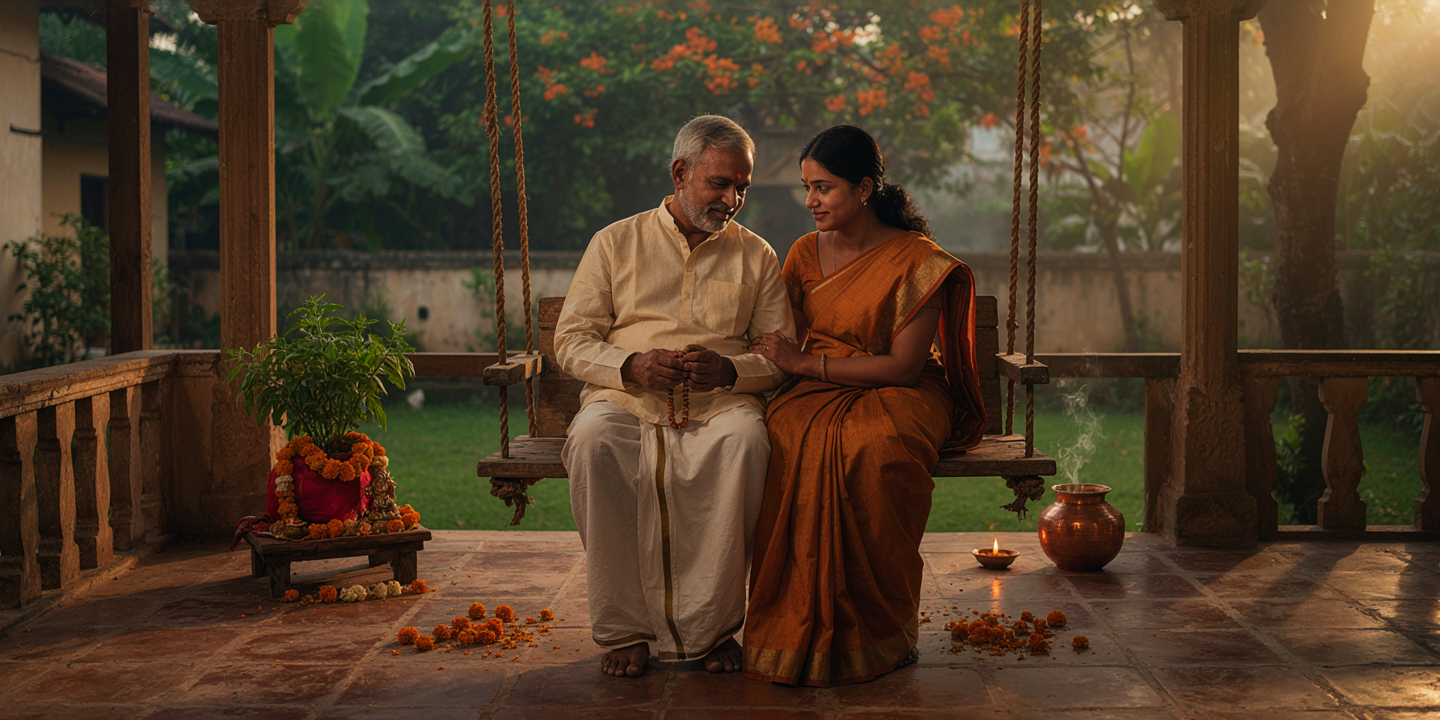
- A calm morning routine. The Vedic tradition praises the early morning, when the air is fresh and the house is quiet. A simple routine could include waking up at a regular time, a warm bath, lighting a lamp before the family shrine, and a short prayer. If early waking is hard, any steady time will do. A regular rhythm gives the mind a sense of safety.
- Japa and mantra chanting. Chanting a mantra with a mala is a very old way of calming the mind. Your parent may choose the name of their Ishta Devata, or a mantra such as “Om Namah Shivaya”, “Om Namo Narayanaya”, the Gayatri mantra or the short Dhanvantari mantra “Om Shri Dhanvantaraye Namah”. Even 11 or 21 repetitions each day can bring a quiet feeling. You can read more in our post on the Dhanvantari mantra.
- Listening to sacred sound. Many elders find deep peace in listening to the Vishnu Sahasranama, the Hanuman Chalisa, bhajans or kirtan, especially in the morning or the evening. This is a good option for a parent who is tired, as they do not need to do anything but listen.
- Reading from the scriptures. A few verses of the Bhagavad Gita, the Ramayana or a favourite book of teachings, read slowly each day, can give strength. You can read aloud to your parent, which becomes a loving time together.
- Gentle breathing. Slow and easy breathing, such as a few rounds of Anulom Vilom or the soft humming sound of Bhramari, is a traditional way to calm the mind. Please keep it light and comfortable, without any strain or holding of breath. Before starting any breathing practice, it is wise to ask the doctor, especially if your parent has a heart, blood pressure or breathing concern.
- Time with nature and sunlight. A short walk in the morning, sitting near a Tulasi plant, or tending a few pots in the balcony can lift the mood. The Tulasi plant has a special place in many Indian homes, and watering it each day gives a small and gentle purpose.
- Satsang and good company. Meeting friends, visiting a temple, joining a bhajan group or a community of elders keeps loneliness away. Where a parent cannot go out, a video call with a friend or relative can do the same work.
A simple sattvic routine. Ayurveda and the Gita both speak about moderation in food, rest and activity. Simple home cooked meals at regular times, enough rest and light movement approved by the doctor all support a peaceful mind. Please follow the diet advice of your parent’s doctor.
What Are the Shanti Mantras That Can Be Chanted for Peace?
The Vedic tradition has many Shanti mantras, which are prayers for peace. Here are two beautiful ones that you can chant with your parent.
The first is a well known prayer for the wellbeing of all:
Om Sarve Bhavantu Sukhinah
Sarve Santu Niramayah
Sarve Bhadrani Pashyantu
Ma Kashchid Duhkha Bhag Bhavet
Om Shantih Shantih Shantih
In simple English, it means, “May all be happy. May all be free from illness. May all see what is good. May no one suffer. Om, peace, peace, peace.” The nice part of this prayer is that it includes everyone. A parent who is worried about their own health often feels a gentle lift when they pray for the wellbeing of all.
The second is the Shanti Path from the Yajurveda, which begins:
Om Dyauh Shantir Antariksham Shantih
Prithivi Shantir Apah Shantir Oshadhayah Shantih
Vanaspatayah Shantir Vishvedevah Shantir Brahma Shantih
Sarvam Shantih Shantir Eva Shantih Sa Ma Shantir Edhi
Om Shantih Shantih Shantih
This prayer asks for peace in the sky, the space between, the earth, the waters, the plants, the trees, all the Devas, Brahman and everything, and finally for that peace to come to us. It is often chanted at the end of a puja. Reciting it slowly can be a calming practice for the whole family.
How Can Children Who Live Far Away Help?
Many Indian families today are spread across cities and countries, and NRI children often feel a deep worry about their parents. Distance can be softened with a few simple habits.
Keep a fixed time for a video call each day or a few times a week, and make it warm and light. Pray together over the call, for example by chanting a mantra for five minutes at the same time. This small act helps a parent feel that you are with them. Arrange a trusted neighbour, relative or helper who can check on your parent, and share each other’s contact details. Keep a clear record of doctors, medicines and emergency numbers, and share it with the people who help.
Where possible, plan regular visits, and tell your parent about them in advance, because the thought of a visit is itself a comfort. When you come, spend most of the time simply being with them, rather than running errands.
Can a Homam for Parents Give Support?
Many children choose to perform a Homam for their parents’ wellbeing. The Dhanvantari Homam is a Vedic fire ritual that honours Bhagwan Dhanvantari, the divine physician. It is traditionally performed to seek blessings for health, strength and peace of mind. The priests take a Sankalpa in the parent’s name, chant the Dhanvantari mantras and offer ghee and sacred herbs into the fire.
Some families also choose the Maha Mrityunjaya Homam or the Ayushya Homam. If you are not sure which one is right, our posts on Dhanvantari Homam vs Maha Mrityunjaya Homam and on Dhanvantari Homam vs Ayushya Homam vs Sudarshana Homam may help.
The Homam can also be booked online, which is a great help to NRI children. The parent does not need to travel, and the family can join the prayer in their hearts from anywhere. You can read more on our Dhanvantari Homam page.
When Should You Seek Professional Help?
Normal worry is a part of life, but sometimes it grows into something heavier. Please speak to your parent’s doctor or a mental health professional if you notice that your parent is very low in mood for several weeks, has lost interest in things that they used to enjoy, is sleeping or eating much less or much more than usual, seems very anxious most of the day, or is becoming confused or very withdrawn.
If your parent ever speaks about not wanting to live, or about ending their life, please take it seriously and act at once. Stay with them, speak to their doctor or a mental health professional without delay, and in an emergency contact your local emergency services. This is not a matter for prayer alone, and asking for professional help is an act of love and not a lack of faith.
How Should We See Prayer and Medical Care Together?
The practices in this post are forms of spiritual and emotional support. They are not a replacement for medical advice, diagnosis or treatment. They do not promise any result, and they should never delay or replace the care of a doctor.
The best way to see them is as a companion to good care. The doctor treats the body, the family looks after the person, and the prayer gives comfort and calm to the mind. Please continue to follow your doctor’s guidance, and never stop or change a treatment because of a ritual.
Key Takeaways
- A worried parent needs presence, patience and a calm routine before anything else.
- The Taittiriya Upanishad teaches “Matru Devo Bhava, Pitru Devo Bhava”, which means seeing the divine in our parents.
- Gentle practices such as a morning lamp, mantra chanting, listening to sacred sound, light breathing and time in nature can bring peace of mind.
- Shanti mantras such as “Om Sarve Bhavantu Sukhinah” bring a feeling of peace for the whole family.
- Children who live far away can help with regular calls, shared prayer and a trusted local helper.
- Seek professional help if low mood or worry lasts, and act at once if a parent speaks of not wanting to live.
Frequently Asked Questions
Q. How can I support a parent who is always worried about health?
Listen with patience, keep a fixed time to talk, go with them to doctor visits when you can, and offer gentle practices such as a morning lamp, mantra chanting and listening to bhajans. Respect their faith and their wishes.
Q. Which mantra can an elderly parent chant for peace of mind?
Many elders chant the name of their Ishta Devata, the Gayatri mantra, “Om Namo Narayanaya”, or the short Dhanvantari mantra “Om Shri Dhanvantaraye Namah”. Even 11 or 21 repetitions each day can bring a calm feeling.
Q. Is it safe for an elderly parent to do pranayama?
Gentle and easy breathing can be calming, but please keep it light and without strain. It is wise to ask the doctor first, especially if your parent has a heart, blood pressure or breathing concern.
Q. What does “Matru Devo Bhava, Pitru Devo Bhava” mean?
It is a line from the Taittiriya Upanishad. It means that we should honour our mother and father as Bhagwan, and serve them with respect and love.
Q. How can NRI children support their parents in India?
Keep a regular time for video calls, pray together over the call, arrange a trusted helper nearby, keep a clear record of doctors and medicines, and plan regular visits. A Homam can also be booked online for the parent’s wellbeing.
Q. Can a Homam cure health worries?
No. A Homam is spiritual support and does not claim to cure any illness. It is performed to seek blessings, strength and peace of mind, and it should always go along with proper medical care.
A Note on Health and Faith
The practices, mantras and the Dhanvantari Homam described here are forms of spiritual support. They are not a substitute for medical advice, diagnosis or treatment. Please continue to follow your doctor’s guidance and take care of your health along with your prayers.
Seek the Blessings of Bhagwan Dhanvantari
If you wish to pray for the health and wellbeing of your parents with the full Vedic method, you can book the Dhanvantari Homam with Jyotirgamaya from anywhere in the world. Visit the Dhanvantari Homam page