Shani Sade Sati Remedies for NRIs Living Abroad
By: Pratima Argade
10 September 2026 at 12:30 AM
Shani Sade Sati Remedies for NRIs Living Abroad
Distance Does Not Have to Mean Disconnection
For many NRIs navigating Shani Sade Sati while living abroad, a particular kind of frustration often accompanies this already testing period. Back home, family members might easily visit a trusted temple, consult a nearby astrologer, or arrange a purohit for a proper puja. From thousands of miles away, in a city without a Shani temple, without easy access to specific ritual items, and often without a community that shares this same devotional framework, many NRIs feel as though they are navigating this challenging period with one hand tied behind their back.
This concern, while understandable, does not need to be the reality. This post looks in detail at how NRIs living abroad can genuinely and meaningfully engage with Shani Sade Sati remedies, regardless of their location, and explains why distance does not have to mean reduced spiritual benefit.
Why This Concern Is So Common Among NRIs
Given everything discussed throughout this series regarding the importance of consistent, sincere remedial practice during Sade Sati, it makes sense that NRIs would worry about their ability to maintain these practices while living in a country without easy access to Hindu temples, ritual items or experienced purohits. This concern often adds an additional layer of stress to an already testing period, sometimes leading NRIs to feel they are somehow less protected or supported than family members back in India.
The Foundational Principle, Sincerity Over Location
Classical Vedic tradition consistently emphasizes that the sincerity and devotion behind a spiritual practice matter more than the specific physical location where it takes place. Bhagwan Shani, like all devtas within this tradition, is understood to respond to genuine devotion regardless of geography. A sincere prayer offered quietly in a small apartment in London or Toronto carries the same spiritual weight as one offered in a grand temple in India, provided the intention and sincerity behind it are genuine.
This principle forms the foundation for everything discussed in this post, since it means NRIs are not fundamentally disadvantaged in their ability to engage with Sade Sati remedies, even without easy access to traditional resources.
Sankalp Based Puja, Performed on Your Behalf
One of the most valuable options available to NRIs is sankalp based puja, a practice that has been mentioned throughout this series and deserves particular attention here. This arrangement allows a qualified purohit in India to perform a formal puja, such as Shani Sade Sati Puja or the more elaborate Shani Shanti Puja discussed in earlier posts, on behalf of a devotee living abroad.
The process typically involves providing the purohit with the devotee's name, family lineage details and specific intention, which are then formally included in the sankalp, the ritual declaration of purpose that begins any formal puja. The devotee can participate remotely, often via video call, or simply hold the puja's timing and intention in their heart while it is being performed in India on their behalf.
This arrangement ensures that NRIs receive the full traditional benefit of a properly performed ritual, conducted with correct vidhi and by an experienced purohit, without needing to be physically present in India themselves.
Setting Up a Simple Home Altar
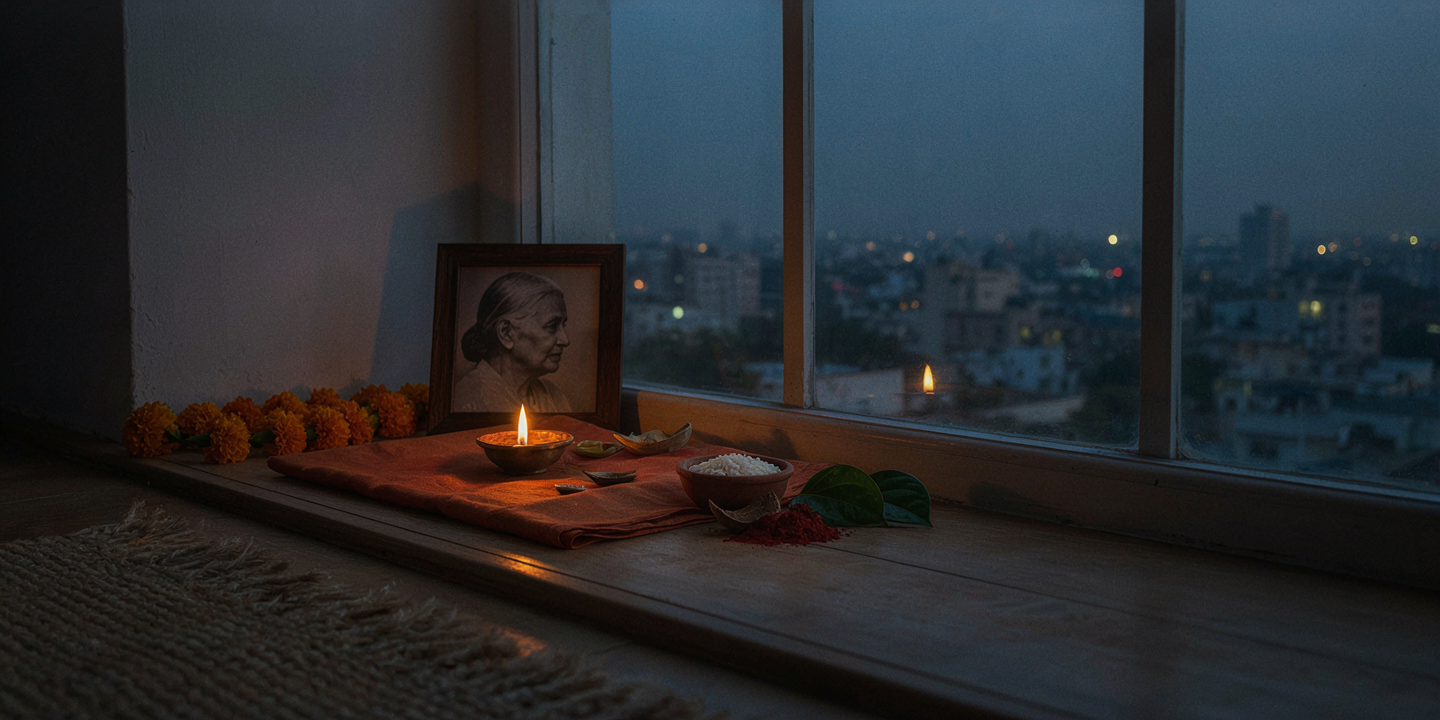
For regular, ongoing practice, particularly weekly Saturday worship, establishing a simple home altar is entirely sufficient and genuinely meaningful. This does not require an elaborate setup, a small, dedicated space with an image or small idol of Bhagwan Shani, a diya, and space for basic offerings is enough to support consistent, sincere daily or weekly practice.
Many NRIs find that maintaining this kind of simple home altar throughout their Sade Sati period becomes a genuinely grounding daily anchor, particularly valuable given how disorienting this period can already feel, as discussed in earlier posts covering emotional effects.
Sourcing Ritual Items From Abroad
- Online Availability of Traditional Items: Many items traditionally used in Shani worship, including black sesame seeds, mustard oil, and simple puja items such as diyas and incense, are increasingly available through online retailers specializing in Indian grocery and religious items, many of which now ship internationally to countries with significant Indian diaspora populations.
- Local Indian Grocery Stores: In cities with a meaningful Indian or South Asian population, local grocery stores often carry many of the basic items needed for simple puja and daan practices, making it easier than many NRIs initially expect to source what is needed for consistent practice.
- Adapting When Specific Items Are Unavailable: When specific traditional items genuinely cannot be sourced, classical tradition generally allows for reasonable substitution or adaptation, provided the underlying intention and sincerity remain consistent. A knowledgeable purohit or astrologer can often suggest appropriate alternatives when a specific traditional item is simply not accessible in a particular location.
Fasting and Vrat While Abroad
Practices such as Shani Pradosh Vrat, discussed in detail in an earlier post, can be observed by NRIs exactly as they would be in India, since fasting itself requires no specific location or physical items beyond the devotee's own commitment and discipline. Checking a reliable Panchang calendar, many of which are now available through apps and websites specifically designed for this purpose, allows NRIs to accurately track when Pradosh and other significant dates fall, even while living in a different time zone.
Mantra Chanting Requires No Location at All
As discussed in the earlier dedicated post on mantra remedies, this particular practice requires nothing beyond a quiet space and genuine focus, making it perhaps the most naturally accessible remedy for NRIs regardless of where they live. A consistent daily mantra practice can be maintained with exactly the same devotion and effectiveness abroad as it could be in India.
Daan From Abroad
While the specific traditional items discussed in the earlier daan post may require some adaptation, the underlying spirit of daan, generous giving to those in need, can be practiced anywhere in the world. NRIs can donate to local charitable causes, support underprivileged individuals within their own community abroad, or contribute to organizations back in India that support those in genuine need, all while maintaining the sincere spirit of Saturday giving discussed throughout this series.
Connecting With Local Temples and Communities
Many cities with significant Indian diaspora populations now have Hindu temples that include Navagraha shrines, offering dedicated space for Shani worship even outside India. NRIs living in or near such cities can incorporate temple visits into their regular Sade Sati practice, much as they might in India, while those in areas without such access can rely more heavily on home based practice and sankalp based remote puja arrangements.
Time Zone Considerations for Timing Sensitive Practices
For practices with specific timing significance, such as Pradosh Kaal worship discussed in an earlier post, NRIs can generally observe these practices according to their own local time zone, since classical tradition generally recognizes that the spiritual significance of these timings applies relative to the devotee's own location and daily rhythm, rather than requiring exact synchronization with Indian Standard Time.
Staying Connected to Community Support
Beyond formal remedies, maintaining connection with other members of the Indian diaspora community, whether through local temple communities, cultural associations or family networks abroad, can provide valuable emotional and spiritual support throughout the Sade Sati period, helping offset the sense of isolation that distance from India might otherwise create during this already testing time.
Consulting Astrologers Remotely
Given the widespread availability of video consultations and online astrological services, NRIs need not feel limited in their ability to seek personalized guidance from experienced astrologers in India. A detailed birth chart reading, along with personalized recommendations for puja, remedies and timing, can be arranged entirely remotely, ensuring NRIs receive the same quality of guidance as those able to consult an astrologer in person.
A Period That Can Deepen Connection to Heritage
For many NRIs, navigating Shani Sade Sati while abroad becomes an unexpected opportunity to deepen their connection to their cultural and spiritual heritage, often engaging with these traditions more intentionally and thoughtfully than they might have while surrounded by these practices casually throughout daily life in India. Many NRIs describe their Sade Sati years abroad as the period when their spiritual practice genuinely deepened, precisely because greater intentional effort was required to maintain it.
Distance Is Not a Barrier to Genuine Devotion
Shani Sade Sati does not require physical proximity to India, a specific temple, or constant access to a purohit in order to be navigated with genuine spiritual support. Through sankalp based puja, simple home worship, consistent mantra practice, thoughtful daan and remote astrological consultation, NRIs can engage with this significant period just as meaningfully as anyone in India, provided the sincerity and consistency of practice remain genuine.
If you are an NRI navigating Shani Sade Sati and want personalized guidance on remedies suited to your specific circumstances, our astrologers can arrange sankalp based puja on your behalf and recommend the practices best suited to support you through this period, wherever in the world you may be.