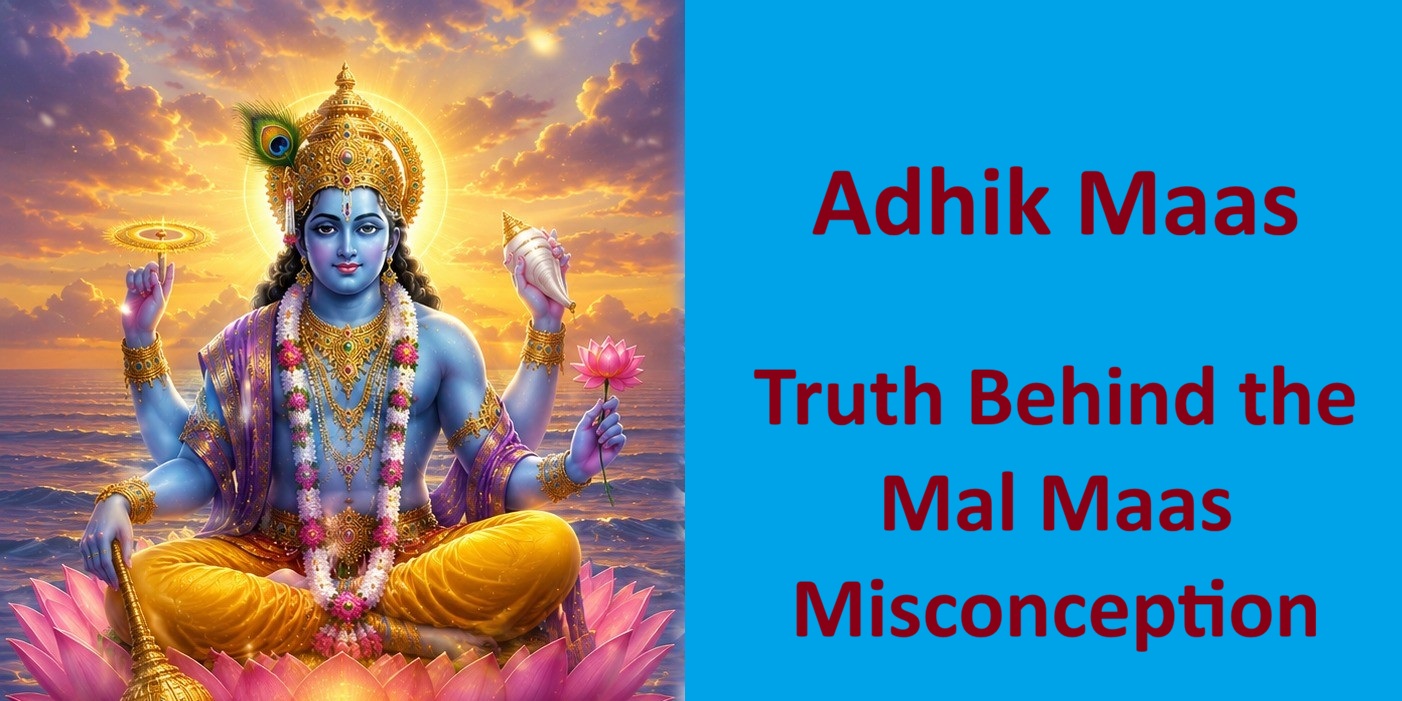
Is Adhik Maas Inauspicious? The Truth Behind the Mal Maas Misconception
By: Pratima Argade
22 May 2026 at 11:00 AM
Every time Adhik Maas arrives, two very different conversations happen simultaneously across Bharat.
In one conversation, pandits and temples announce: "Purushottam Maas has begun. This is the most sacred time for puja, daana, and seva. Do not let this rare month pass without devotion."
In the other conversation, elders in households warn: "Mal Maas has started. Do not plan anything important now. Wait until it passes."
Both conversations are happening in good faith. Both come from genuine tradition. And yet they seem to be saying completely opposite things about the same month.
Who is right?
Both are. But only partially. And the part that most families carry loudly is the cautionary one, while the spiritually more important part, the one that Bhagwan Vishnu Himself declared, gets lost in the worry about postponing weddings and house-warming ceremonies.
This post is about setting that right.
Where the Idea of Inauspiciousness Comes From
To understand whether Adhik Maas is truly inauspicious, you need to understand where that belief originated.
As we have discussed in earlier posts, the extra lunar month originally appeared in the Hindu calendar with no presiding deity. Every other month in the Hindu calendar is governed by a specific devata. But this extra month had no divine patron, no Sankranti to anchor it, and no spiritual identity of its own.
People at the time made a reasonable conclusion: a month without a presiding deity is a month without divine support. And a month without divine support is not the right time to begin something as important as a marriage, a new home, or a sacred samskara.
This reasoning gave birth to the name Mal Maas, and to the tradition of avoiding new auspicious beginnings during this period.
That tradition was not wrong for its time. It arose from a genuine understanding of how divine energy flows through the calendar. Without a presiding devata, the month was spiritually unanchored. The caution made sense.
But that was before Bhagwan Vishnu intervened.
The Moment Everything Changed
When Bhagwan Vishnu accepted the extra month as His own and declared it Purushottam Maas, the spiritual condition of that month changed completely and permanently.
The Skanda Purana describes this transformation in detail. Bhagwan Vishnu's declaration was not a gentle blessing or a minor upgrade in status. It was a complete reversal. The most neglected month became the month of the Supreme Being. The month considered spiritually empty became the month most filled with divine presence.
Bhagwan Vishnu said clearly: whoever worships Me during this month shall receive multiplied blessings. Sevas, vratas, daana, and japa performed during Purushottam Maas yield merit far beyond what the same acts earn in any other month.
This declaration is the central spiritual fact of Adhik Maas. And it means that any understanding of this month that stops at "Mal Maas is inauspicious and should be avoided" is incomplete. It is like knowing only the first half of a story and making your decisions based on that.
The full story is: yes, this month was once called Mal Maas. And then Bhagwan Vishnu transformed it into the most spiritually powerful month in the three-year cycle.
The Crucial Distinction: What is Actually Avoided and Why
Here is where the genuine confusion lies, and where clarity makes all the difference.
The traditional avoidance during Adhik Maas applies specifically to new auspicious worldly beginnings. Not to spiritual practice. Not to puja. Not to daana or seva or japa. Only to certain categories of life ceremonies and auspicious beginnings.
Let us be precise about what this means.
What is traditionally avoided during Adhik Maas:
Weddings and engagement ceremonies are postponed. The reasoning is that marriage is considered a sacred samskara that ideally should be conducted under the auspicious influence of a month governed by a specific deity with a solar Sankranti. Since Adhik Maas has no Sankranti of its own, it is considered less ideal for beginning a lifelong union.
Griha Pravesh, or the ritual of entering a new home for the first time, is similarly postponed. This is again about auspicious beginnings of long-term life phases.
Major samskaras such as Mundan, the first haircut ritual for children, and Upanayana, the sacred thread ceremony, are typically scheduled before or after Adhik Maas.
Purchasing new vehicles, property, or major assets for an auspicious purpose is often delayed.
Starting new long-term business ventures is also commonly avoided.
The key phrase in all of these is: new auspicious beginnings. These are moments when a person is initiating a long-term phase of life and wishes to do so under the most aligned divine conditions possible.
What is not only permitted but actively encouraged during Adhik Maas:
Every form of spiritual practice. Puja, japa, dhyana, vrata. Temple visits and temple sevas. Daana in all forms: Annadana, Go-daana, Vastra daana, and Vidya daana. Homas and yagnas. Ekadashi vrata. Reading and listening to the Puranas. Satsang. Deepa seva. All of this not only continues during Adhik Maas but is specifically amplified in merit and result.
The Padma Purana states that Annadana performed during Purushottam Maas equals the merit of Annadana performed thousands of times during ordinary months. The Bhavishya Purana says that even lighting a single deepa before Bhagwan Vishnu during this month earns extraordinary punya.
So the picture is very different from the one many families carry. Adhik Maas is not a month to sit quietly and do nothing spiritual. It is a month to be deeply and actively devoted.
A Simple Way to Understand the Distinction
Think of it this way.
Imagine a period of intense spiritual retreat in your life. During that retreat, you would naturally postpone certain external activities: a big party, starting a new business, signing a major contract. Not because those things are bad in themselves, but because the energy of the retreat period is best used for inner work, not outer launches.
At the same time, during that retreat, you would not stop eating, sleeping, praying, or caring for your family. You would deepen those practices, not abandon them.
Adhik Maas works on a similar principle. It is a cosmic period of spiritual retreat built into the calendar by Bhagwan Vishnu's own grace. The outer celebrations can wait. The inner work cannot, because the conditions for inner work are uniquely powerful right now.
This is why your pandit tells you to book sevas during this month. And this is also why your elders tell you to wait before scheduling the wedding. Both are right. They are simply referring to two completely different categories of activity.
What the Puranas Actually Say About Mal Maas
The Puranas do not describe Adhik Maas as inauspicious for the devotee. They describe it as extraordinary.
The Skanda Purana dedicates multiple chapters to the glory of Purushottam Maas and lists the sevas and vratas that are most meritorious during this period.
The Padma Purana specifically says that a person who performs daana, japa, and puja during Purushottam Maas receives blessings that liberate not just themselves but their ancestors across many generations.
The Bhavishya Purana contains the original story of how the extra month approached Bhagwan Vishnu and was accepted, and it concludes with Bhagwan declaring that this month is henceforth the most sacred of all months for devotion.
None of these texts say: avoid this month. None of them say: do nothing spiritual during Mal Maas. In fact, they say precisely the opposite with extraordinary force and detail.
The idea that Adhik Maas should be avoided entirely is a misreading of the tradition. What should be avoided is a specific and limited category of worldly auspicious beginnings. What should be embraced, with full devotion and intention, is every form of spiritual practice available during this month.
The Real Cost of Misunderstanding This Month
When a family misunderstands Adhik Maas as simply inauspicious and avoids all engagement with it, they lose something very specific.
They lose approximately 30 days of the most powerful spiritual window in the three-year cycle.
Adhik Maas comes once every 32 months. In the current occurrence, it runs from 17 May 2026 to 15 June 2026. The next occurrence will arrive approximately in late 2028 or early 2029. If a person spends this month in avoidance rather than devotion, they will have to wait nearly three years for the next opportunity.
And those three years will have their own challenges, their own karmic weight, their own graha influences. Sevas that could have provided relief during Adhik Maas 2026 will not have been performed. Karma that could have been lightened will remain. Planetary afflictions that could have been addressed will continue.
This is not said to create anxiety. It is said to create awareness. The tradition of Sanatana Dharma is not a tradition of fear. It is a tradition of intelligent and loving engagement with the sacred rhythms of time. Adhik Maas is one of those rhythms. Missing it out of a misunderstood sense of avoidance is a genuine spiritual loss.
A Note for Those Whose Elders Insist on Full Avoidance
In many families, particularly older generations, the instruction around Mal Maas is absolute: do nothing during this month. Wait for it to pass.
If this is the environment you are in, please approach this with gentleness and respect. The elders are not wrong to be cautious. Their caution comes from genuine care and from a tradition that, in its incomplete form, at least protected people from making rushed worldly decisions during this period. That is not without value.
But you can honour their concern about worldly decisions while also quietly, sincerely engaging with the spiritual richness of this month. Lighting a deepa at home. Chanting a mantra in the morning. Reading a chapter of the Bhagavata Purana. Sponsoring a seva at a temple. None of these requires announcement or argument. They simply require your sincere heart and a few minutes of each day.
Bhagwan Vishnu does not require fanfare to receive your devotion. He requires sincerity. And during Purushottam Maas, even the smallest sincere act reaches Him with multiplied clarity.
Adhik Maas 2026: 30 Days of Divine Opportunity
Adhik Maas 2026 runs from 17 May 2026 to 15 June 2026.
These 30 days are not a month to endure. They are a month to use. Every day within this window carries the special grace of Bhagwan Vishnu's direct presence over this month.
The most powerful days within Adhik Maas 2026 are:
Kamala Ekadashi: The Ekadashi of Shukla Paksha. One of the most powerful Ekadashis of the year for karma shuddhi, peace, and prosperity.
Parama Ekadashi (Purushottam Ekadashi): The Ekadashi of Krishna Paksha. Carries Bhagwan Vishnu's own name. Said in the Puranas to remove the karma of many janmas.
Akhanda Deepa Seva: On 30 May 2026 and 01 June 2026 at Shriman Narayana and Shri Parameshwara temples. For success, health, wealth, peace, and wish fulfillment.
Navagraha Shanti Homa: On 24 May 2026 or 14 June 2026. For sarva graha dosha nivaran and all-round progress.
Sevas at Jyotirgamaya for Adhik Maas 2026
At Jyotirgamaya, all six sevas offered during Adhik Maas 2026 are performed by experienced Vedic pandits in authentic temple settings, with a full sankalpa taken in your name and gotra. Prasadam is delivered to your home after the seva.
- Kamala Ekadashi Maha Puja Seva: Panchamrut abhisheka, Tulasi archana, Mangalaarti, and Grand Tulasi Haar Samarpan. For karmic balance, peace, prosperity, and spiritual and material progress.
- Parama Ekadashi / Purushottam Ekadashi Maha Puja Seva: For deep karma shuddhi, removal of karmic burdens across janmas, and divine grace of Bhagwan Vishnu.
- Akhanda Deepa Seva on 30 May and 01 June 2026: For success, good health, wealth, inner peace, and fulfillment of sincere wishes.
- Gau Seva throughout Adhik Maas: For karmic balance, inner peace, and ease of graha and pitru dosha.
- Annadana to old age homes and orphanages: Among the highest punya acts prescribed in the Puranas for karma shuddhi and inner peace.
- Navagraha Shanti Homa on 24 May or 14 June 2026: For sarva graha dosha nivaran and progress in all areas of life.
Book your Adhik Maas 2026 seva here: Adhik Maas Puja Seva Booking at Jyotirgamaya
Frequently Asked Questions
Q. Is Adhik Maas inauspicious?
Adhik Maas is not inauspicious for spiritual practice. It is the most auspicious period in the three-year cycle for puja, daana, japa, vrata, and seva. The inauspiciousness traditionally associated with Mal Maas applies only to new worldly auspicious beginnings such as weddings, griha pravesh, and major samskaras. For all spiritual activities, Adhik Maas or Purushottam Maas is extraordinarily powerful and actively encouraged by the Puranas.
Q. Why is Adhik Maas called Mal Maas if it is now sacred?
The name Mal Maas comes from the time before Bhagwan Vishnu accepted this month as His own. At that time, the extra month had no presiding deity and was considered spiritually empty. After Bhagwan Vishnu blessed it and named it Purushottam Maas, its spiritual quality changed completely. The name Mal Maas remains in cultural use referring to the tradition of avoiding new worldly beginnings, but it no longer reflects the spiritual truth of the month.
Q. Can I do puja during Mal Maas?
Yes, absolutely. Puja, japa, daana, vrata, and all forms of devotion are not just permitted during Mal Maas or Adhik Maas but specifically encouraged. The Puranas say the merit of these acts is multiplied many times over during this month compared to ordinary months.
Q. What should I avoid during Adhik Maas?
New auspicious worldly beginnings such as weddings, griha pravesh, mundan, upanayana, purchasing property or vehicles for auspicious purposes, and starting major new long-term ventures. Daily work, regular business, family life, and all spiritual practice continue completely as normal.
Q. Is it okay to perform homas during Adhik Maas?
Yes. Homas are among the most powerful spiritual acts that can be performed during Adhik Maas. The Navagraha Shanti Homa and other remedial homas performed during Purushottam Maas are considered especially effective because Bhagwan Vishnu as Jagadishwara presides directly over this month.
Q. My family says Adhik Maas is bad. What should I do?
Respect your family's concern about postponing worldly auspicious beginnings. That tradition is valid. But also understand that performing sincere spiritual practice, lighting a deepa, chanting a mantra, sponsoring a temple seva, or performing Annadana during this month is not only permitted but considered extraordinarily meritorious by the Puranas. You can honour both the cultural caution and the spiritual opportunity.
Conclusion: Do Not Let a Half-Truth Cost You a Whole Month of Grace
Adhik Maas is not inauspicious. Mal Maas is not a month to fear or avoid.
It is a month to understand correctly. And when understood correctly, it reveals itself as one of the greatest gifts in the entire Hindu calendar: a 30-day window of direct divine attention, extraordinary spiritual merit, and the personal grace of Bhagwan Vishnu flowing into the lives of all who engage with it sincerely.
Yes, postpone the wedding. Wait on the griha pravesh. Delay the major new beginnings until after 15 June 2026.
But do not postpone your devotion. Do not delay your seva. Do not wait on the karma that needs healing or the divine grace that your family deserves to receive.
Adhik Maas 2026 runs from 17 May to 15 June. Thirty days. One rare window. The next one is 32 months away.
Perform your Divine Seva this Purushottam Maas. Invite Peace. Invite Prosperity. Invite Divine Grace.
Book Your Adhik Maas 2026 Seva at Jyotirgamaya
Om Namo Bhagavate Vasudevaya