








How to Observe Shani Jayanti at Home – Rituals, Fasting Rules, Mantras, and Daan (Complete Guide)
By: Pratima Argade
8 May 2026 at 1:33 AM
Shani Jayanti is one of the most significant days in the Vedic calendar - the birth anniversary of Bhagwan Shani Dev, the divine dispenser of karma and justice. Every year, millions of devotees across India and around the world observe this day with rituals, fasting, mantra chanting, and charitable giving. But many people are unsure about how to observe it correctly. What should you do first thing in the morning? Which mantra should you chant, and how many times? What can you eat? What should you donate, and to whom? And is there anything you must avoid doing on this day?
This guide answers all of those questions in full - covering the complete home observance of Shani Jayanti 2026, which falls on Saturday, 16 May 2026, on a rare Badami Amavasya that makes this year's observance exceptionally significant. Whether you are doing everything at home on your own, or combining home practice with an online puja performed at a real temple on your behalf, this guide gives you everything you need. Why Shani Jayanti 2026 Deserves Special Attention Before we get into the rituals, it is worth understanding why this particular Shani Jayanti carries extra significance because that understanding will deepen the sincerity and effectiveness of your observance. Shani Jayanti 2026 falls on a Badami Amavasya - a rare alignment of three powerful celestial factors occurring simultaneously: Shanivar (Saturday): Saturn's own weekday. Every ritual performed on a Saturday carries a natural resonance with Shani Dev's energy. When Shani Jayanti itself falls on a Saturday, this resonance is at its absolute peak.
Amavasya (New Moon): The new moon tithi is the most powerful time for karma cleansing, pitru shanti (ancestral peace), and deep inner work. The absence of the moon's reflected light symbolises turning inward - exactly the quality Shani Dev most rewards. Bharani Nakshatra: One of the most karmic Nakshatras in Jyotish, Bharani is associated with transformation, justice, and the processing of karma. Its presence on Shani Jayanti deepens the day's capacity for genuine karmic purification. Vedic astrologers consider this combination, which occurs only once in several years, comparable in its remedial power to an entire year of regular Shani worship compressed into a single day. Whatever you do on this day, do it with sincerity, awareness, and your full attention. Bhagwan Shani does not respond to mechanical ritual - he responds to genuine effort, honest reflection, and sincere devotion.
When to Begin: The Importance of Brahma Muhurta The ideal time to begin your Shani Jayanti observance is during Brahma Muhurta - the auspicious pre-dawn period approximately 1. 5 hours before sunrise, roughly between 4: 00 AM and 5: 30 AM. This is when the atmosphere is at its most sattvic (pure), the mind is free from the day's accumulated distractions, and spiritual practices carry maximum potency. Rising early on Shani Jayanti is itself considered an act of discipline and discipline is precisely what Bhagwan Shani most appreciates in a devotee. If waking at Brahma Muhurta is not possible, the next best window is before sunrise. The morning hours carry significantly more spiritual weight for Shani observance than the afternoon or evening. Step-by-Step Morning Ritual for Shani Jayanti at Home Follow this sequence on the morning of 16 May 2026 to properly observe Shani Jayanti at home. Step 1: Snana (Sacred Bath) Begin with a complete bath before sunrise. This is not merely about physical cleanliness - in Vedic tradition, the morning bath on auspicious days is considered a purification of the subtle body as well.
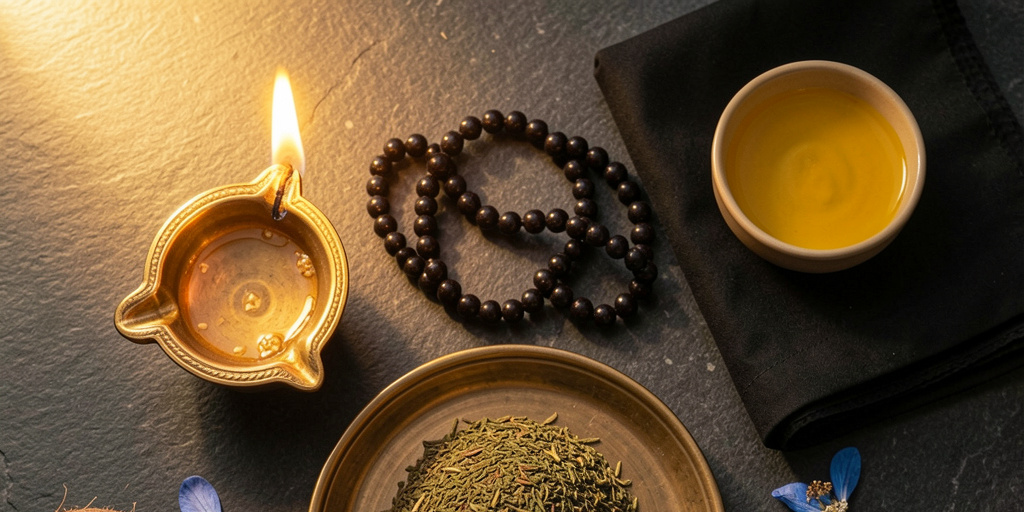
Add a small quantity of sesame seeds (til) to your bathwater if possible. Sesame is Shani Dev's most sacred material and even the water used for bathing on Shani Jayanti carries greater significance when til is added. Some devotees also add a few drops of sesame oil. After bathing, wear clean clothes in blue or black - the colours associated with Shani Dev. These colours are not merely symbolic. In the Vedic understanding of colour and consciousness, blue and black carry the vibrational quality of surrender, karmic acceptance, and resonance with Saturn's energy. Wearing these colours on Shani Jayanti is a simple but meaningful alignment with the day's spiritual purpose. Step 2: Setting Up the Puja Space Designate a clean, quiet corner of your home as your Shani Jayanti puja space. Place a clean cloth - ideally black or dark blue - on a small table or platform.
If you have a Shani Dev idol or image, place it here. If not, you may place a picture of Bhagwan Shani Dev, or simply proceed with the ritual facing west - the direction associated with Saturn. Place the following items in your puja space before you begin:
- A brass or clay diya filled with sesame oil (til tel)
- A second diya filled with mustard oil (sarson ka tel)
- A small plate of black sesame seeds (kale til)
- Blue or black flowers (Aparajita flowers, also called Neel Pushp, are ideal; if unavailable, any blue flowers work)
- A small quantity of urad dal (black lentils)
- Incense sticks - preferably sandalwood or the specific Shani incense available at most temple stores
- A glass of water for the ritual
- Panchamrut if you wish to perform a simple abhisheka at home: a mixture of milk, curd, honey, ghee, and sugar
Step 3: Lighting the Diyas Light both diyas that is the sesame oil lamp and the mustard oil lamp and place them facing west. West is Shani Dev's direction, and positioning the lamps in this direction aligns your home puja with the correct cosmic orientation. Do not use ghee diyas as the primary lamp for Shani puja sesame oil and mustard oil are specifically prescribed for Saturn worship. Ghee lamps belong to other deities such as Surya, Vishnu, and Devi. As you light the diyas, take a moment of silence. Observe the flame. In Vedic thought, the moment of lighting a diya is a moment of inviting the divine into your space. Begin with that intention clearly in your mind. Step 4: Sankalpa (Setting Your Intention) Before any mantra chanting or ritual offering begins, sit quietly and state your Sankalpa - your sacred intention for this puja. The Sankalpa does not need to be formal Sanskrit. Speak from your heart, in your own language, clearly stating:
- Who you are (your name)
- Why you are performing this puja (your sincere reason - Sade Sati relief, karmic purification, family protection, career stability, ancestral peace, or simply devotion to Bhagwan Shani)
- What you are asking for
Bhagwan Shani is described in the scriptures as the one who sees all clearly and without illusion. He is not moved by elaborate ritual performed without sincerity. He is moved by honest effort, genuine acknowledgement of one's karma, and a true commitment to improvement. Your Sankalpa is the most important single moment of the entire home observance. Spend at least a minute here in genuine reflection. Step 5: Offering Sesame Seeds and Blue Flowers Take the black sesame seeds on the plate and hold them in your cupped hands. Recite the Shani Mool Mantra three times: Om Sham Shanaishcharaya Namah. Then offer the sesame seeds before the Shani Dev image or into a small bowl designated as the offering vessel.
Sesame seeds are Shani Dev's primary sacred material. The offering of til is one of the oldest and most universally prescribed Shani remedies in Vedic tradition, found across the Puranas and Dharmashastra texts. Even this simple act that is holding black sesame seeds with a sincere mind and offering them with the mantra carries genuine remedial power on Shani Jayanti. Next, offer the blue flowers. Place them before the idol or image one by one, with each flower accompanied by a quiet, sincere prayer. Blue flowers especially Aparajita resonate with Saturn's vibrational colour of truth, endurance, and justice. Step 6: Panchamrut Abhisheka (Optional — for those with a Shani idol) If you have a Shani Dev idol at home, you may perform a simple Panchamrut Abhisheka — bathing the idol with the mixture of milk, curd, honey, ghee, and sugar. Pour the mixture slowly over the idol while chanting Om Sham Shanaishcharaya Namah.
After the Panchamrut, wipe the idol clean and offer sesame oil as Tailabhisheka — a few drops poured over the idol. This mirrors the full Thailabhisheka performed at temples and carries the same intention: soothing Shani Dev's karmic intensity and inviting his compassionate grace. If you do not have an idol, skip this step. No idol is required for Shani Jayanti observance to be complete and sincere. Step 7: Mantra Chanting This is the heart of the home observance. Set aside at least 20 to 30 minutes for dedicated mantra chanting. Use a black sesame mala (a string of 108 beads made from black sesame or ebony) if you have one. If not, you may count mentally or use any mala available. Primary mantra for Shani Jayanti: Om Sham Shanaishcharaya Namah Chant this 108 times minimum. Those seeking more intensive practice may do 3 or 5 malas (324 or 540 repetitions).
Shani Beej Mantra (for deeper Saturn pacification): Om Pram Prim Prom Sah Shanaye Namah Chant this 108 times after the Mool Mantra, or alternate between the two across your malas. Shani Gayatri Mantra: Om Sanaischaraya Vidmahe Sooryaputraya Dheemahi Tanno Manda Prachodayata Chant this 21 or 51 times as part of your session, particularly at the beginning before the main japa sequence. Guidance on chanting: Do not rush through the mantras. Speed is not the goal — resonance is. Each repetition should be clear, audible (even if only to yourself), and accompanied by at least a moment of awareness of Shani Dev's presence and purpose. If your mind wanders, gently return it to the mantra without frustration — Bhagwan Shani is the teacher of patience, after all. Chanting in front of the lit sesame oil diya amplifies the effect. The combination of sound vibration and fire energy creates an environment highly conducive to genuine mantra work.
Step 8: Shani Chalisa or Shani Stotra Recitation After your mantra japa, read or listen to the Shani Chalisa or Shani Stotra. These devotional texts narrate Bhagwan Shani's qualities, his cosmic role, and the blessings available to sincere devotees. If you do not know the text by heart, reading it from a printed sheet or listening to an audio version is equally valid. The Shani Chalisa and Stotra are widely available in Hindi and Sanskrit through spiritual audio apps and YouTube. Reciting or listening with full attention — not as background noise while doing other things — is what makes the practice meaningful. Step 9: Aarti Conclude the ritual portion of your home observance with the Shani Dev Aarti. Light an aarti lamp (camphor or ghee wick) and move it in a clockwise circular motion before the Shani Dev image while singing or playing the Shani Aarti.
The Aarti is the concluding act of gratitude and devotion that formally closes the puja. It signals to the divine that your offering is complete and your heart is full of reverence. After the Aarti, bow or prostrate before Bhagwan Shani and sit in silence for a minute or two — simply receiving whatever sense of peace or clarity is available to you in that moment. Shani Jayanti Fasting: Rules and Guidelines Fasting on Shani Jayanti is a traditional and powerful observance. It is a direct expression of the self-discipline that Bhagwan Shani most rewards. Here is a complete guide to fasting on 16 May 2026. What kind of fast is observed?
The Shani Jayanti fast is typically a nirjala fast (complete abstention from food and water) for those with the physical capacity and strong intention, or a phalahar fast (subsisting only on fruits, nuts, milk, and water) for those who find complete fasting difficult. The most commonly observed form today, particularly for those who work or have physical responsibilities, is the phalahar fast — eating only once in the day, consuming only sattvic (pure) foods, and avoiding grains, salt, non-vegetarian food, alcohol, and onion and garlic. What to eat on Shani Jayanti (phalahar fast):
- Fresh fruits: bananas, pomegranates, coconut, guava
- Dry fruits: black raisins, dates, cashews
- Milk and curd (plain, unsweetened)
- Sabudana (tapioca) prepared without salt
- Sendha namak (rock salt) is permitted in some traditions for Shani Jayanti, unlike other fasts
- Water throughout the day
What to strictly avoid:
- All grains (rice, wheat, corn, millet)
- Regular table salt
- Non-vegetarian food, fish, and eggs
- Alcohol and intoxicants of any kind
- Onion and garlic — tamasic foods that are generally avoided on all sacred fasting days
- Excessive sleep and laziness — these are contrary to the spirit of Shani's fasting, which is about disciplined wakefulness
Breaking the fast: The fast is traditionally broken after sunset, after completing the evening prayers. Some devotees break the fast only after offering the day's daan (charitable giving) and feeding crows or black dogs. Consuming sesame (til) sweets or til ladoo when breaking the fast is considered especially auspicious on Shani Jayanti — as sesame is Shani Dev's most sacred food offering. If you cannot fast: If health conditions, medication, or physical demands make any form of fasting genuinely unsuitable, do not force it. Bhagwan Shani does not reward the kind of self-punishment that harms the body. In such cases, simply observe the day with sincerity through the other practices — mantra chanting, daan, and mindful awareness — and your observance will be complete and meaningful. Daan (Charitable Giving) on Shani Jayanti — What to Give and to Whom
Daan is one of the three most important components of Shani Jayanti observance, alongside fasting and mantra chanting. In Vedic tradition, charitable giving is one of the most direct ways of working with karma — consciously choosing to give from one's own resources creates a corresponding movement in one's karmic field. The materials traditionally donated on Shani Jayanti are specifically associated with Saturn's nature and symbolism. Here is a complete list: Black sesame seeds (kale til) The primary daan for Shani Jayanti. Give black sesame seeds to a Brahmin, a sadhu, a temple, or anyone in genuine need. Even a small quantity given sincerely carries significant merit. Sesame oil (til tel) or mustard oil (sarson ka tel) Donate a bottle or container of sesame oil or mustard oil. These are both associated with Shani Dev and their donation is specifically mentioned in traditional Shani Jayanti observance texts.
Urad dal (black lentils) Black lentils are one of Saturn's primary grains. Donating urad dal to those in need or to a community kitchen is a traditional and effective Shani remedy. Black cloth Donating a piece of black cloth — a shawl, a blanket, or a length of fabric — is one of the most potent Shani Jayanti donations. It is particularly recommended for those facing persistent obstacles, negative energy, or malicious intent from others. Shoes or footwear Saturn governs service, labour, and those who work on their feet. Donating shoes or footwear — particularly to labourers, construction workers, or those who walk barefoot — is a deeply meaningful act on Shani Jayanti. Iron objects Saturn is associated with iron (his planet is often depicted with iron attributes). Donating an iron vessel, utensil, or implement to someone in genuine need carries specific Shani remedial value.
Food to the poor or hungry Any act of feeding those in genuine hunger on Shani Jayanti accumulates significant punya (spiritual merit). If you are near a community kitchen, labour colony, or any place where food distribution can happen, this is an especially valuable form of daan. To whom should you give? Ideally, daan on Shani Jayanti is given to: a Brahmin learned in Vedic texts, a sadhu or ascetic, labourers and working-class individuals (who fall under Shani's special domain), the poor and hungry, or any person in genuine need whom you encounter sincerely. The most important quality of daan is that it is given without expectation of return and with genuine goodwill toward the recipient. Feeding Crows and Black Dogs on Shani Jayanti Two of the most distinctively Shani-specific observances on this day are feeding crows and feeding black dogs.
Feeding crows: The crow (kaka) is Bhagwan Shani's vahana — his divine vehicle and companion. In Vedic tradition, crows are also believed to carry messages to and from the ancestral realm, making them particularly significant on Amavasya — the day most associated with pitru (ancestors). On Shani Jayanti 2026, which falls on Amavasya, feeding crows is doubly meaningful — it simultaneously honours Shani Dev and connects with the energy of ancestral healing. Offer crows: black sesame seeds, cooked rice mixed with sesame oil, black lentils, or any plain cooked food. Place the offering on your terrace, balcony, or garden early in the morning. Offer it quietly and with genuine reverence — not as a superstitious act, but as a conscious practice of feeding a creature associated with both Saturn and your ancestors.
Feeding black dogs: The black dog is specifically associated with Shani Dev in Vedic tradition and is considered a symbol of Saturn's presence in the material world. Feeding a black dog on Shani Jayanti — especially a stray, hungry one — is considered one of the most direct and powerful Shani remedies available. Offer plain cooked food, roti, or any simple, non-spiced food to a black dog. If there are no black dogs in your immediate vicinity, any hungry stray dog may be fed with the same intention and effect. The act of compassion toward an animal — particularly one associated with Shani Dev — is itself a deeply karmic act that resonates strongly with Saturn's fundamental domain of justice and deservingness. Evening Observance on Shani Jayanti While the morning is the primary window for ritual practice, the evening also holds significance on Shani Jayanti — particularly as Amavasya continues through the day.
Sunset prayers: As the sun sets on Shani Jayanti, light your sesame oil diya again (or keep it burning through the day if you lit it in the morning). Offer a final round of mantra chanting — at minimum 11 or 21 repetitions of Om Sham Shanaishcharaya Namah — at the time of sunset. Breaking the fast: If you have been fasting through the day, break your fast after sunset with a light sattvic meal. Begin with something sweet made from sesame — til ladoo or sesame chikki is ideal — as the first thing you consume after the fast. This is both a traditional practice and a symbolic completion of the day's Shani observance. Reflection: The evening of Shani Jayanti is a natural time for quiet personal reflection. Bhagwan Shani is, above all else, the deity of self-reckoning. Sit quietly for even ten minutes and honestly ask yourself: where in my life am I not living up to my own values? Where am I avoiding responsibility? What karma am I still carrying that I could choose to release?
This kind of honest self-examination — done with compassion rather than self-criticism — is perhaps the most purely Saturnine spiritual practice available. And on Shani Jayanti, it carries the potential to initiate genuine long-term change. Going Beyond Home Practice: Connecting with a Temple Puja Home observance on Shani Jayanti is meaningful and valid. The practices described in this guide — when followed sincerely — constitute a genuine and complete Shani Jayanti observance. However, there is an additional dimension available to devotees who wish to go deeper: participating in a properly performed Vedic ritual at a consecrated temple, with qualified pandits performing the full Shani Shanti Homa or Samarpan Seva on your behalf.
The difference between home practice and a full Vedic Homa performed at a temple is something like the difference between a sincere private prayer and a formal ceremony conducted by trained specialists in a sacred space. Both have genuine value. But the Homa, with its specific mantras, ahutis, and consecrated fire, operates at a level of karmic depth that a home ritual alone cannot fully replicate. Jyotirgamaya is offering the complete range of Shani Jayanti sevas — including the Shani Shanti Homa, Thailabhisheka, and Samarpan Seva — at Shri Sankatahara Vinayaka Temple, Bangalore, on 16 May 2026, starting at 5: 30 AM. After booking, you receive:
- A live stream link to watch the puja from your home
- A recorded video of the full ritual
- Blessed prasad delivered to your home address across India
Many devotees combine both approaches: performing the home rituals described in this guide personally and simultaneously participating in the temple puja through the live stream. This is a deeply meaningful way to mark Shani Jayanti — personal discipline and formal sacred ritual working together. Bookings close on 15 May 2026 at 10: 00 PM. 👉 Book Your Shani Jayanti Seva on Jyotirgamaya For any questions, reach us on : A Note on the Spirit Behind the Observance Every practice in this guide — the early bath, the black sesame offering, the mantra chanting, the fasting, the daan, the feeding of crows — points toward the same underlying truth that Bhagwan Shani embodies.
We are responsible for our own karma. We receive what we have earned. And we have, in every moment, the capacity to choose differently — to act with greater integrity, greater discipline, greater compassion — and thereby change what we are in the process of earning for ourselves. Shani Jayanti is not a day to fear Saturn. It is a day to meet him honestly. To sit with the parts of your life that have not worked out as you hoped, and to ask yourself sincerely whether there is anything in your own actions — past or present — that has contributed to those outcomes. And then to take whatever small, genuine step toward correction is available to you.
This is what Bhagwan Shani rewards. Not the most elaborate puja. Not the largest donation. Not the longest fast. Sincerity. Honesty. Genuine effort. The willingness to learn from your karma rather than simply seeking escape from it. Approach Shani Jayanti 2026 with that spirit, and the blessings of Bhagwan Shani — stability, justice, discipline, and long-term protection — will follow in their time. Frequently Asked QuestionsWhen is Shani Jayanti 2026? Shani Jayanti 2026 falls on Saturday, 16 May 2026, on the Vaishaka Amavasya tithi with Bharani Nakshatra. This year it is a rare Badami Amavasya — one of the most potent Shani Jayanti days in several years. What time should I start the Shani Jayanti puja at home? The ideal time is during Brahma Muhurta, approximately 1. 5 hours before sunrise — roughly 4: 00 to 5: 30 AM. Beginning before sunrise is the next best option. Avoid beginning the ritual after noon if possible.
What colour should I wear on Shani Jayanti? Blue or black clothing is traditionally worn on Shani Jayanti, as both colours are associated with Shani Dev's energy and carry the quality of surrender and karmic acceptance. What is the most important mantra to chant on Shani Jayanti? The Shani Mool Mantra — Om Sham Shanaishcharaya Namah — is the primary mantra for Shani Jayanti home observance. Chant it 108 times minimum. The Shani Beej Mantra — Om Pram Prim Prom Sah Shanaye Namah — may be chanted alongside it for deeper Saturn pacification. What oil should I use for the diya on Shani Jayanti? Use sesame oil (til tel) or mustard oil (sarson ka tel) for your diya — not ghee. These oils are specifically prescribed for Shani Dev worship. Place the lit diya facing west.
Can women observe Shani Jayanti fast and rituals? Yes. Shani Jayanti observance is appropriate for devotees of all genders. There are no scriptural restrictions on women observing Shani Jayanti rituals, fasting, or mantra chanting. What should I donate on Shani Jayanti? The most important donations are: black sesame seeds (kale til), sesame oil or mustard oil, urad dal (black lentils), black cloth, and food for the hungry. Feeding crows and black dogs is also a meaningful act of giving on this day. Can I observe Shani Jayanti if I am not in Sade Sati? Absolutely. Shani Jayanti observance benefits all devotees — not only those facing specific Saturn challenges. Proactively honoring Bhagwan Shani through sincere practice on his birth anniversary invites his long-term blessings of stability, discipline, and protection.
Is it okay to combine home observance with an online puja? Yes — and in fact, this combination is particularly meaningful. Performing your own morning rituals at home while simultaneously participating in a properly conducted Vedic puja at a real temple through a live stream deepens the observance on both the personal and formal ritual levels.