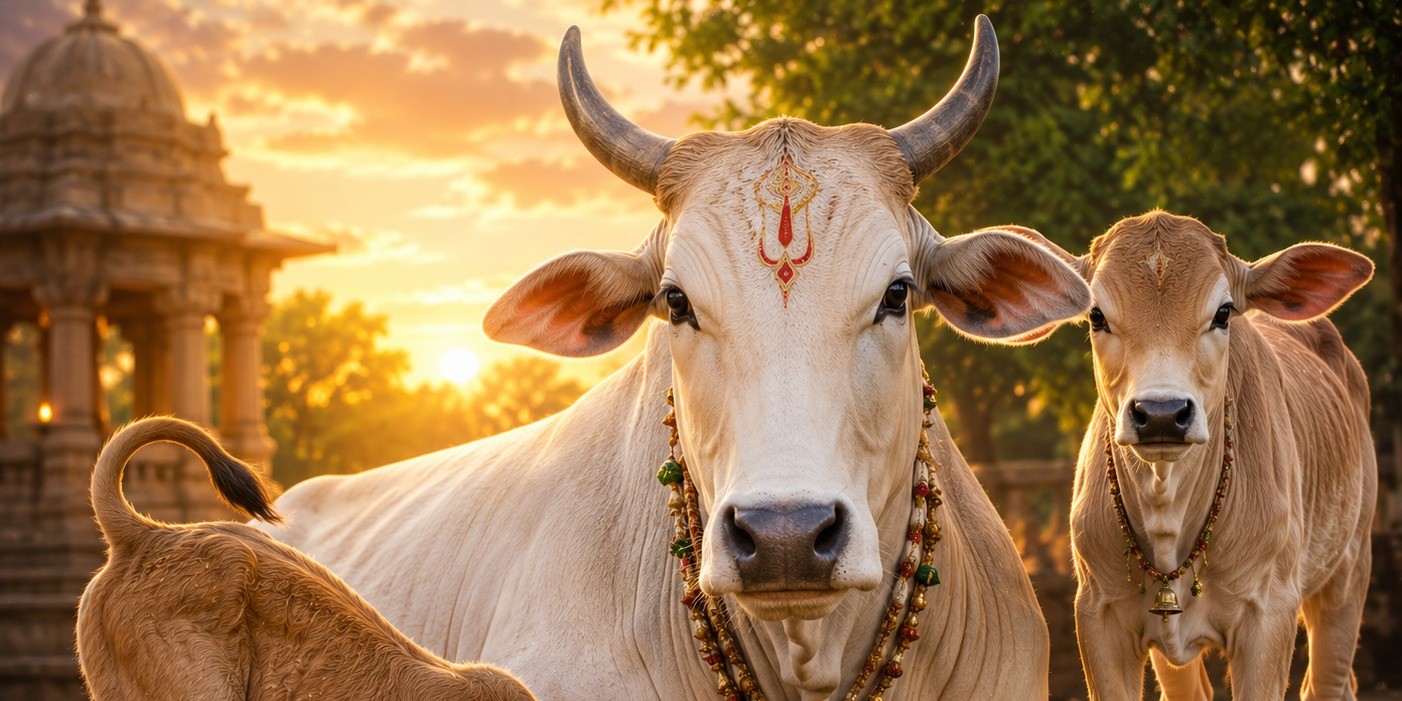
Why Gau Seva During Adhik Maas is One of the Most Powerful Acts of Dharma
By: Pratima Argade
22 May 2026 at 11:37 AM
There is a seva that requires no elaborate ritual preparation. No specific muhurta. No complex mantra. No pandit to guide each step.
It requires only a clean heart, a sincere intention, and the willingness to stand before a cow and offer her food, care, and respect.
This seva is Gau Seva. And in the tradition of Sanatana Dharma, it is one of the most complete and powerful dharmic acts available to a human being.
During ordinary months, Gau Seva carries extraordinary merit. But when Gau Seva is performed during Adhik Maas, also known as Adhika Masa, Mal Maas, or Purushottam Maas, the Puranas say its spiritual power multiplies in ways that are difficult to fully describe in words.
Why? What makes a cow so sacred? What does feeding a cow have to do with healing karma, reducing planetary afflictions, and bringing peace to ancestors? And why does the timing of Adhik Maas make all of this so much more potent?
This post answers all of these questions from the ground up.
Gomata in Sanatana Dharma: Not Just an Animal
Before understanding why Gau Seva during Adhik Maas is so powerful, it is important to understand why Gomata, the sacred cow, holds such an extraordinary place in Sanatana Dharma in the first place.
The reverence for the cow in our tradition is not sentimental. It is not simply cultural affection or agricultural gratitude, though both of those have their place. The reverence for Gomata is rooted in a specific understanding of what the cow represents and contains in the Vedic cosmic order.
The Atharva Veda describes the cow as the mother of all beings, Jagat Mata, because she sustains life through her milk just as a mother sustains her child. The Skanda Purana states: all 33 koti devatas reside within the body of Gomata. Bhagwan Vishnu in His form as Govinda, the protector of cows, is inseparable from Gomata. Bhagwan Krishna, the eighth avatar of Bhagwan Vishnu, spent His entire youth as a cowherd, Gopala, protecting and celebrating cows as a living expression of His divine nature.
The Mahabharata states in the Anushasana Parva that there is no gift greater than the gift of a cow, Godana. It places Godana above gold, land, and even the performance of major yagnas in its capacity to generate punya and dissolve karma.
The Padma Purana says that simply touching a cow in the morning removes the sins accumulated in the previous night. Feeding a cow removes the sins of a full month. And circumambulating a cow, pradakshina, is equivalent to completing a pradakshina of the entire earth.
These are not poetic exaggerations. In the Vedic understanding, they are precise statements about the spiritual mechanics of punya and karma. Gomata is a living vessel of divine energy, and every sincere interaction with her generates spiritual merit in proportion to the sincerity of the act.
Why Gau Seva Addresses Karma, Graha Dosha, and Pitru Dosha Simultaneously
One of the most remarkable qualities of Gau Seva is that it simultaneously addresses three of the most common sources of suffering in a person's life: accumulated karma, planetary afflictions, and ancestral disturbance. Very few single acts of dharma carry this triple benefit.
- Karma Shuddhi Through Gau Seva: The Puranas describe karma as accumulated in layers. Some karma from past actions produces visible effects in the current life as illness, financial difficulty, relationship discord, or repeated failure despite sincere effort. Other karma lies deeper, waiting to express itself in future lives. Gau Seva works on both layers. The Atharva Veda and the Skanda Purana both describe the cow as a purifier of karma through her inherent divine nature. When a person feeds, protects, or serves Gomata with genuine care and without expectation, the act creates a counterweight to past negative karma. It does not simply balance the ledger of actions. It invites a specific quality of divine grace that lightens the karmic load in a way that even elaborate rituals sometimes cannot.
- Graha Dosha Relief Through Gau Seva: In Vedic Jyotish, specific planetary afflictions are linked to the mistreatment or neglect of specific sacred beings and acts. Ketu dosha, in particular, is deeply connected to the mistreatment of cows. The Lal Kitab, the Brihat Parashara Hora Shastra, and several other Jyotish texts specifically prescribe Gau Seva as one of the most effective remedies for Ketu dosha. Shani dosha is also addressed through acts of service and compassion toward vulnerable beings, and Gomata, in a world where cows are increasingly abandoned, is among the most vulnerable. Beyond these specific connections, the Puranas state that performing Gau Seva pleases Bhagwan Vishnu as Govinda, and when Bhagwan Vishnu is pleased, His grace acts as a shield against the intensity of all planetary afflictions. This is why Gau Seva during Purushottam Maas, when Bhagwan Vishnu Himself presides over the month, carries exceptional potency for graha shanti.
- Pitru Shanti Through Gau Seva: The connection between Gau Seva and Pitru Shanti is described explicitly in the Mahabharata's Anushasana Parva and in the Garuda Purana. The Garuda Purana, which deals extensively with the afterlife and with the condition of ancestors, states that the punya generated through Godana, the gift of a cow, reaches the pitrus in the afterlife and provides them with sustenance and peace.
Our ancestors who have passed from this world continue to influence our lives and families through subtle karmic threads. When their souls carry unresolved burden, that burden ripples through the lineage. Gau Seva performed in the name of ancestors, or with a sankalpa dedicated to their peace, is one of the most direct and powerful ways to send merit to the pitrus and invite their blessings back to the living family.
This triple action of karma shuddhi, graha dosha relief, and pitru shanti through one single act of Gau Seva is what makes it so uniquely valuable in the dharmic toolkit.
What Gau Seva Actually Involves
Many people think of Gau Seva as simply feeding grass to a cow. While that is one form of Gau Seva and a perfectly valid one, the tradition encompasses a much wider range of acts:
- Feeding Gomata: Offering grass, green fodder, jaggery, grain, or other appropriate food to a cow. Even a single feeding done with sincere intention is considered meritorious.
- Providing water: Ensuring a cow has clean drinking water, especially during summer months, is an act of Gau Seva that the Puranas specifically mention as cooling the karma of the one who performs it.
- Protection: Contributing to the protection of cows from slaughter, abandonment, or mistreatment. Supporting gaushalas financially or through volunteer service falls under this category.
- Medical care: Ensuring that a sick or injured cow receives care and treatment.
- Circumambulation: Walking around a cow three times with folded hands and a prayer in the heart is considered equivalent in merit to a pradakshina of the entire earth according to the Skanda Purana.
- Financial support: Contributing to a gaushalas running costs, feed requirements, or veterinary care counts as Gau Seva even when physical presence is not possible.
All of these forms of Gau Seva generate punya. The key is sincerity of intention and consistency of practice. A single act of Gau Seva generates merit. A sustained practice of Gau Seva over an entire month such as Adhik Maas generates transformation.
Why Adhik Maas Multiplies the Power of Gau Seva
The power of Gau Seva during Adhik Maas is described in the Puranas with specific emphasis that goes beyond general praise of Gomata.
Here is why the timing matters so precisely.
Bhagwan Vishnu, who presides over Purushottam Maas personally, is also Govinda, the eternal protector of cows. These two identities, Purushottama and Govinda, are not separate aspects of Bhagwan Vishnu. They are the same divine consciousness expressing itself in two ways.
When you perform Gau Seva during the month that Bhagwan Vishnu has named after His supreme name, Purushottama, you are performing an act of devotion to Govinda during Govinda's own month. The alignment between the act and the time creates a spiritual resonance that the Puranas describe as extraordinarily powerful.
The Skanda Purana specifically states that Gau Seva performed during Purushottam Maas earns merit equivalent to performing Godana, the gift of an entire cow, during an ordinary month. This is not a minor multiplication. Godana is described elsewhere in the Puranas as one of the highest acts of dharma available to a human being.
Furthermore, the Puranas note that the karmic relief provided by Gau Seva during Purushottam Maas extends not just to the person performing the seva but to their entire family lineage, both to living family members and to ancestors in the afterlife. This extension of benefit across the family is unusual and is specifically attributed to the combination of Gau Seva and the sacred timing of Purushottam Maas.
Gau Seva and Bhagwan Krishna: The Deeper Devotional Connection
There is another layer of devotional significance to Gau Seva during Adhik Maas that goes beyond the mechanics of karma and dosha.
Bhagwan Krishna, the eighth avatar of Bhagwan Vishnu and one of the most beloved forms of the divine in all of Sanatana Dharma, spent His formative years in Vrindavana as a Gopala, a cowherd and protector of cows.
The Bhagavata Purana describes in extraordinary detail how Bhagwan Krishna tended to His cows each day, calling them by name, ensuring each one was fed and safe, playing His flute to guide them home in the evening. For Bhagwan Krishna, Gau Seva was not a ritual. It was His life's daily practice. It was how He expressed His love for creation.
The Gopis of Vrindavana, the most devoted souls in all of Puranic literature, achieved a state of divine union with Bhagwan Krishna not through elaborate rituals or great ascetic practice but through the simple, daily, wholehearted love they poured into their lives alongside the cows and the divine cowherd.
When you perform Gau Seva, you are stepping, however briefly, into the same tradition. You are doing what Bhagwan Krishna did. You are caring for what He cared for. You are protecting what He protected.
During Purushottam Maas, when Bhagwan Vishnu as Purushottama presides over the entire month, this act of following in Bhagwan Krishna's footsteps carries a particular sweetness and a particular potency that the devotional heart understands even when words fall short.
Gau Seva at Jyotirgamaya During Adhik Maas 2026
At Jyotirgamaya, we offer Gau Seva as one of our six dedicated sevas for Adhik Maas 2026, running from 17 May 2026 to 15 June 2026.
Our Gau Seva during Adhik Maas includes the feeding and care of cows throughout the sacred month, conducted with proper sankalpa taken in your name and gotra by our team. When Gau Seva is performed with your name in the sankalpa, the punya generated reaches you and your family completely regardless of your physical location.
What Gau Seva during Adhik Maas brings:
- Karmic balance and relief from the weight of past karmas, both known and unknown
- Inner peace and emotional healing, the kind of quiet settledness that comes when karmic burden lifts
- Easing of graha dosha, particularly Ketu dosha and Shani dosha
- Relief from Pitru Dosha and transmission of punya to ancestral souls
- Prosperity and abundance as the blessings of Gomata and Govinda flow into the household
- Protection and wellbeing for the entire family
Gau Seva can be combined with any of our other Adhik Maas sevas for a more complete spiritual offering during this sacred month.
Our other Adhik Maas 2026 sevas include:
- Kamala Ekadashi Maha Puja Seva: For karmic balance, peace, prosperity, and spiritual and material progress
- Parama Ekadashi / Purushottam Ekadashi Maha Puja Seva: For deep karma shuddhi and divine grace
- Akhanda Deepa Seva on 30 May and 01 June 2026: For success, health, wealth, and wish fulfillment
- Annadana to old age homes and orphanages: Highest punya karma for karmic balance and inner peace
- Navagraha Shanti Homa on 24 May or 14 June 2026: For sarva graha dosha nivaran and all-round progress
Book your Gau Seva and other Adhik Maas 2026 sevas here: Adhik Maas Puja Seva Booking at Jyotirgamaya
Frequently Asked Questions
Q. Why is Gau Seva so important in Sanatana Dharma?
Gomata is considered sacred in Sanatana Dharma because all 33 koti devatas are said to reside within the body of a cow. Bhagwan Vishnu as Govinda and Bhagwan Krishna as Gopala are both intimately connected with cows. The Puranas state that Gau Seva generates extraordinary punya, dissolves karma, and pleases Bhagwan Vishnu more deeply than many elaborate rituals.
Q. Does Gau Seva specifically help with Ketu dosha?
Yes. Vedic Jyotish texts including the Brihat Parashara Hora Shastra specifically prescribe Gau Seva as one of the most effective remedies for Ketu dosha. Ketu's afflictions, which often manifest as spiritual confusion, sudden losses, health issues, and disconnection from roots, are addressed through acts of compassion and care toward sacred beings, with Gomata being the most directly prescribed.
Q. Can Gau Seva help with Pitru Dosha?
Yes. The Garuda Purana and the Mahabharata's Anushasana Parva both state that the punya generated through Gau Seva and Godana reaches the pitrus in the afterlife. Performing Gau Seva with a sankalpa dedicated to the peace of ancestors is one of the most traditional and effective remedies for Pitru Dosha.
Q. How is Gau Seva performed if I cannot physically visit a gaushalas?
You can sponsor Gau Seva through a trusted organisation like Jyotirgamaya where the seva is performed on your behalf with your name in the sankalpa. Financial contributions toward gaushalas feeding and care also count as Gau Seva. The punya generated reaches you completely when the sankalpa is properly taken in your name.
Q. Why is Gau Seva during Adhik Maas more powerful than in other months?
Bhagwan Vishnu, who presides personally over Purushottam Maas, is also Govinda, the eternal protector of cows. Performing Gau Seva during the month named after Bhagwan Vishnu's supreme name creates a direct alignment between the act and the deity it pleases most. The Skanda Purana states that Gau Seva during Purushottam Maas earns merit equivalent to performing Godana, the gift of an entire cow, during an ordinary month.
Q. When is Adhik Maas 2026?
Adhik Maas 2026, also known as Purushottam Maas 2026 or Mal Maas 2026, runs from 17 May 2026 to 15 June 2026. These dates are confirmed by our pandit.
Conclusion: One Act of Dharma. Three Layers of Grace.
Gau Seva is not complicated. It does not require wealth, status, or advanced spiritual knowledge. It requires only the willingness to stand before Gomata, offer what you can, and do so with a sincere heart.
But within that simplicity lives an extraordinary depth. Karma lightens. Planetary afflictions soften. Ancestral souls receive peace. The blessings of Govinda and Gomata flow into the household. And when this one act is performed during Adhik Maas 2026, during the 30 sacred days from 17 May to 15 June that Bhagwan Vishnu made His own, all of that depth is multiplied.
The Puranas have said it for thousands of years. And the lived experience of sincere devotees confirms it again and again: Gau Seva during Purushottam Maas is not just an act of dharma. It is one of the most complete and compassionate offerings a human being can make during this rare sacred month.
This Adhik Maas, let Gomata carry your prayers. Let Govinda receive your devotion. And let Purushottam Maas 2026 be the month that brings genuine and lasting relief to you and your family.
Perform your Gau Seva and Divine Sevas this Purushottam Maas. Invite Peace. Invite Prosperity. Invite Divine Grace.
Book Your Adhik Maas 2026 Seva at Jyotirgamaya
Om Namo Bhagavate Vasudevaya Om Govindaya Namaha