







Dhanvantari Homam vs Ayushya Homam vs Sudarshana Homam: Differences and Purpose
By: Pratima Argade
16 October 2026 at 11:04 AM
Dhanvantari Homam honours Bhagwan Dhanvantari and is performed to seek blessings for healing and wellbeing. Ayushya Homam is performed with Vedic mantras for long life, often on birthdays and milestone ages. Sudarshana Homam honours the Sudarshana Chakra of Bhagwan Vishnu and is performed to seek protection from fear, obstacles and negative influences.
Families who want to pray for the health of a loved one often hear three names. Some priests suggest the Dhanvantari Homam, some suggest the Ayushya Homam, and others speak about the Sudarshana Homam. All three are respected Vedic rituals, and all three are linked with the wellbeing of the family. Because of this, many people feel unsure about which one to choose.
In this post, we will explain each of the three Homams in simple words, show how they differ, and describe how families usually decide. If you are new to the subject, you may like to read our posts on what the Dhanvantari Homam is and on Dhanvantari Homam vs Maha Mrityunjaya Homam.
What Is Dhanvantari Homam?
Dhanvantari Homam is a Vedic fire ritual dedicated to Bhagwan Dhanvantari, the divine physician and the Bhagwan of Ayurveda. The Puranas describe him as a form of Bhagwan Vishnu who rose from the Kshira Sagara with the Amrit Kalash during the Samudra Manthan.
In the Homam, the priests take a Sankalpa in the name of the Sevakartha and chant the Dhanvantari mantras with offerings of ghee and sacred herbs into the fire. The ritual is traditionally performed to seek blessings for health, recovery, vitality and peace of mind. Its focus is on healing and wellbeing.
What Is Ayushya Homam?
The word Ayushya comes from Ayus, which means life or lifespan. Ayushya Homam is a Vedic fire ritual performed to seek blessings for a long, healthy and meaningful life. It is one of the most common rituals in Indian families, and it is often done on birthdays and at important ages.
The mantras used in this Homam come from the Vedic tradition, and often include the Ayushya Sukta and other prayers for long life. Priests may also include prayers to the Navagrahas and to Bhagwan Vishnu or Bhagwan Shiva, depending on the family tradition. The Sankalpa mentions the name, gotra and nakshatra of the person for whom it is done.
Many families perform the Ayushya Homam for a child on the first birthday, and for an elder at milestone ages. In several regions, these milestones are marked with ceremonies such as Shashtipurti at the age of 60, Bhimaratha Shanti at 70, and Sahasra Chandra Darshana or Shatabhishekam at around 80. The names and the exact ages vary from one tradition to another, so it is best to follow your family custom or the advice of your priest.
The focus of the Ayushya Homam is on long life and blessings for each stage of life. It is a ritual of thanksgiving and of hope.
What Is Sudarshana Homam?
The Sudarshana Chakra is the divine discus of Bhagwan Vishnu. In Vaishnava tradition, it is worshipped as Sudarshana, a mighty form of Bhagwan Vishnu’s own power, who protects devotees from fear and from all that stands in the way of a peaceful life. The name Sudarshana means “the one with the auspicious vision”.
Sudarshana Homam is a Vedic fire ritual dedicated to Bhagwan Sudarshana. It is widely performed in the Vaishnava tradition, and the priests chant the Sudarshana mantras with offerings into the fire. A well known hymn in this tradition is the Sudarshana Ashtakam, composed by the great Acharya Sri Vedanta Desika.
The Homam is traditionally performed to seek protection from fear, obstacles, ill will and negative influences. Families also perform it when they feel that their life is facing many blocks, or when they wish to seek the shelter of Bhagwan Vishnu at the start of a new venture. Its focus is on protection and the removal of obstacles.
Are These Three Homams Linked?
Yes, there are some beautiful links among the three. The first link is that both Bhagwan Dhanvantari and Bhagwan Sudarshana are connected with Bhagwan Vishnu. Bhagwan Dhanvantari holds the Sudarshana Chakra in one of his four hands, along with the shankha, the leech and the Amrit Kalash. So the chakra is present in his very form.
The second link is in the mantras. The longer Dhanvantari Maha Mantra, which many devotees chant, begins with a salutation to Bhagwan Maha Sudarshana, followed by Bhagwan Vasudeva and Dhanvantari. In this way, the prayer for healing starts with a prayer for protection.
The third link is in the purpose. Health, long life and protection are three needs that often come together. A family that prays for the healing of a loved one may also wish for long life and for shelter from fear. This is why many families do more than one Homam.
What Are the Main Differences Between the Three Homams?
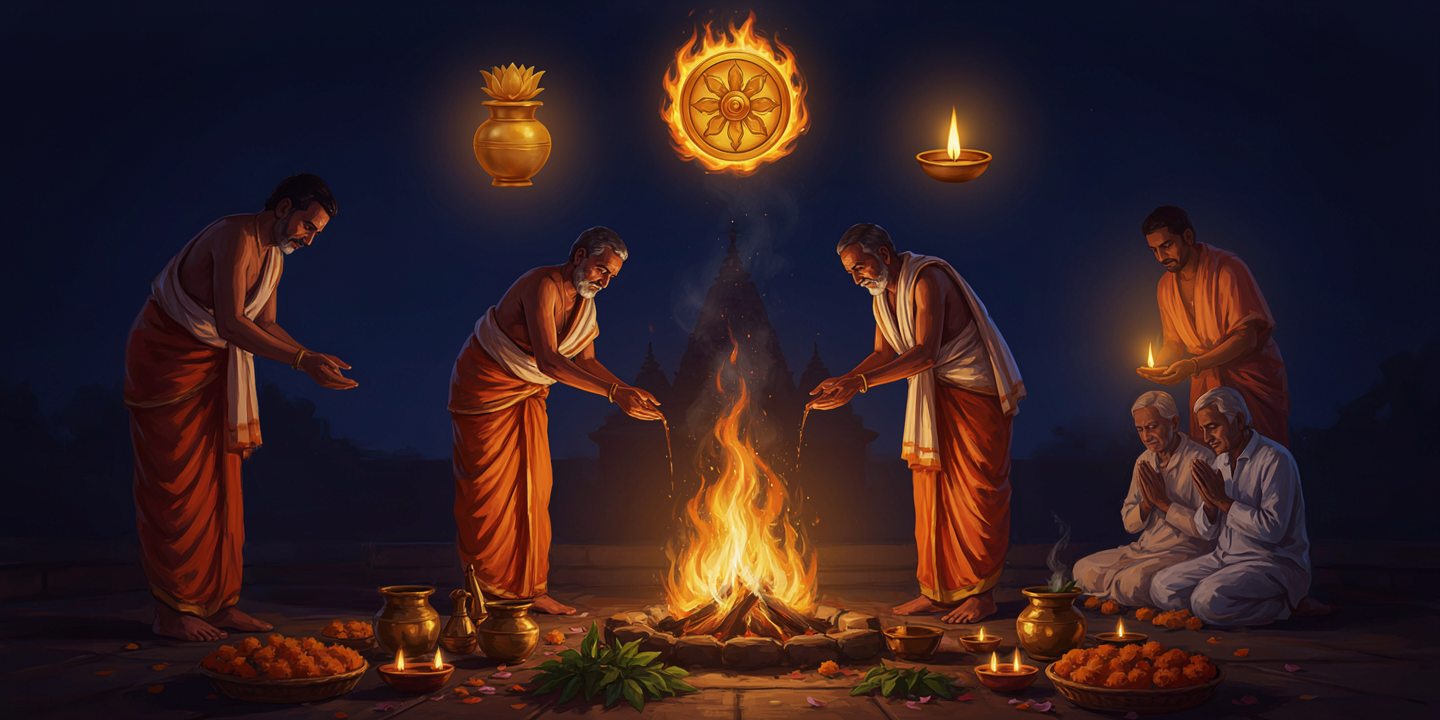
The three Homams share the same basic structure of a Vedic fire ritual, with a Sankalpa, a prayer to Bhagwan Ganesha, a kalash, the lighting of the fire, mantra chanting with offerings, a final offering and an aarti. The main differences are as follows.
- Deity. Dhanvantari Homam honours Bhagwan Dhanvantari. Ayushya Homam honours the Vedic Devatas of long life, often with the Navagrahas, Bhagwan Vishnu or Bhagwan Shiva. Sudarshana Homam honours Bhagwan Sudarshana.
- Main mantras. The first uses the Dhanvantari mantras. The second uses the Ayushya Sukta and other prayers for long life. The third uses the Sudarshana mantras.
- Focus. The first is about healing and wellbeing. The second is about long life and blessings at each stage of life. The third is about protection and the removal of obstacles.
- Mood. The first has a gentle and caring feeling. The second has a feeling of thanksgiving and hope. The third has a strong and protective feeling.
- Typical occasions. The first is often chosen for health journeys and recovery. The second is often chosen for birthdays and milestone ages. The third is often chosen for protection during hard times and at the start of new ventures.
These are traditional ways of understanding the three Homams, and not fixed rules. Every family and priest may follow their own custom.
When Do Families Choose Dhanvantari Homam?
Families usually choose the Dhanvantari Homam when their main wish is for healing and wellbeing. A loved one may be going through a long period of health worry, or preparing for or recovering from a surgery. An elderly parent may need care and comfort, or a child may often fall sick. Some families do it as thanksgiving after a hard time has passed. The feeling behind the choice is one of care and hope.
When Do Families Choose Ayushya Homam?
Families usually choose the Ayushya Homam when they wish to celebrate a milestone and seek blessings for a long life. This may be a child’s first birthday, an elder’s sixtieth or seventieth birthday, or any birthday that the family wishes to mark with a prayer. Some people also do it at the start of a new year of life, or when a Jyotishi has suggested a ritual for longevity. The feeling behind the choice is one of gratitude and a wish for many good years.
When Do Families Choose Sudarshana Homam?
Families usually choose the Sudarshana Homam when they wish to seek protection and clear the way ahead. This may be during a time of fear, or when many obstacles seem to appear without reason, or before the start of a new home, venture or journey. Followers of the Vaishnava tradition also perform it as a regular part of their worship. The feeling behind the choice is one of seeking shelter in the protection of Bhagwan Vishnu.
What Does Jyotish Say About Choosing Between Them?
In Vedic astrology, longevity is studied through the Lagna, the 8th house and the planets connected with them. When a horoscope shows strain on these areas, traditional teachers often suggest a Homam for long life, such as the Ayushya Homam. When the 6th house shows worries about health, the Dhanvantari Homam is often suggested. When a horoscope shows many obstacles, fear, or the heavy effects of Rahu, Ketu or Shani, the Sudarshana Homam is sometimes suggested for protection.
These are traditional views, and every horoscope is different. Jyotish is a guide for reflection and spiritual practice, and not a medical diagnosis or a promise of results. A trusted Jyotishi and an experienced priest can look at the full chart and suggest the right Homam with care.
Can You Perform More Than One Homam?
Yes, many families perform two or even all three Homams, either on the same day or on different days. For example, a family may perform the Ayushya Homam on an elder’s milestone birthday, and also the Dhanvantari Homam to seek blessings for the elder’s health. Another family may perform the Sudarshana Homam before a major surgery, to seek protection, and the Dhanvantari Homam for a smooth recovery period.
There is no rule against doing more than one. The Homams are not in competition. They are three different ways of making one prayer, which is for the wellbeing of a loved one. If you are unsure, share your situation with the priest, and let them guide you on the order and the timing.
How to Decide Which Homam Is Right for You?
A few simple questions can help you decide.
- What is the main wish in your heart? If it is for healing and recovery, the Dhanvantari Homam may feel close. If it is for long life and a milestone, the Ayushya Homam may feel close. If it is for protection and clear paths, the Sudarshana Homam may feel close.
- Which Bhagwan does your family feel most connected with? Devotion is personal, and a Homam done with a close heart is always meaningful.
- Does your family tradition or Guru have a preference? If yes, please follow it.
- Has a Jyotishi or priest given any advice for your situation? If yes, it can be a helpful guide.
- Is it possible to do more than one? If your family wishes, there is no rule against it.
When you book a Homam, you will usually be asked for the name, gotra and nakshatra of the Sevakartha, and the purpose of the prayer. You can share your wish in simple words, and the priests will take the Sankalpa with care.
How Should We See Homams and Medical Care Together?
All three Homams are forms of spiritual support. They are not a replacement for medical advice, diagnosis or treatment. They do not promise any result, and they should never delay or replace the care of a doctor, especially in a serious condition.
The best way to see a Homam is as a companion to good care. The doctor treats the body, the family looks after the person, and the prayer gives strength, hope and calm to the mind. Please continue to follow your doctor’s guidance, and never stop or change a treatment because of a ritual.
Key Takeaways
- Dhanvantari Homam honours Bhagwan Dhanvantari and is performed to seek blessings for healing and wellbeing.
- Ayushya Homam uses Vedic mantras for long life, and is often done on birthdays and milestone ages such as Shashtipurti.
- Sudarshana Homam honours the Sudarshana Chakra of Bhagwan Vishnu and is performed to seek protection from fear and obstacles.
- The three are linked, as the chakra is in Dhanvantari’s hand, and the long Dhanvantari Maha Mantra begins with a salutation to Maha Sudarshana.
- Families may choose one, two or all three, based on their wish, tradition and the advice of their priest or Jyotishi.
- All three Homams are spiritual support and work alongside medical care, never in place of it.
Frequently Asked Questions
Q. What is the difference between Dhanvantari Homam and Ayushya Homam?
Dhanvantari Homam honours Bhagwan Dhanvantari and is performed to seek blessings for healing and wellbeing. Ayushya Homam uses Vedic mantras for long life, and is often done on birthdays and milestone ages.
Q. What is Sudarshana Homam performed for?
Sudarshana Homa honours the Sudarshana Chakra of Bhagwan Vishnu. It is traditionally performed to seek protection from fear, obstacles and negative influences.
Q. Which Homam is best for an elderly parent?
Many families choose the Ayushya Homam to celebrate a milestone birthday and seek blessings for long life, and the Dhanvantari Homam to seek blessings for health. Some do both. Your priest can advise you.
Q. Can I perform Dhanvantari Homam and Ayushya Homam together?
Yes. There is no rule against it, and many families perform both, either on the same day or on different days.
Q. Is Sudarshana Homam only for followers of Bhagwan Vishnu?
It is widely performed in the Vaishnava tradition, but any devotee with faith can take part in it, to seek protection and clear paths.
Q. Which Homam is suitable before surgery?
Many families perform the Dhanvantari Homam to seek blessings for a smooth recovery period, and some also perform the Sudarshana Homam for protection. Both are spiritual support and do not replace the care of the surgeon.
A Note on Health and Faith
The Dhanvantari Homam, Ayushya Homam and Sudarshana Homam are forms of spiritual support. They are not a substitute for medical advice, diagnosis or treatment. Please continue to follow your doctor’s guidance and take care of your health along with your prayers.
Seek the Blessings of Bhagwan Dhanvantari
If you wish to pray for the health and wellbeing of your family with the full Vedic method, you can book the Dhanvantari Homam with Jyotirgamaya from anywhere in the world. Visit the Dhanvantari Homam page