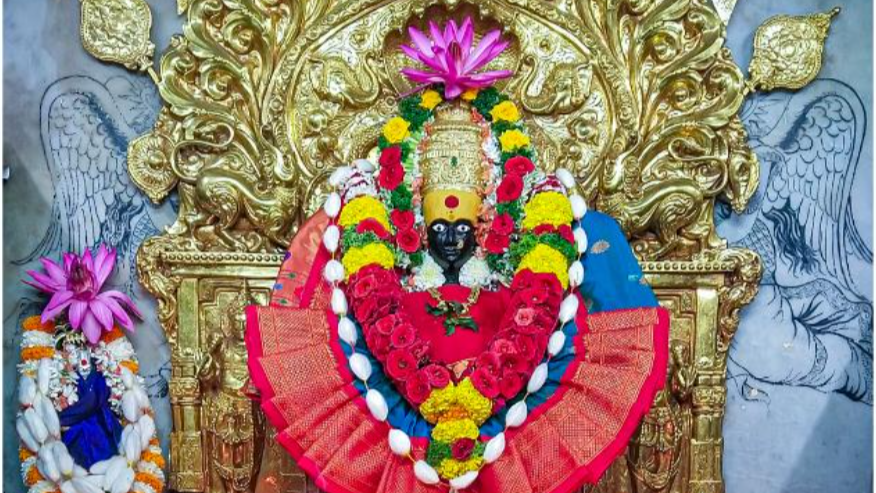
Sri Sukta Havan (Laxmi Havan) and Chandi Homa at Shri Kshetra Kolhapur Mahalakshmi Temple
 Sunday 25 October, 2026
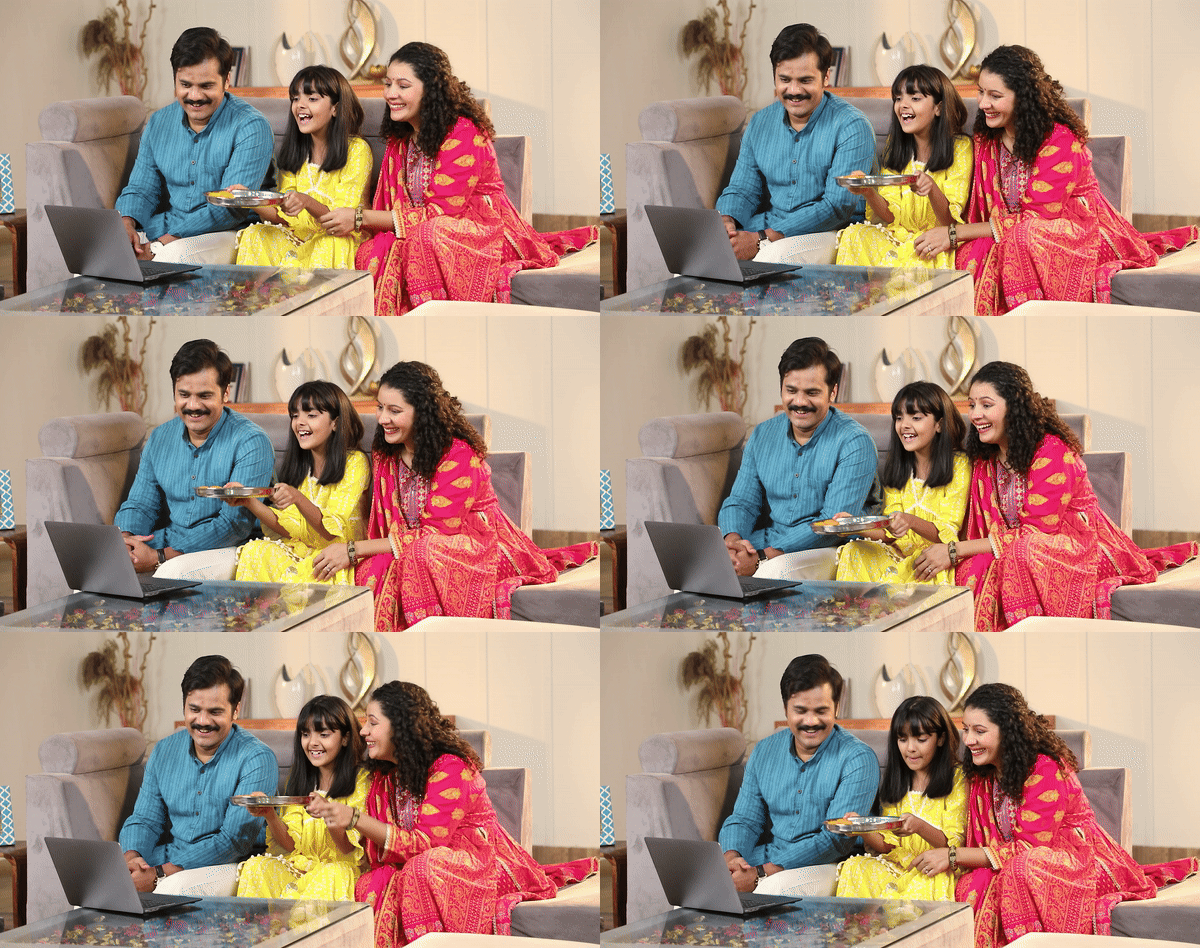
Puja will be held at Mahalakshmi Temple Premises, Kolhapur, where all rituals will be performed before the Utsav Murti, and you can experience from your home!
Shri Kshetra Kolhapur Mahalakshmi, also called Karaveera Nivasini, is one of the most respected Shakti Peethas of Bharat. Devi Mahalakshmi here is believed to bless her devotees with wealth, protection and peace. This October, Jyotirgamaya brings you two powerful rituals within the Mahalakshmi Temple premises in Kolhapur: Sri Sukta Havan, also known as Laxmi Havan, to invite the flow of Lakshmi, and Chandi Homa (Nav Chandi Homa) to call the protecting power of Devi Chandi. All rituals are performed in front of the Utsav Murti of Devi. Two of the Sri Sukta Havan dates, 15 and 19 October, fall in Navaratri, the best time for Devi upasana. Your sankalpa is taken in your name and gotra by experienced Vedic Pandits. Sevakartha from India and abroad can join through a live link, so you can take part from your own home.
- Sri Sukta Havan, Laxmi Havan: Done with the Sri Sukta mantras of the Rigveda to call the presence of Devi Lakshmi. It is chosen for steady income, relief from money worries, success in business and work, and a peaceful, prosperous home.
- Chandi Homa, Nav Chandi Homa: Done with the Devi Mahatmya (Durga Saptashati) mantras to please Devi Chandi. It is chosen for protection from enemies, fear and negative energy, removal of obstacles, courage, and victory in difficult times.

Vedic Significance

Sri Sukta of Rigveda
Sri Sukta comes from the Khila section of the Rigveda. Its verses call Devi Mahalakshmi through Agni for wealth and wellbeing.

Chandi Homa Power
Chandi Homa offers verses of Devi Mahatmya from the Markandeya Purana into the sacred fire to remove fear, enemies and obstacles.

Kolhapur Shakti Peetha
Kolhapur Mahalakshmi, known as Karaveera Nivasini, is a Shakti Peetha where Devi is said to bless both worldly joy and moksha.

Agni as the Messenger
In a homa, Agni carries every ahuti to Devi. Mantra, fire and sankalpa together build a strong link between sevakartha and Shakti.
Sevas we offer for Sri Sukta & Chandi Homa
Divine Story, Benefits, and Sacred Sevas of this Auspicious Puja
What is Sri Sukta Havan (Laxmi Havan)?
Sri Sukta Havan, also called Laxmi Havan, Shri Suktam Homa or Lakshmi Sukta Homam, is a Vedic fire ritual done to invite Devi Mahalakshmi into your life and home. In this havan, the mantras of the Sri Sukta are chanted, and an ahuti is offered into the sacred fire after each mantra. It is done for wealth, steady income, success at work and a peaceful home.
The word Sri means wealth, beauty and all that is auspicious. It is also the name of Devi Lakshmi. The word Sukta means a hymn that is well spoken. Sri Sukta is a hymn from the Khila section of the Rigveda, and its first verse begins with the call "Hiranyavarnam Harinim". In this verse, Agni Deva is invited as Jatavedas, the one who knows all beings, so that he may bring Devi Lakshmi to the sevakartha.
In a havan, Agni Deva is the messenger. Whatever is offered with the right mantra and a clean heart reaches Devi through him. Traditionally, the ahuti includes ghee, lotus seeds, bilva leaves and other pure items. The Pandits chant the mantras with the correct swara, and the sankalpa is taken in the name and gotra of the sevakartha.
Sri Sukta Havan is not only about money. The text speaks of Lakshmi as the one who removes alakshmi, meaning poverty, misfortune and a restless mind. It also asks for fame, good fortune and a stable home. This is why the havan is chosen by families, business owners and working people alike.
At Kolhapur Mahalakshmi, this havan is even more special. Kolhapur is where Devi is worshipped as Mahalakshmi herself, and the Devi Bhagavata Purana counts Kolhapur among the sacred places of Devi. A Lakshmi havan done within her own temple premises, before the Utsav Murti of Devi, and during Navaratri on 15 and 19 October, carries great spiritual strength.
What is Chandi Homa?
Chandi Homa, also called Chandi Havan, Chandi Path Havan or Durga Saptashati Homa, is a powerful fire ritual done to please Devi Chandi, the fierce and protecting form of Durga. In this homa, verses of the Devi Mahatmya are recited and offered into the fire. It is done for protection from fear, enemies and negative energy, and for courage, victory and removal of obstacles.
The Devi Mahatmya is a part of the Markandeya Purana. It has 700 verses in 13 chapters, and it is also called Durga Saptashati or Chandi Path. The text is divided into three charitras. It tells how Devi, who is the Adi Shakti, destroyed Madhu and Kaitabha, Mahishasura, and Shumbha and Nishumbha. These stories show that when adharma grows too strong, Shakti rises to protect her devotees.
The homa begins with Ganapati puja, kalash sthapana and sankalpa. The Pandits then recite the Chandi Path, along with prayers such as Chandi Kavacham, Argala Stotram and Keelaka Stotram. Havan is done with the verses, and the ritual ends with Purnahuti and Mangal Aarti.
Nav Chandi Homa is the grand form of this ritual. Traditionally, the Chandi Path is recited nine times, and the havan is done on a large scale, so it needs a team of trained Pandits and a long time to complete. The sevakartha takes part through sankalpa, and the ritual is done in his or her name.
Chandi Homa is chosen by those who face fear, court or family troubles, enemies, evil eye, or long standing obstacles. The text itself says that Devi protects the one who recites or hears her stories with devotion. Done within the Mahalakshmi Temple premises in Kolhapur on 25 October 2026, before the Utsav Murti of Devi, this homa is performed in the holy presence of Adi Shakti.
Benefits of Sri Sukta Havan (Laxmi Havan)
Sri Sukta Havan is done to invite Devi Mahalakshmi and her blessings of wealth, stability and peace. Devotees believe it brings these benefits:
- Flow of wealth: Helps bring steady income and new sources of earning, and supports the growth of a business or career.
- Relief from money worries: Eases financial stress and helps the sevakartha move towards a stable and secure life.
- Removal of Alakshmi: The Sri Sukta asks for the removal of poverty, loss and misfortune, and for the arrival of good fortune.
- Peace and harmony at home: Lakshmi is the Devi of a happy, well kept home, so the havan supports love and calm in the family.
- Success in new beginnings: It is a good choice before starting a business, buying a home or taking a big financial step.
- Mental peace and clarity: The mantras and the sacred fire bring a calm mind, which helps in making wise money decisions.
Benefits of Chandi Homa
Chandi Homa is done to please Devi Chandi, the protecting form of Durga. Devotees believe it brings these benefits:
- Protection from fear: Gives strength and a feeling of safety when life feels uncertain or heavy.
- Safety from enemies and harm: Devi Chandi is the destroyer of those who bring harm, so the homa is chosen for protection from enemies and unfair people.
- Removal of nazar and negative energy: Helps clear the effect of evil eye, bad influences and unseen troubles.
- Courage and confidence: The Devi Mahatmya stories build inner strength to face hard times.
- Removal of obstacles: Helps clear long standing blocks in work, family matters and important decisions.
- Peace and wellbeing in the family: Brings a protected, peaceful atmosphere at home.
Why Do Both Together at Kolhapur Mahalakshmi?
Lakshmi brings prosperity, and Chandi protects it. Wealth that is not protected can be lost, and protection without prosperity is incomplete. This is why many devotees take part in both rituals. Within the Mahalakshmi Temple premises in Kolhapur, where Devi is worshipped as Mahalakshmi herself, the blessings of both forms come together in one holy place. Two of the Sri Sukta Havan dates, 15 and 19 October, fall in Navaratri, the time when Devi shakti is believed to be at its strongest. The first date, 9 October, is a Friday, the day of Devi Lakshmi.
Who Should Book Sri Sukta Havan and Chandi Homa?
Sri Sukta Havan (Laxmi Havan) is a good choice for:
- Families facing money problems, loss or unsteady income
- Business owners who want growth and stability
- Those starting a new business, buying a home or making a big investment
- Those whose kundli shows a weak Shukra (Venus), as many astrologers advise Lakshmi upasana for Shukra
- Anyone who wishes to invite prosperity and peace into the home
Chandi Homa is a good choice for:
- Those who feel constant fear, worry or a heavy feeling at home or at work
- Those troubled by enemies, jealousy or evil eye
- Families facing long standing obstacles or disputes
- Those going through a hard planetary period who want protection and strength
- Anyone who wishes to give thanks to Devi Chandi for her protection
Also for those who cannot travel: If you live in another city or abroad and cannot visit Kolhapur, you can still take part. Your sankalpa is taken in your name and gotra, and you can join through the live link from home.
How the Ritual is Done
These rituals follow the traditional Vedic method. The general flow is given below so that you know what to expect.
Sri Sukta Havan (Laxmi Havan)
- Sankalpa: The Pandit takes the sankalpa in the name and gotra of the sevakartha and family, and states the wish for which the havan is done.
- Ganapati puja: The ritual starts with a prayer to Shri Ganesha to remove all obstacles.
- Agni sthapana: The sacred fire is lit and Agni Deva is invited to carry the offerings.
- Sri Sukta mantras with ahuti: The Sri Sukta verses are chanted, and an ahuti is offered into the fire after each mantra.
- Purnahuti and aarti: The havan ends with the final offering, followed by Mangal Aarti and prayers for the wellbeing of the sevakartha.
Chandi Homa (Nav Chandi Homa)
- Sankalpa and Ganapati puja: The ritual begins with the sankalpa and a prayer to Shri Ganesha.
- Kalash sthapana: Devi is invited into the kalash.
- Chandi Path: Verses of the Devi Mahatmya are recited, along with prayers like Chandi Kavacham, Argala Stotram and Keelaka Stotram.
- Havan: Ahuti is offered into the fire with the mantras of the Chandi Path.
- Purnahuti and Mangal Aarti: The homa ends with the final offering and aarti, with prayers for protection and peace for the sevakartha and family.
All rituals are performed within the Mahalakshmi Temple premises, in front of the Utsav Murti of Devi, and follow the temple's traditional method.
How to Join Sri Sukta Havan and Chandi Homa Online
You do not need to travel to Kolhapur. Here is how to take part from home, from India or abroad:
- Book your seva: Go to the booking section and choose Sri Sukta Havan, Chandi Homa, or both.
- Share your details: Give the name of the sevakartha, the gotra and the names of the family members for whom the sankalpa is to be taken.
- Get the live link: The live link for the ritual will be shared with you.
- Watch and join: On the day, sit in a clean place, light a diya and watch the havan. When the Pandit takes the sankalpa, join in with a calm mind and a prayer.
- Offer your prayer: At the time of Purnahuti, fold your hands and pray for your wish.
For the best result, bathe and wear clean clothes before the havan, and keep a pure and peaceful mind during the ritual.
Why attend puja online with us?
In the spiritual realm, physical boundaries hold no power, ensuring a connection between you and the divine.

Live Ritual Viewing
Experience the spiritual essence from the comfort of your home by tuning into live streams of the rituals performed by experienced priests.

Recorded Ceremony Video
If you miss the live event, a recorded video will be provided, allowing you to watch the sacred rituals at your convenience.

Free Prasad Delivery
Receive blessed prasad delivered directly to your home, ensuring you remain connected to the divine blessings.

Convenience
Participate in the rituals remotely without the need to visit the temple.

Spiritual Connection
Stay spiritually connected through live and recorded rituals, with blessings brought to you through prasad delivery.
How to book Sri Sukta & Chandi Homa puja
1
Choose your seva
Select one or more main rituals as per your spiritual need.
2
Choose offerings
Add optional offerings to deepen your spiritual experience.
3
Complete your booking
Confirm securely so all selected rituals and offerings are included.
Click Here To Book Puja
Book Sri Sukta Havan and Chandi Homa at Kolhapur Mahalakshmi
Take part in these sacred rituals within the Mahalakshmi Temple premises in Kolhapur, the holy place where Devi is worshipped as Mahalakshmi herself. Invite the blessings of Devi Lakshmi for wealth and a peaceful home, and the protection of Devi Chandi for courage and strength. Whether you live in India or abroad, you can be a part of these rituals from your own home.
Seva Dates 2026
- Sri Sukta Havan (Laxmi Havan): 9 October, 15 October and 19 October 2026. The dates of 15 and 19 October fall during Navaratri.
- Chandi Homa (Nav Chandi Homa): 25 October 2026
Booking closes before each date, so please book early to make sure your sankalpa is included. For guidance on which date or ritual suits you, you may also speak with our team, and we will be happy to help you.
Book your seva now
May Devi Mahalakshmi bring prosperity to your home, and may Devi Chandi protect you and your family always.
Frequently Asked Questions
Q. What is Sri Sukta Havan?
Sri Sukta Havan is a Vedic fire ritual in which the Sri Sukta mantras of the Rigveda are chanted and ahuti is offered into the sacred fire to invite Devi Mahalakshmi. It is done for wealth, stability and peace at home.
Q. Is Laxmi Havan the same as Sri Sukta Havan?
Laxmi Havan is a general name for any havan done for Devi Lakshmi. Sri Sukta Havan is its most popular and traditional form, because it uses the Sri Sukta, the main Vedic hymn of Devi Lakshmi. It is also called Shri Suktam Homa or Lakshmi Sukta Homam.
Q. What is Chandi Homa?
Chandi Homa, also called Chandi Havan or Durga Saptashati Homa, is a fire ritual in which verses of the Devi Mahatmya are recited and offered into the fire. It is done to please Devi Chandi and to seek protection, courage and removal of obstacles.
Q. What is the difference between Chandi Homa and Nav Chandi Homa?
Nav Chandi Homa is the grand form of Chandi Homa. Traditionally, the Chandi Path is recited nine times, and the havan is done on a larger scale with a team of Pandits.
Q. What are the dates of these rituals at Kolhapur Mahalakshmi in 2026?
Sri Sukta Havan is on 9, 15 and 19 October 2026, and Nav Chandi Homa is on 25 October 2026. The 15 and 19 October dates fall during Navaratri.
Q. Do I need to be present at Kolhapur to take part?
No. The sankalpa is taken in your name and gotra, and you can join the ritual through the live link from your home.
Q. Can NRI devotees book these rituals?
Yes. Devotees living in the USA, UK, Canada, Australia, the Gulf countries and other places can book online and join through the live link. Please keep the time difference in mind.
Q. What details are needed for the sankalpa?
The name of the sevakartha, the gotra and the names of the family members for whom the ritual is to be done.
Q. Can I book both Sri Sukta Havan and Chandi Homa?
Yes. Many devotees book both, because Lakshmi brings prosperity and Chandi protects it.
Q. Which day is best for Lakshmi upasana?
Friday is considered the day of Devi Lakshmi, and Navaratri is a very special time for Devi worship. The Sri Sukta Havan dates of 9 October (Friday), 15 October and 19 October suit both.
Q. Is Kolhapur Mahalakshmi a Shakti Peetha?
Yes. Shri Kshetra Kolhapur Mahalakshmi, also called Karaveera Nivasini, is one of the most respected Shakti Peethas of Bharat, and Devi is worshipped here as Mahalakshmi.
Q. Where are Sri Sukta Havan and Chandi Homa performed at Kolhapur?
Both rituals are performed within the Mahalakshmi Temple premises in Kolhapur, in front of the Utsav Murti of Devi.
Q. What is the Utsav Murti?
The Utsav Murti is the festival form of Devi, used for special rituals, utsavs and processions. When the rituals are done before the Utsav Murti, the sankalpa, mantras and ahuti are offered in the direct presence of Devi.
Upcoming dates for Same Puja
30 September 2027
19 September 2028
8 October 2029