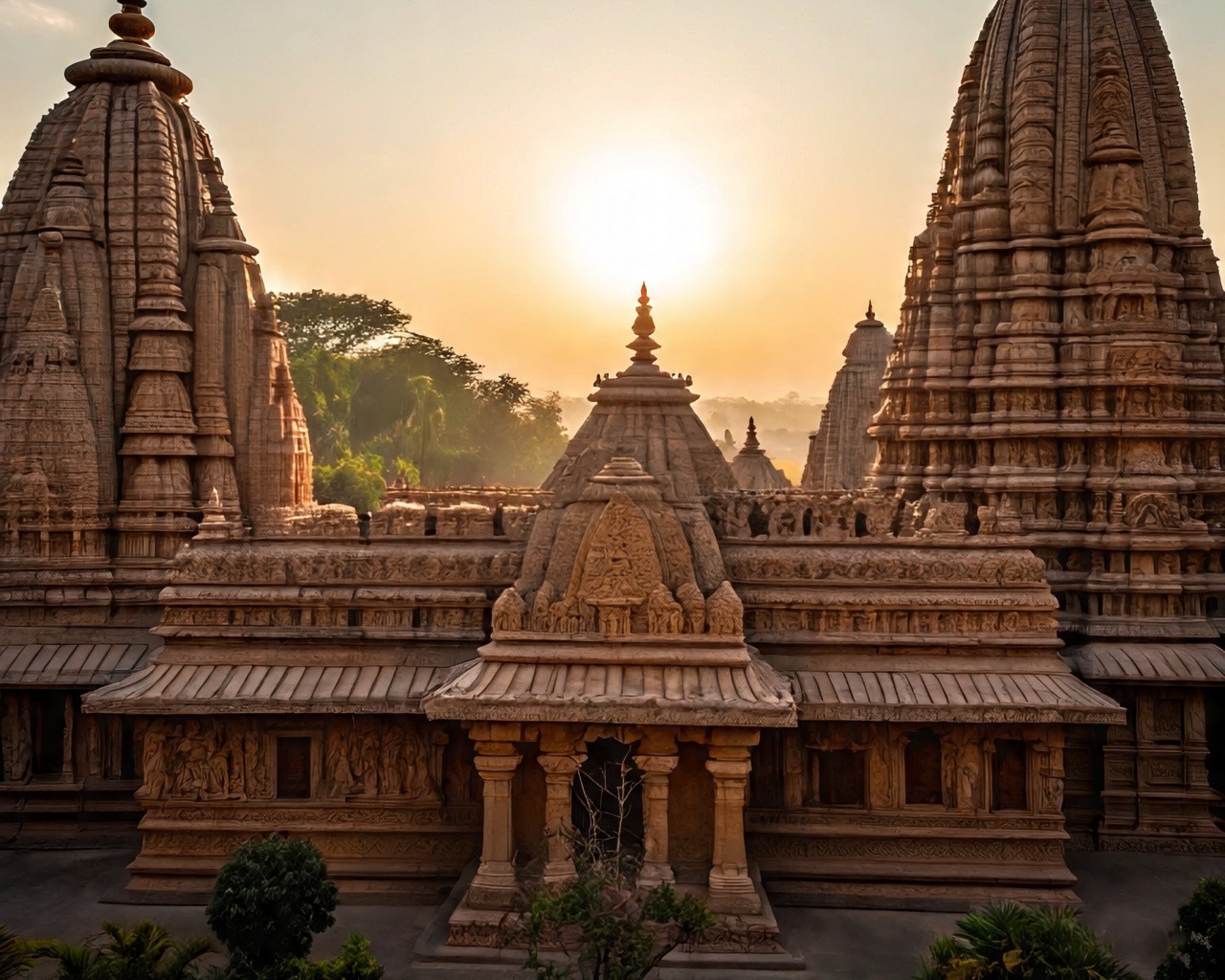
Why Vedic Rituals Are Performed at Sunrise and Sunset – The Science of Sandhya
By: Pratima Argade
1 March 2026 at 12:08 PM
In the quiet moments just before sunrise, the world feels different. The sky slowly shifts from deep darkness to soft shades of blue and gold. The air is calm. Birds begin their first movements. There is a natural stillness that is difficult to describe but easy to feel. A similar stillness appears again during sunset. The bright activity of the day fades. Light softens. The sky glows with warm colors. Nature seems to pause before night begins. For thousands of years, Vedic rishis chose these exact moments for important spiritual practices. Gayatri mantra was chanted at sunrise and sunset. Agnihotra was performed exactly at these times. Temples conducted aarti during these transitions. Daily Sandhyavandanam was prescribed during these periods. This was not done randomly. These moments are called Sandhya - the cosmic junctions of time. And modern astronomy, biology, and environmental science now help us understand why these moments were considered so powerful. What Is Sandhya? The Meaning of the Cosmic Junction The word Sandhya comes from Sanskrit, meaning “junction, ” “connection, ” or “transition. ”
It refers to the meeting point between two phases of time: These are not just visual changes in the sky. They are moments when Earth itself is undergoing a shift in its relationship with the Sun. In Vedic understanding, these junction points are considered highly sensitive and powerful. They represent balance, neither fully night nor fully day, but a bridge between both. The rishis observed that these transition periods had a unique influence on nature, environment, and human consciousness. As a result, they prescribed Sandhya as the ideal time for spiritual activities. The Astronomical Reality: What Happens to Earth During Sunrise and Sunset To understand Sandhya more deeply, we must look at what happens astronomically during sunrise and sunset.
Earth is constantly rotating on its axis. Sunrise occurs when your location on Earth rotates into the Sun’s light. Sunset happens when your location rotates away from it. During these transition periods, several important changes occur: These changes affect not only the sky but the entire environment of Earth. Sunlight carries energy. As Earth moves into or out of sunlight, this energy transition influences atmospheric particles, air movement, and subtle environmental conditions. These are dynamic, active periods of change, not static moments. Ancient Vedic rishis did not have modern instruments, but through deep observation, they recognized that sunrise and sunset were special cosmic transition windows.
How These Transition Periods Affect the Human Brain and Consciousness Human beings are deeply connected to the Sun’s cycle. Our body operates on what modern science calls the circadian rhythm - an internal biological clock aligned with the day-night cycle. During sunrise and sunset, the human body naturally undergoes internal adjustments. At sunrise: At sunset: These transitions affect brainwave patterns. The mind naturally becomes quieter and more receptive during these periods. This is why many people feel peaceful while watching sunrise or sunset. The environment supports mental stability and awareness. Vedic rishis recognized that these were ideal moments for mantra chanting, meditation, and spiritual focus, because the mind was naturally aligned with balance. Why Agnihotra and Vedic Homa Are Done Exactly at Sunrise and Sunset One of the clearest examples of Sandhya timing is Agnihotra, a Vedic fire ritual that must be performed precisely at sunrise and sunset. Agnihotra is not done at random times. Its effectiveness depends on aligning with solar transition. During Sandhya, atmospheric conditions change in ways that support the upward movement of heat and subtle particles. When Agni is lit and offerings are made during this time: In Vedic understanding, Agni is described as the divine messenger who carries offerings to Devatas. Performing homa during Sandhya aligns this ritual with cosmic transition, enhancing its spiritual effectiveness.
This timing reflects precise environmental awareness, not symbolic choice. Why Gayatri Mantra Is Prescribed During Sandhya The Gayatri mantra is one of the most important mantras in Sanatana Dharma. It is dedicated to Surya, the source of light, energy, and consciousness. The mantra itself speaks about meditating on the divine light that illuminates the mind. Sunrise and sunset represent visible expressions of this light transition. At sunrise, light emerges from darkness. At sunset, light withdraws into stillness. These moments symbolize awakening and reflection. Chanting Gayatri mantra during Sandhya aligns inner awareness with outer cosmic rhythm.
This synchronization strengthens focus and clarity. The mantra becomes more than words. It becomes a conscious alignment with natural cycles. How Ancient Rishis Discovered This Without Modern Instruments One of the most fascinating aspects of Vedic knowledge is that it was developed through observation, not machines. Rishis lived close to nature. They carefully observed: Over long periods, they noticed consistent patterns. They observed that certain times supported mental clarity, stability, and awareness more than others. Based on these observations, they structured rituals to align with cosmic timing. This reflects a deep understanding of natural rhythm.
Their goal was not superstition, but alignment. Modern Scientific Observations That Support Sandhya Timing Modern science now recognizes many principles that reflect Vedic observations. Science acknowledges: Sunrise and sunset play important roles in regulating biological and psychological balance. While science explains these effects through biological mechanisms, Vedic tradition recognized their spiritual importance long ago. This shows that Vedic rituals were aligned with natural laws. Why Temples Perform Aarti at Sunrise and Sunset Temple rituals also follow Sandhya timing. Morning aarti welcomes the energy of the rising Sun. It represents activation, awareness, and beginning. Evening aarti stabilizes the transition into night. It represents gratitude, protection, and calmness. These practices align temple environments with cosmic rhythm. Devotees participating during these times naturally experience deeper connection and focus. Temple timing is not arbitrary. It follows universal cycles. The Deeper Spiritual Meaning: Alignment with Cosmic Rhythm At its core, Sandhya represents balance. It is neither complete darkness nor full light. It is the bridge between two states. Vedic philosophy emphasizes living in harmony with cosmic order. When rituals are performed during Sandhya, human consciousness aligns with universal rhythm.
This alignment strengthens: Ritual becomes synchronization with nature. Instead of acting independently, the individual becomes part of cosmic flow. This is the deeper purpose of Sandhya rituals. Why This Knowledge Still Matters Today Modern life often disconnects people from natural cycles. Artificial lighting, irregular schedules, and constant activity reduce awareness of cosmic timing. Yet sunrise and sunset still occur every day. These moments still carry the same natural transitions. Performing puja, mantra chanting, or even silent prayer during sunrise or sunset helps restore alignment with natural rhythm. Even today, many temples, Vedic pandits, and spiritual practitioners follow Sandhya timing because it preserves ritual effectiveness.
This ancient wisdom remains relevant. The Timeless Intelligence of Vedic Ritual Timing Vedic rituals were never designed randomly. They were aligned carefully with cosmic timing, environmental conditions, and human consciousness. Sunrise and sunset represent powerful transition windows where Earth, atmosphere, and mind undergo natural shifts. By performing rituals during Sandhya, rishis aligned spiritual practice with universal rhythm. This reflects deep observation, wisdom, and understanding of natural law. Even today, these sacred junctions continue to offer moments of balance, clarity, and connection. Every sunrise and sunset is not just a visual event. It is a cosmic transition, an opportunity to align human awareness with the rhythm of the universe. And that is why Sandhya remains one of the most important foundations of Vedic ritual tradition.