







Why Temple Pradakshina Is Done Clockwise – Energy Field and Human Aura Explained
By: Pratima Argade
6 March 2026 at 11:08 AM
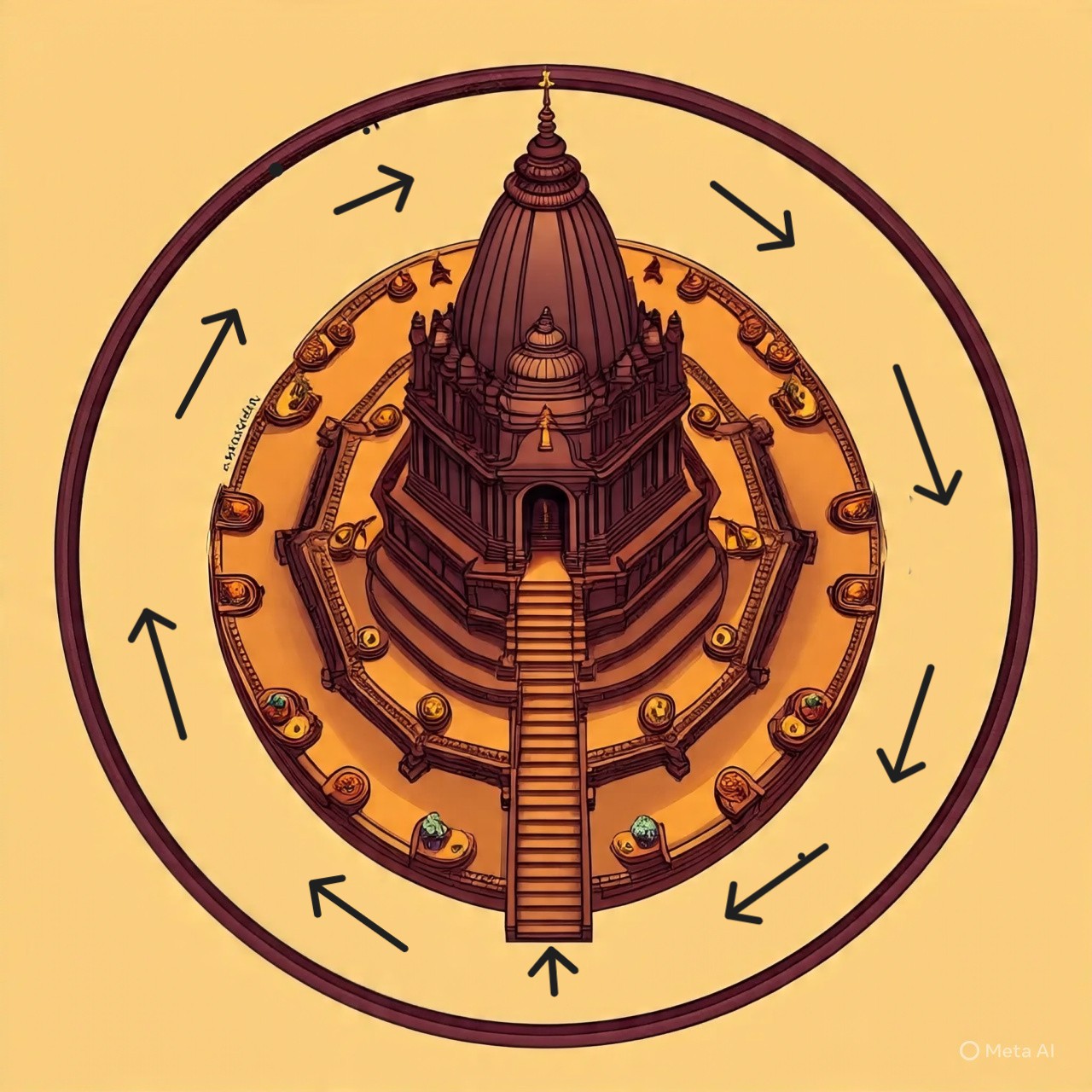
When devotees visit a Hindu temple, one practice they almost always follow is pradakshina, the act of walking around the temple sanctum in a circular path. After offering prayers before the murti, many devotees quietly begin walking around the Garbhagriha with folded hands and a calm mind. If you observe closely, you will notice that this movement is always done clockwise. Devotees start from one side of the sanctum, move around it in a circular path, and return to the front again. This direction is not accidental. It is a practice deeply rooted in Sanatana Dharma, temple tradition, and subtle understanding of spiritual energy.
The word Pradakshina itself reveals its meaning. It comes from the Sanskrit words Pra meaning forward or sacred movement and Dakshina meaning right side. Together, the term suggests moving in such a way that the deity always remains on the devotee’s right side. In Vedic culture, the right side is considered auspicious and associated with respect, honor, and spiritual alignment. By keeping Bhagwan on the right side while walking, the devotee symbolically places the divine presence in the most respected position. This simple movement becomes an expression of humility, reverence, and devotion. Ancient temple architecture also supports this practice. Hindu temples were carefully designed according to Vastu Shastra and Agama Shastra, which describe how sacred spaces should be constructed to support spiritual practices. At the center of every traditional temple lies the Garbhagriha, the innermost sanctum where the murti of Bhagwan is installed after the ritual of Prana Pratistha. This chamber is considered the spiritual nucleus of the temple. According to traditional belief, divine energy radiates outward from this central point. When devotees perform pradakshina around the sanctum, they move through this sacred energy field.
Walking clockwise keeps the body naturally aligned with the direction of this spiritual flow. Instead of moving against the symbolic energy of the temple, the devotee moves in harmony with it. This creates a sense of balance between the individual and the sacred space. The circular movement itself reflects one of the most fundamental patterns found throughout nature. The Earth rotates on its axis, planets revolve around the Sun, and galaxies spin slowly through the universe. Ancient sages observed these cosmic movements and understood that circular motion represents harmony with universal order.
Pradakshina symbolically mirrors this cosmic rhythm. Just as planets revolve around the Sun, devotees revolve around the divine presence inside the temple. The deity becomes the spiritual center, and the devotee’s movement expresses the understanding that life itself revolves around the divine source. This idea carries deep philosophical meaning. It reminds the devotee that all actions, thoughts, and experiences ultimately find their center in Bhagwan. Another interesting perspective comes from the concept of the human energy field, sometimes described as the aura. Yogic traditions explain that the human body contains subtle energy channels known as nadis, through which life energy flows continuously. When a devotee walks slowly and mindfully around the sanctum, the rhythmic movement of the body helps stabilize breathing and calm the mind. This calm circular motion gradually brings the devotee into a more meditative state.
At the same time, the temple environment plays an important role. The sound of bells, the chanting of Vedic mantras, the fragrance of incense, and the glow of oil lamps create a powerful spiritual atmosphere. These elements influence the senses and help quiet the mind. When devotees walk through this sacred environment during pradakshina, the temple’s spiritual vibrations interact with their own energy field. The clockwise movement is believed to maintain harmony between the temple’s energy and the devotee’s internal balance.
The practice of pradakshina also encourages mindfulness and reflection. Devotees usually walk slowly rather than rushing. Some silently chant the name of Bhagwan while walking. Others close their eyes for a moment, offering gratitude or seeking guidance. The repeated circular movement gradually reduces mental distractions and brings attention inward. In this way, pradakshina becomes a form of moving meditation, where the body moves gently while the mind remains focused on devotion.
Another symbolic meaning of pradakshina is humility. By circling the deity, the devotee acknowledges that Bhagwan is the center of existence. The devotee moves around the divine presence with respect and surrender, accepting that life’s journey is guided by a higher power. This idea is reflected in many traditional prayers where devotees express the wish to keep Bhagwan at the center of their thoughts and actions. Pradakshina becomes a physical expression of this spiritual understanding. One of the most beautiful aspects of this practice is its simplicity. Pradakshina does not require complex rituals or special preparation. Anyone can perform it with sincerity. A child visiting a temple for the first time can quietly walk around the sanctum. An elderly devotee may complete a slow pradakshina with folded hands and deep devotion. The practice remains accessible to everyone, regardless of age, knowledge, or background. This reflects the inclusive nature of Sanatana Dharma, where even simple acts of devotion hold deep spiritual value.
For centuries, countless devotees have walked the pradakshina paths of temples across Bharat and beyond. With every step taken around the sanctum, they have offered prayers, gratitude, and devotion. When a devotee performs pradakshina today, they continue this timeless tradition. The circular walk becomes more than a ritual—it becomes a reminder that just as the universe revolves around its cosmic center, human life too finds its meaning in staying connected with the divine presence of Bhagwan.