







Why Is Mehendi Applied on Hands and Feet Before Marriage? The Hidden Ayurvedic Science of Mehendi
By: Pratima Argade
12 March 2026 at 3:02 AM
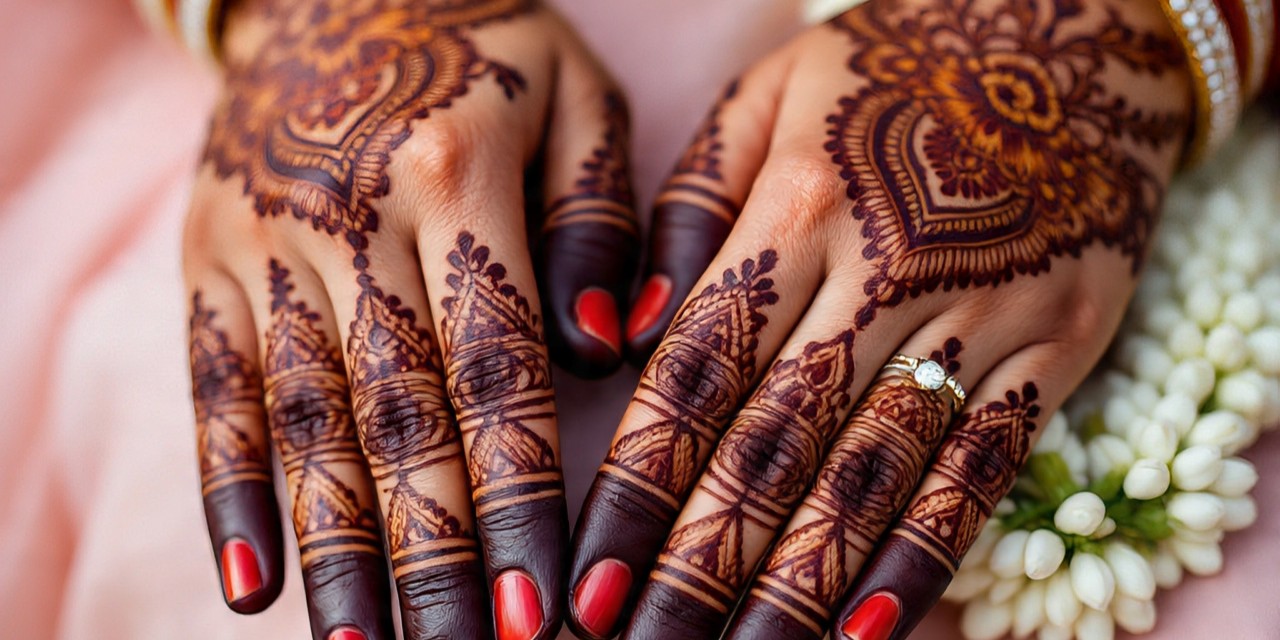
Two days before a traditional Hindu wedding, there is a moment when the atmosphere becomes filled with music, laughter, and the sweet fragrance of fresh henna leaves. The bride sits surrounded by her friends and family while a Mehendi artist carefully draws intricate patterns on her hands and feet. The designs slowly grow into beautiful shapes filled with flowers, paisleys, and sacred symbols. This celebration, known as the Mehendi ceremony, is one of the most joyful and colorful parts of Indian wedding traditions. For many people today it appears mainly as a decorative ritual, yet this tradition carries a deeper meaning connected to Ayurveda, body science, and emotional wellbeing that has been understood in Indian culture for centuries.
Henna, which is used to create Mehendi designs, comes from the leaves of the Lawsonia inermis plant, a natural herb that has been used across Bharat for thousands of years. In ancient Ayurvedic practices, henna was valued not only for its beauty but also for its cooling and healing properties. The days before a wedding can be physically tiring and emotionally overwhelming for the bride. With numerous ceremonies, guests, and preparations happening all around, it is natural for stress and excitement to build up. Applying Mehendi helps calm the body and mind because henna naturally cools the skin and reduces internal heat, which Ayurveda describes as balancing excess pitta energy in the body. One fascinating reason Mehendi is applied specifically on the hands and feet lies in the way the human body is designed. These areas contain a high concentration of nerve endings and energy points that are connected to different organs and emotional responses. When the cool henna paste is applied to these sensitive areas, it creates a soothing effect that travels through the nervous system. This gentle cooling sensation can help relax the bride and reduce anxiety before the wedding day. Our ancestors may not have described this process in modern scientific terms, but their understanding of the body’s energy points was remarkably accurate.
The cooling property of henna also helps regulate body temperature during long wedding ceremonies. Traditional weddings in India often last many hours and involve heavy clothing, jewelry, bright lights, and large gatherings. All these factors can create physical fatigue. By applying Mehendi beforehand, the bride’s body remains naturally cooler and calmer during the celebrations. Even today, people living in warm climates use henna on their palms and feet during hot seasons because it helps provide relief from heat and keeps the body comfortable. Another interesting benefit of Mehendi is its mild medicinal quality. Henna has natural antibacterial and antifungal properties that help protect the skin from infections or irritation. Weddings involve constant contact with people, fabrics, and ornaments, which can sometimes cause small cuts or skin sensitivity. The application of henna acts as a natural protective layer, helping the skin remain healthy and free from irritation. In earlier times when modern skincare products did not exist, this simple herbal paste served as a gentle and effective form of skin care.
The beauty of Mehendi also carries deep cultural symbolism. In many Indian traditions, the dark color of the Mehendi stain is believed to represent the strength of love and affection between the couple. Family members often playfully say that the darker the Mehendi becomes, the deeper the love between the bride and groom will be. While this belief is symbolic rather than scientific, it adds a joyful emotional element to the ceremony. The excitement of waiting for the Mehendi to darken becomes a shared experience filled with laughter and playful teasing among family members. Beyond symbolism, the intricate Mehendi patterns themselves have cultural significance. Many traditional designs include sacred motifs such as lotus flowers, peacocks, mango shapes, and sometimes even hidden initials of the groom within the patterns. These designs are not chosen randomly. The lotus symbolizes purity and new beginnings, the peacock represents beauty and grace, and the mango shape is associated with fertility and prosperity. By decorating the bride’s hands and feet with such symbols, the ceremony silently expresses wishes for happiness, abundance, and harmony in her married life.
The Mehendi ceremony also plays an important social role in bringing people together. Unlike some formal rituals that are conducted mainly by priests, this celebration is lively and interactive. Friends, cousins, and relatives gather around the bride, singing traditional songs and sharing stories. The atmosphere becomes relaxed and joyful, giving everyone a chance to bond before the grand wedding day. In psychological terms, such shared rituals strengthen emotional connections and create positive memories that families cherish for years.
There is also a spiritual dimension hidden within this tradition. In many cultures, decorating the body before important life events is believed to attract positive energy and ward off negativity. Mehendi, being a natural and sacred plant, is considered purifying. Applying it before marriage symbolizes preparing the bride for a new phase of life with purity, grace, and auspicious energy. The beautiful patterns on her hands and feet become a visual reminder that she is stepping into a sacred journey of companionship and responsibility.
Interestingly, the benefits of henna are now being studied and appreciated even in modern wellness practices. Researchers recognize that henna contains compounds with anti-inflammatory and cooling properties. Natural henna is also widely used today in herbal cosmetics and hair treatments around the world. What modern science is gradually discovering has long been part of traditional Indian life. The Mehendi ceremony is therefore not just a decorative celebration but a reflection of ancient herbal knowledge woven into cultural rituals. When we observe the Mehendi ceremony today, with its vibrant music, laughter, and stunning patterns, it is easy to think of it only as a festive tradition. Yet behind the beauty lies a thoughtful combination of Ayurvedic healing, emotional relaxation, cultural symbolism, and family bonding. The ritual prepares the bride physically, calms her mind, and surrounds her with love and blessings before the important transition of marriage.
Even in modern weddings that blend contemporary style with tradition, Mehendi continues to hold its special place. The delicate patterns fading slowly over the days after the wedding become a gentle reminder of the joyful celebrations and the beginning of a new life chapter. In those intricate lines of henna lies a beautiful message passed down through generations—that marriage is not only about ceremony and celebration, but also about balance, harmony, and the loving support of family and community.