Why Is Kundali Matching Done Before Marriage? The Science Behind 36 Gunas
By: Pratima Argade
17 March 2026 at 1:28 AM
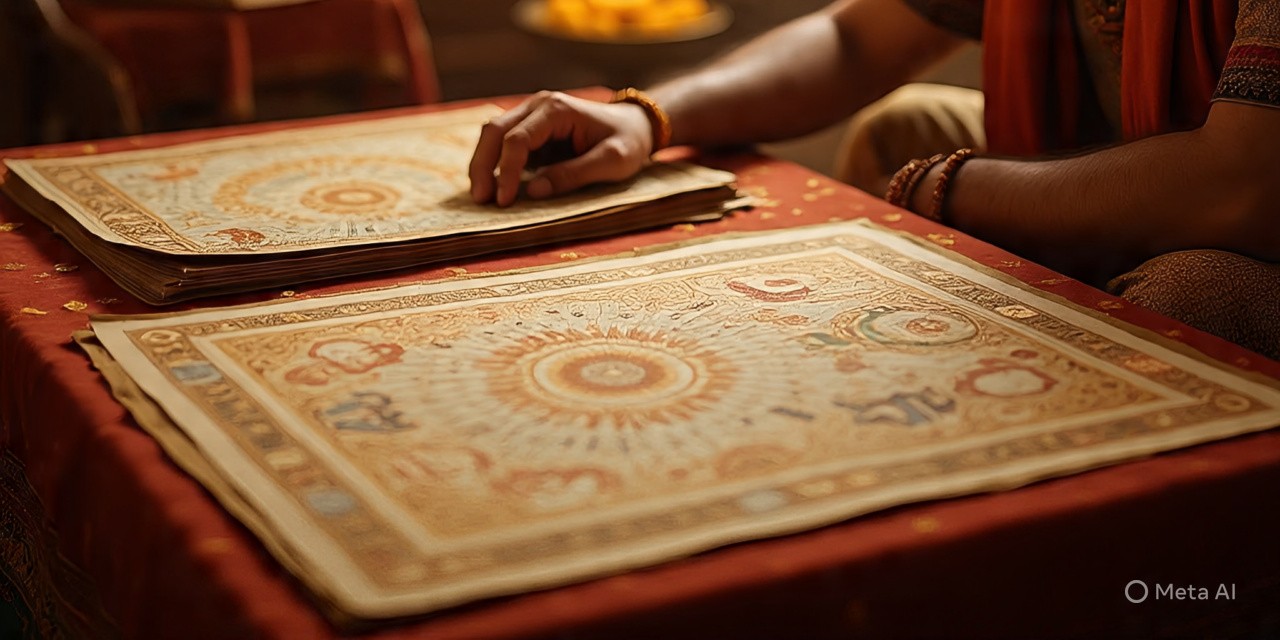
In many Indian families, before wedding discussions move forward, there is a quiet but important step that takes place behind the scenes. Two birth charts are placed side by side, an astrologer studies planetary positions, and a simple question is asked - do the kundalis match? For some, this may seem like an old tradition followed out of habit, while for others it holds deep importance. The practice of Kundali matching, especially through the system of 36 Gunas, has been a part of Hindu marriages for centuries. But beyond belief and tradition, there is a deeper layer of logic, observation, and human understanding that makes this system far more meaningful than it first appears.
In Vedic astrology, a kundali is not just a chart of planets; it is seen as a map of a person’s tendencies, strengths, emotions, and life patterns. It is created based on the exact time, date, and place of birth, which determines the position of grahas at that moment. Ancient rishis believed that these cosmic positions influence human behavior and experiences in subtle ways. When two people are about to spend their lives together, understanding how their personalities and life paths align becomes important. Kundali matching was designed as a tool to study this compatibility in a structured and thoughtful way. The system of 36 Gunas, also known as Ashta Koota Milan, breaks compatibility into eight different aspects of life. Each aspect represents a certain dimension of the relationship, such as emotional connection, mental compatibility, health, family values, and spiritual alignment. Instead of looking at marriage as only a romantic bond, this system recognizes that a successful partnership depends on balance across many areas. The total score out of 36 gives an indication of how naturally the couple may align in their journey together.
One of the most interesting aspects of this system is how closely it relates to modern ideas of compatibility. Today, relationship experts talk about the importance of shared values, emotional understanding, communication styles, and long-term goals. The 36 Gunas system, in its own traditional way, attempts to measure these very factors. For example, certain gunas evaluate mental compatibility, while others look at temperament and behavior patterns. Without using modern psychological terms, our ancestors created a framework that addresses many of the same concerns.
Another important factor considered in kundali matching is the Moon sign and Nakshatra, which are believed to influence a person’s emotional nature. In modern terms, this can be compared to understanding someone’s emotional personality and how they respond to situations. A strong emotional mismatch can lead to misunderstandings and conflict, while a good match can create harmony and mutual support. By analyzing Nakshatras, the system attempts to predict how two individuals may connect on an emotional level. Health and well-being are also part of the matching process, which shows how practical this system is. Certain combinations in a kundali may indicate challenges related to health or lifestyle. When two charts are compared, astrologers look for signs that could affect the couple’s future together. While this may sound abstract, even today people consider factors like lifestyle habits, stress levels, and long-term health when choosing a partner. In this way, kundali matching reflects a holistic approach that goes beyond surface-level attraction.
The concept of Guna Milan also includes the idea of balancing energies. Each individual carries certain strengths and weaknesses, and the goal is not to find a perfect person but to find a compatible partner. A higher score suggests that the natural tendencies of both individuals support each other, while a lower score may indicate areas where extra understanding and effort are required. This approach is quite realistic because no relationship is without challenges, but awareness of those challenges can help couples navigate them better.
There are also elements within kundali matching that deal with doshas, such as Mangala Dosha, which are believed to affect marital harmony. While these concepts are often seen as fear-based in modern discussions, their original purpose was to highlight potential areas of conflict or imbalance. In many cases, remedies and rituals were suggested to reduce these effects, showing that the system was not rigid but adaptable. It aimed to guide people rather than restrict them.
Another fascinating dimension is the role of timing in relationships. Vedic astrology places great importance on the concept of kaal, or time. Even a compatible match may face difficulties if life events are not aligned properly. Kundali matching sometimes includes looking at future planetary periods to understand how the relationship may evolve over time. This reflects an awareness that compatibility is not just about who two people are today, but also about how their lives may unfold together. In today’s world, where people often meet through modern platforms and make decisions based on personal preferences, the idea of kundali matching may feel optional. Many couples choose to rely on communication and mutual understanding instead of astrology. However, even in such cases, the principles behind the 36 Gunas can still offer valuable insights. They encourage people to think beyond attraction and consider deeper aspects like emotional compatibility, shared values, and long-term stability.
It is also important to understand that kundali matching was never meant to replace human judgment. Our ancestors valued wisdom and guidance, but they also believed in free will and conscious decision-making. A good match on paper does not guarantee a successful marriage, just as a lower score does not mean failure. What truly matters is how two individuals choose to understand, respect, and support each other over time. When seen in this light, the practice of Kundali matching becomes less about superstition and more about structured thinking. It is a system that tries to answer an important question: how well can two people build a life together? By looking at different aspects of personality, emotion, and life patterns, it provides a broader perspective that can complement personal choices.
As marriages continue to evolve in modern society, the relevance of ancient practices like the 36 Gunas may also change. Yet the core idea remains timeless—the desire to create a strong, balanced, and harmonious partnership. Whether one follows kundali matching strictly or simply appreciates its insights, it stands as a reminder that marriage is not just about two individuals coming together, but about understanding how their lives, energies, and journeys can align. In the end, the science behind the 36 Gunas is not just about numbers or charts, but about understanding human relationships in a deeper way. It reflects a thoughtful attempt by ancient scholars to bring awareness, balance, and foresight into one of life’s most important decisions. And even today, in a world that is constantly changing, that intention still holds meaning. ✨