What Is Dhanvantari Homam? Meaning, Traditional Benefits and How It Is Performed
By: Pratima Argade
9 October 2026 at 3:16 AM
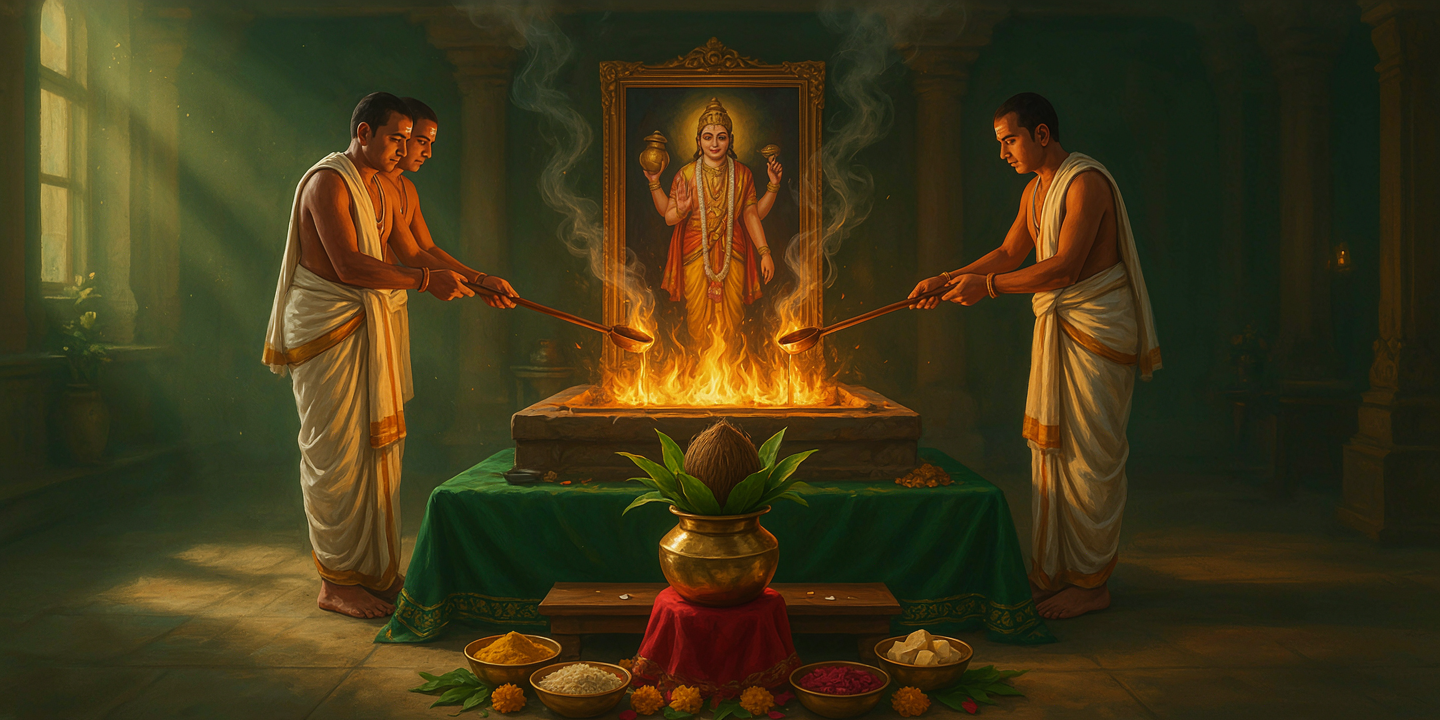
Dhanvantari Homam is a Vedic fire ritual dedicated to Bhagwan Dhanvantari, the divine physician and the Bhagwan of Ayurveda. Priests chant his mantras and offer ghee and sacred herbs into the sacred fire with the Sankalpa of the devotee. It is traditionally performed to seek blessings for health, recovery and peace of mind.
Fire has a special place in Indian tradition. Before the big moments of life, such as a wedding, a new home or the birth of a child, families sit around a sacred fire and pray. The same idea stands behind the Dhanvantari Homam. It is a ritual in which a family asks for the blessings of Bhagwan Dhanvantari for the health and wellbeing of a loved one, or of the whole household.
In this post, we will explain what the Dhanvantari Homam is, why it is performed, what happens during the ritual, which mantras and herbs are used, and how to see it in a balanced way along with medical care.
What Is Dhanvantari Homam?
A Homam, also called Homa or Havan, is a Vedic ritual in which offerings are made into a consecrated fire while mantras are chanted. In the Dhanvantari Homam, the main deity is Bhagwan Dhanvantari, who appeared from the Kshira Sagara with the Amrit Kalash during the Samudra Manthan. If you wish to know his full story, you can read our post on who Bhagwan Dhanvantari is.
The ritual is performed for the health and wellbeing of a person or a family. The priests take a Sankalpa, a spoken resolve that states the name of the devotee, the family lineage (gotra), the birth star (nakshatra) and the wish for which the Homam is done. Every offering that goes into the fire after this is made with that intention.
In simple words, the Dhanvantari Homam is a way of praying to Bhagwan Dhanvantari with the full Vedic method, through the sacred fire, the mantras and the sacred offerings.
Why Is Fire Used in a Homam?
The very first hymn of the Rigveda begins with a prayer to Agni, who is called the priest of the yajna and the one who carries the offerings to the Devas. Because of this, Agni is also known as Havyavahana, the carrier of offerings. In the Vedic view, the sacred fire is a bridge between human beings and the Devas.
The Bhagavad Gita also speaks of yajna as a way of living in harmony with the world. The idea is that when we give with a thankful heart, we receive in return. A Homam is the ritual form of this idea. The devotee gives ghee, herbs and grains into the fire and offers the prayer along with them.
Many families also feel a calm and clean atmosphere around a homa fire. The sound of the mantras, the smell of ghee and herbs, and the quiet sitting together all help the mind become still. This is one reason why Homams remain a part of Indian life even today.
Why Do Devotees Perform Dhanvantari Homam?
Devotees perform the Dhanvantari Homam in many life situations. In each case, the wish is to seek the blessings of Bhagwan Dhanvantari and to find strength and peace of mind. These are some of the most common reasons.
Many families perform it when a loved one is going through a long period of health worry. Some do it before or after a surgery, to pray for a smooth recovery period along with the care of the doctors. Parents often perform it for children who fall sick again and again, and children often perform it for the health and strength of their elderly parents.
Others do it as a thanksgiving after a difficult time has passed, or at the start of a new year of life, such as a birthday. Some perform it when the horoscope shows a hard planetary period, and a Jyotish teacher has suggested a Dhanvantari Homam as a supportive ritual. NRI families also book it often, so that their parents in India can receive the blessings of the Homam while they are far away.
What Are the Traditional Benefits of Dhanvantari Homam?
The benefits of a Homam are a matter of faith and tradition. They are not medical claims, and we should not read them as promises of a cure. With this understanding, these are the benefits that devotees and traditional teachers speak about.
The first is peace of mind. When a family sits together for a prayer, the heart feels lighter and the fear becomes smaller. The second is a feeling of support. Devotees feel that they are not alone, and that the blessings of Bhagwan Dhanvantari are with them in a hard time.
The third is a positive atmosphere at home. Many people feel that the chanting and the sacred fire bring a calm, clean and hopeful feeling to the house. The fourth is thankfulness. The Homam gives the family a moment to thank Bhagwan for the health they have, and to pray for the wellbeing of those who need it. Traditional texts also say that Dhanvantari is remembered for vitality and long life, and devotees perform the Homam to seek blessings for the same.
What Happens During a Dhanvantari Homam?
The exact method can vary a little between traditions and temples, but most Dhanvantari Homams follow a similar flow.
- Sankalpa. The priest states the name, gotra and nakshatra of the devotee, along with the purpose of the Homam.
- Ganapati Puja. Every Vedic ritual starts with a prayer to Bhagwan Ganesha, so that the work goes ahead without obstacles.
- Kalasha Sthapana. A kalash filled with water, mango leaves and a coconut is placed and worshipped. It stands for the Amrit Kalash of Bhagwan Dhanvantari.
- Avahana and Puja. Bhagwan Dhanvantari is invited with mantras and worshipped with flowers, Tulasi leaves, incense, a lamp and naivedya.
- Agni Pratishtha. The sacred fire is lit in the homa kunda and welcomed with mantras.
- Mantra Japa and Ahuti. The main part of the Homam. The priests chant the Dhanvantari mantras and, after each mantra, offer ghee and sacred samagri into the fire with the word Swaha.
- Purnahuti. The final offering, usually made with a coconut or a full ladle of ghee, which marks the completion of the Homam.
- Aarti and Prasadam. The Homam closes with the aarti, a prayer for the wellbeing of all, and the giving of prasadam and blessings to the family.
The whole ritual may take one to a few hours, depending on the number of chants and the type of Homam chosen.
Which Mantras Are Chanted in Dhanvantari Homam?
The main mantra of the Homam is the Dhanvantari mantra:
Om Namo Bhagavate Vasudevaya Dhanvantaraye Amrita Kalasha Hastaya Sarva Amaya Vinashaya Trailokya Nathaya Dhanvantari Maha Vishnave Namah
This mantra calls upon Bhagwan Dhanvantari, the holder of the Amrit Kalash, who is remembered as the remover of all sickness across the three worlds. The priests chant it many times, and the number of chants is often chosen according to the type of Homam.
Another well known mantra is the Dhanvantari Gayatri:
Om Tat Purushaya Vidmahe, Amrita Kalasha Hastaya Dhimahi, Tanno Dhanvantari Prachodayat
Along with these, priests may also chant the Dhanvantari Stotram, the Purusha Sukta and prayers to Bhagwan Vishnu. We will explain the meaning of these mantras in detail in our separate posts on the Dhanvantari mantra and the Dhanvantari Gayatri.
What Herbs and Samagri Are Used?
Samagri means the sacred materials offered into the fire. The most important one is pure cow ghee. Along with this, priests commonly use samidha, which are sticks of sacred woods such as Palasha, Ashvattha and Khadira. Rice, sesame seeds, barley and sugar are also common offerings.
In the Dhanvantari Homam, priests often include herbs that are linked to Ayurveda, such as Tulasi, Amalaki, Bilva, Guduchi and Durva grass. These herbs are offered into the fire as part of the ritual, with mantras. They are not meant to be eaten as medicine, and nobody should take them in place of treatment. The use of herbs is a way of honouring the link between Bhagwan Dhanvantari and the healing plants of Ayurveda.
Who Can Perform Dhanvantari Homam?
Anyone with faith and a sincere wish can take part in a Dhanvantari Homam. It can be done for oneself, for parents, for a spouse, for children or for the whole family. The person for whom the Homam is done is called the Sevakartha, and the Sankalpa is taken in their name. If the Sevakartha cannot be present, a family member may take part in their place.
You do not need to know the mantras to take part. The priests chant them, and the devotee sits with a calm mind and a clear prayer. If you are unwell yourself, it is also fine to follow the Homam quietly, in a way that is comfortable for you, or to join it online.
When Is a Good Time to Perform Dhanvantari Homam?
Bhagwan Dhanvantari is a form of Bhagwan Vishnu, so many families choose days that are dear to Bhagwan Vishnu, such as Ekadashi, or Thursdays. Trayodashi Tithi, which is linked to Dhanteras, is also seen as a special day for remembering Dhanvantari. Some families choose the day of their birth star, or the start of a new year of life.
Because every family has a different situation, a good priest will usually look at the Panchanga and suggest a suitable time. If a loved one is going through a hard period and there is no time to wait for an auspicious day, many teachers say that the sincere wish of the family is itself the most important part of the Homam.
Can Dhanvantari Homam Be Done Online?
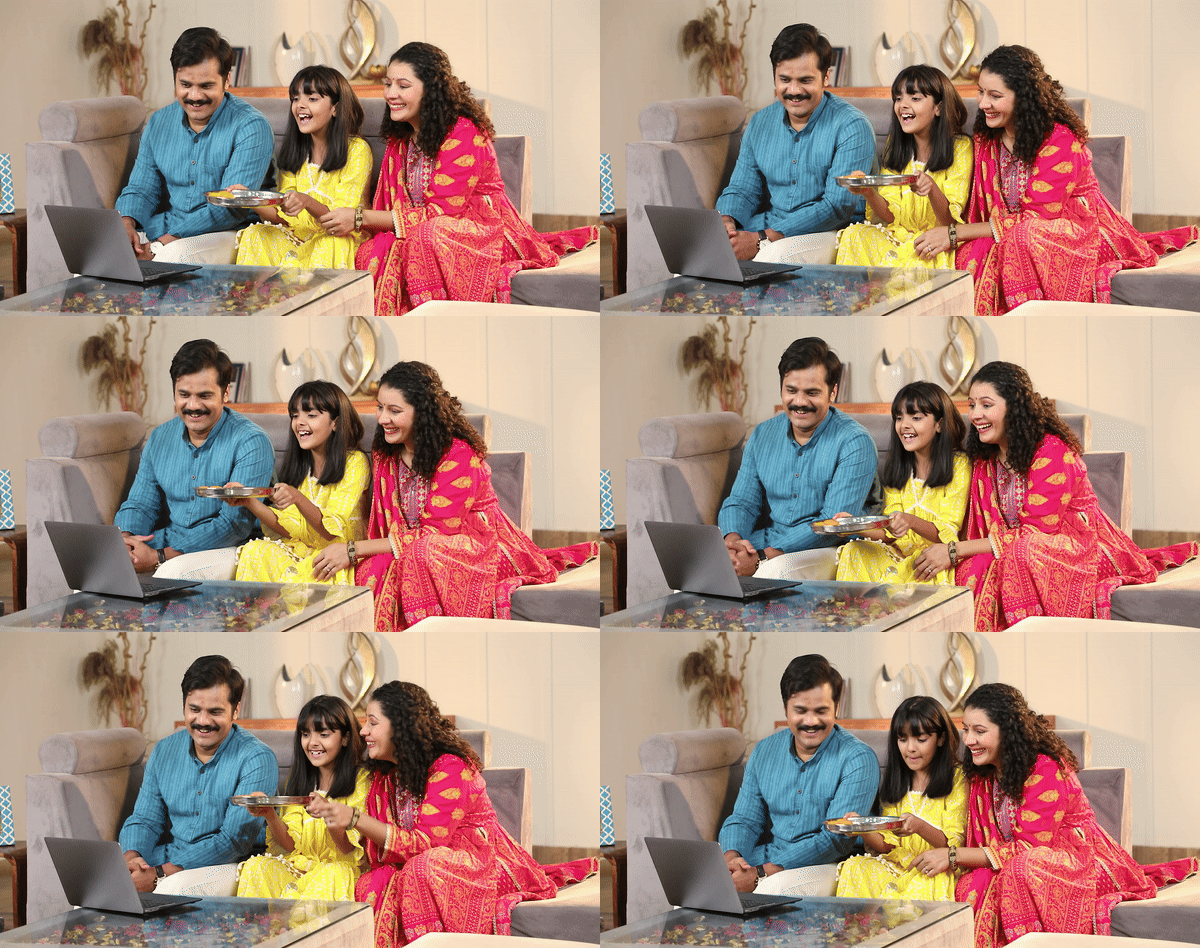
Yes, many families today book their Homams online. This is very helpful for NRI families who want their parents or elders in India to receive the blessings of the ritual. The devotee shares the name, gotra and nakshatra of the Sevakartha, and the priests take the Sankalpa in that name and perform the Homam at the temple or sacred place.
The devotee may then sit at home, light a lamp, and join the prayer with the same faith. Spiritual tradition teaches that the sincerity of the Sankalpa matters most, and it can travel through the heart, no matter where the family is. We will explain this process in detail in our post on how an online Homam works.
How Should We See Homam and Medical Care Together?
This is a very important point. The Dhanvantari Homam is spiritual support. It is not a replacement for medical advice, diagnosis or treatment. Ayurveda itself, which Bhagwan Dhanvantari gave to the world, teaches the importance of a good Vaidya, right food, right rest and right medicine.
The best way to see the Homam is as a companion to good care. The doctor treats the body, the family cares for the person, and the prayer gives strength and peace to the mind. When these three walk together, the family feels supported at every level. Please continue to follow your doctor’s guidance without any change because of a ritual.
Key Takeaways
- Dhanvantari Homam is a Vedic fire ritual dedicated to Bhagwan Dhanvantari, the divine physician.
- It begins with a Sankalpa made in the name of the Sevakartha, with gotra and nakshatra.
- The main parts are Ganapati Puja, Kalasha Sthapana, Agni Pratishtha, mantra chanting with Ahuti, Purnahuti and aarti.
- Common mantras are the Dhanvantari mantra and the Dhanvantari Gayatri.
- Ghee, samidha and herbs such as Tulasi and Amalaki are offered into the fire as part of the ritual.
- The Homam is traditionally performed to seek blessings for health, recovery and peace of mind, as a support alongside medical care.
Frequently Asked Questions
Q. What is Dhanvantari Homam?
Dhanvantari Homam is a Vedic fire ritual dedicated to Bhagwan Dhanvantari. Priests chant his mantras and make offerings of ghee and sacred herbs into the fire with the Sankalpa of the devotee, to seek blessings for health and wellbeing.
Q. Why is Dhanvantari Homam performed?
Devotees perform it to seek the blessings of Bhagwan Dhanvantari for the health of themselves or their loved ones, for peace of mind during hard times, and as thanksgiving after a difficult period.
Q. Can Dhanvantari Homam cure diseases?
No. The Homam is a spiritual practice and does not claim to cure any disease. It is performed to seek blessings and peace of mind, and it should always go along with proper medical care.
Q. Which mantra is chanted in Dhanvantari Homam?
The main mantra is “Om Namo Bhagavate Vasudevaya Dhanvantaraye Amrita Kalasha Hastaya Sarva Amaya Vinashaya Trailokya Nathaya Dhanvantari Maha Vishnave Namah”. The Dhanvantari Gayatri is also chanted.
Q. Can I perform Dhanvantari Homam for my parents?
Yes. The Homam can be performed for anyone, including parents, children and the whole family. The Sankalpa is taken in the name of the person for whom it is done, along with their gotra and nakshatra.
Q. Can Dhanvantari Homam be done online?
Yes. Many families book the Homam online, especially NRI families who wish to seek blessings for their parents in India. The priests perform the ritual with the Sankalpa in the name of the Sevakartha.
Q. A Note on Health and Faith
The Dhanvantari Homam is a form of spiritual support. It is not a substitute for medical advice, diagnosis or treatment. Please continue to follow your doctor’s guidance and take care of your health along with your prayers.
Seek the Blessings of Bhagwan Dhanvantari
If you wish to pray for the health and wellbeing of your family, you can book the Dhanvantari Homam with Jyotirgamaya from anywhere in the world. Visit the Dhanvantari Homam page