What are vedic rituals?
By: Rajesh Ashtaputre
18 February 2026 at 12:54 PM
Hinduism is full of religious rituals which are being followed in India since time immemorial and they continue from the birth of a person till his death. All these rituals being of religious importance play a different role in the life of a person. All these religious ceremonies are celebrated with pomp and grand feast according to Vedic rituals. Various religious rituals celebrated in India like Chhathi Ceremony, Annaprashana, Mundan, Shraddha etc. are performed under Vedic ritual through Havan, Yagna, Shiva Abhishek, Godaan etc.
Vedic rituals have special importance in our Sanatan Dharma. Therefore, various types of Vedic rituals are conducted throughout our life from birth to death. In the Vedic period, various principles of nature were worshipped as gods. Among these gods, Sun, Fire, Wind, Rain, Earth, Water etc. were prominent. Various Vaishvins of nature were worshipped as gods. For example, Sun was worshipped as Sun God, Fire as Agni Dev, Wind as Vayu Dev, Rain as Varun Dev, Earth as Prithvi Dev and Water as Vasu Dev. Reverence and respect for nature was depicted.
In Vedic religion, nature was considered the basis of life. Cow was worshipped as mother. In auspicious works, gaudaan, shivabhishek and yagya programs were performed in Vedic manner. Therefore, it was considered necessary to depict reverence and respect towards nature. Stress was laid on conservation of nature. The importance of preserving nature has been explained in Vedic religion. Only by preserving nature can a perspective of human life be formed. Due to the worship of nature in Vedic religion, a rich and diverse culture developed in India. The worship of nature developed a feeling of love and respect for nature in Indians.
Significance of Vedic rituals
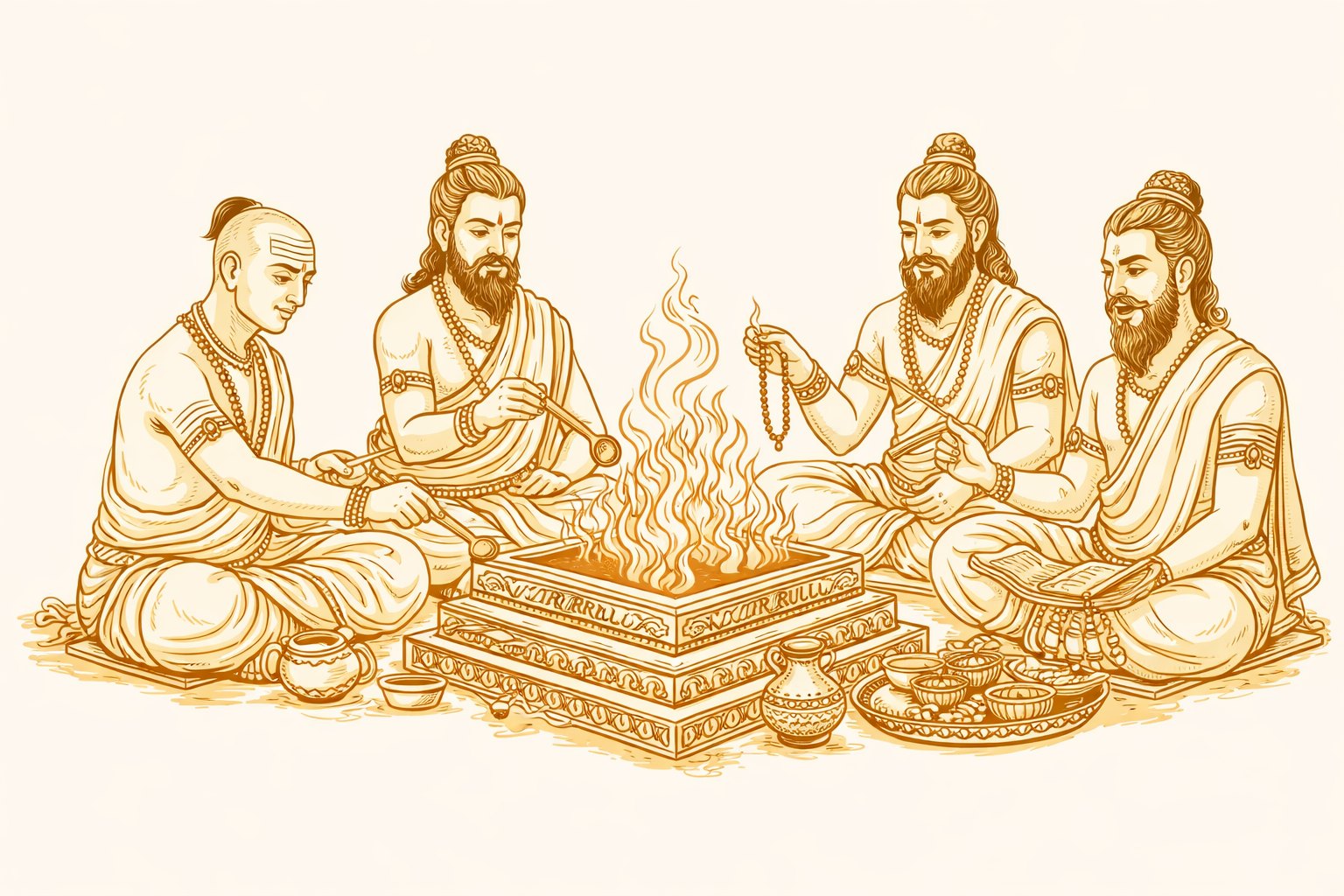
In our Vedic rituals, sacrifice, penance and charity have a special place. In the Vedic era, ritual means the performance of various rites of sacrifice. In these Vedic Rituals, various types of Vedic sacrifices were performed for the worship of various gods. Milk, ghee, food and Soma were offered as sacrifices by lighting fire in the yagya kund.
It was believed that the offerings made in the fire reach the gods and the fire acts as a vehicle for these offerings. At various places in the Vedas, there is mention of offerings in the form of ghee, food and soma in the yagnas. In the Vedic scriptures. For example, if we talk about Vedic Rituals, then Yagya is a very important activity for Hindu religious people. It provides them an opportunity to honor the gods, thank them for everything and ask for forgiveness for any sins they have committed throughout their lives. This is a special religious process through which man can attain not only material happiness but also spiritual wealth. Yagya is the lifeblood of Indian culture and the essence of Vedic religion. 'Yagya' according to Bhagavad Gita: According to Bhagavad Gita, any work done for the sake of God is called Yagya.
Why to do Vedic rituals
In the modern scientific age, the number of people who ridicule Vedic rituals like yajna and havan as superstitions is increasing day by day. Actually, such people do not have even the slightest knowledge of the scientific nature of rituals like yajna and havan. If such people had knowledge, they would not have made a hue and cry about their ignorance in the context of these rituals. In the last few years, Western scientists have done many experiments to test the rituals of yajna and havan on the touchstone of science. The results of these scientific experiments have clearly revealed how scientific the knowledge that Indian sages and saints had revealed thousands of years ago was. For example, the research done by French scientist Trille in the context of yajna and havan rituals is eye-opening. According to Trille, the wood that is burnt in yajna and havan produces a gas called formic aldehyde. According to Trile, this gas is fully capable of keeping the atmosphere-environment clean by destroying bacteria.
Apart from India, fire is considered sacred in countries like China, Japan, Germany and Greece. In these countries, there is a practice of burning different types of incense. In fact, the form of any object that is burnt in fire becomes more and more subtle. Modern nuclear scientists have now completely assimilated the fact that subtle is much more powerful than gross. When any substance is burnt in fire, its form undergoes a qualitative change to a great extent. For example, if a person consumes any poison in its gross form, he will die soon. On the other hand, Ayurveda says that if the same poison is made subtle through Agni Sanskar and consumed in proper and appropriate quantity, then the same poison in its new form will make the person healthy and strong by making him disease-free.
Join and support the new Vedic India. In today's complex and misguided times, we must look within our ancient practices that have sustained our cultural dominance over the entire globe.