


Vedic Practices for Peace of Mind During Stress, Worry and Sleepless Nights
By: Pratima Argade
24 October 2026 at 2:21 AM
To find peace of mind during stress and sleepless nights, Vedic tradition suggests a calm evening routine, gentle breathing, mantra chanting, regular meals and sleep times, and time for gratitude and prayer. Simple mantras such as the Shantakaram verse and “Om Namo Narayanaya” can be said softly at bedtime. If sleep problems or worry last for weeks, please speak to a doctor, as prayer works alongside medical care.
It is late at night, the house is quiet, and your mind is not. The meeting from tomorrow, the bill that is due, a conversation from the afternoon, a worry about someone you love, all of it comes back in a loop. You turn from one side to the other, look at the clock, and feel more tired with every hour. This is one of the most common struggles of modern life, and it affects people of every age in India.
In this post, we will look at what the Vedic and Ayurvedic traditions say about the restless mind, and share a simple evening routine, gentle breathing and sound practices, bedtime mantras and a few ideas for the day. We will also speak honestly about when to see a doctor. If you wish to know more about Bhagwan Dhanvantari, you can read our post on who Bhagwan Dhanvantari is.
Why Does the Mind Race at Night?
During the day, we are busy, and the mind is occupied with tasks, people and noise. When the lights go off and the body slows down, all the thoughts that we pushed aside come forward. Stress, a late meal, too much tea or coffee, long hours on the phone or a lack of daylight and movement can all make this worse.
For many people, the mind is also tired from carrying worries without any pause. It is not a sign of weakness. It is a sign that the mind needs rest, rhythm and gentle care. The Vedic tradition has thought deeply about this, and it offers a number of simple ideas.
What Does Vedic Wisdom Say About the Restless Mind?
The Bhagavad Gita speaks about the restless mind very honestly. In the sixth chapter, Arjuna tells Bhagwan Krishna that the mind is restless, strong and hard to hold, as hard as holding the wind. Bhagwan Krishna does not deny it. He says that it is indeed hard, but that it can be held through steady practice and a gentle letting go of attachment. This is a very comforting teaching. Even the greatest warrior found his mind restless, and the answer is patient practice, and not harsh self blame.
In the same chapter, the Gita also says that yoga becomes a remover of sorrow for the person who is balanced in food, recreation, effort and sleep. In other words, a regular and moderate way of life is itself a spiritual practice.
The Yoga Sutras of Patanjali say that yoga is the stilling of the movements of the mind. They also advise cultivating friendliness towards those who are happy, compassion for those who suffer, joy towards the good, and calm towards what we cannot change. This kind of attitude can quiet the mind in a gentle way.
Ayurveda adds its own insight. The Charaka Samhita names three supports of life, which are food, sleep and regulated living. Sleep, called nidra, is counted as one of these pillars, which shows how much the old Vaidyas valued it.
What Is a Simple Evening Routine for Calm?
A steady evening routine tells the body that the day is coming to an end. Here is a gentle routine that you can adapt to your own life.
- Eat early and light. Try to have your last meal a few hours before sleep, and keep it simple. Heavy, oily or very spicy food late at night can disturb rest. Please follow the diet advice of your doctor.
- Slow down the lights and screens. About an hour before bed, dim the lights and put away your phone, laptop and television. The bright light and endless news keep the mind switched on.
- Wash and refresh. A warm bath or a wash of the face, hands and feet can help the body let go of the day.
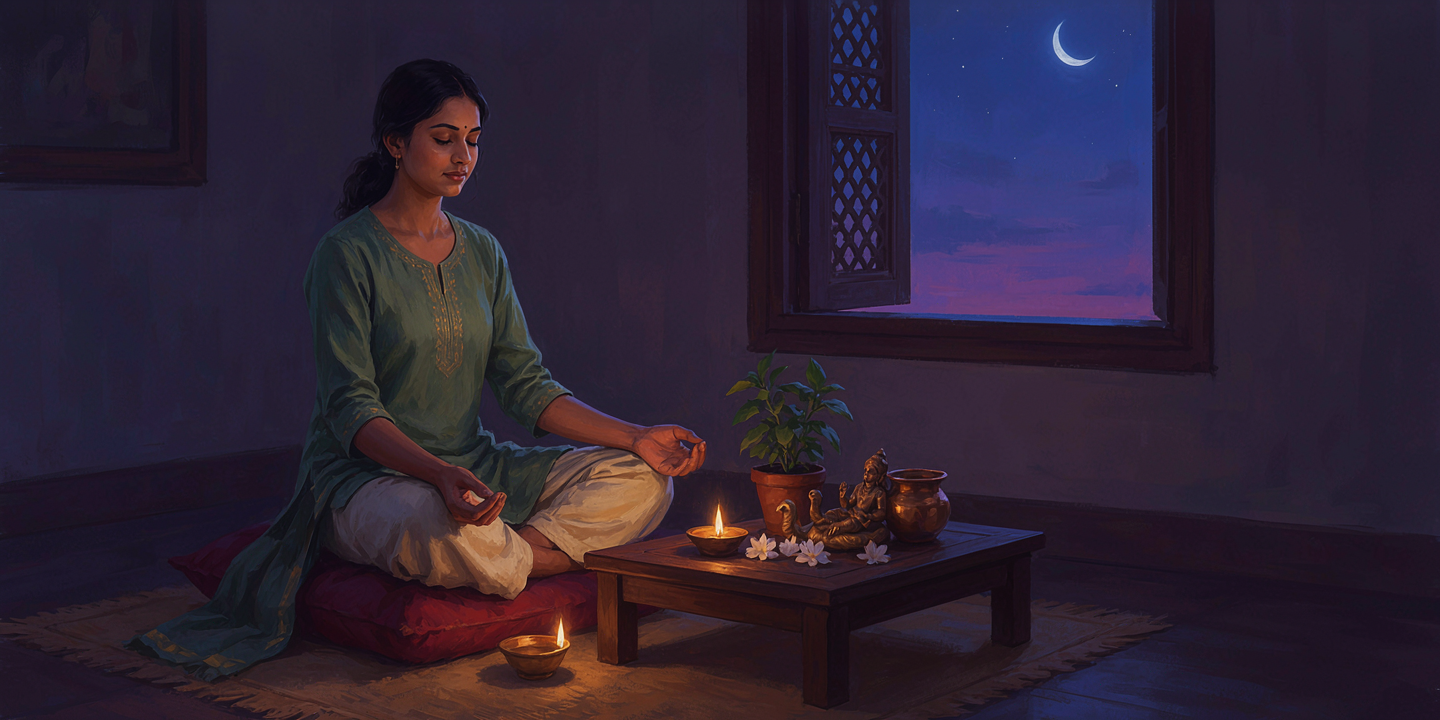
- Light a lamp. At dusk, light a small lamp before your family shrine. This simple act marks a quiet moment and is a lovely habit in Indian homes.
- Pray and give thanks. Sit for a few minutes, chant a mantra, and think of three things that went well today, however small.
- A gentle foot massage. Ayurveda traditionally speaks of Padabhyanga, a soft massage of the feet with a little warm oil before sleep. Please wipe the feet well afterwards so that you do not slip, and skip this if you have any skin or foot problem, unless your doctor agrees.
- Go to bed at a regular time. Keeping a steady sleep time and wake up time teaches the body when to rest.
Which Gentle Breathing and Sound Practices Can Help?
Breathing is the quickest bridge between the body and the mind. Slow and easy breathing tells the body that it is safe. These practices are gentle, and they should never feel forced.
Slow breathing. Sit or lie down comfortably. Breathe in through the nose for a count of four, and breathe out slowly for a count of six. Repeat for a few minutes. If counting makes you tense, simply make the out breath a little longer than the in breath.
Bhramari, the humming bee breath. Sit comfortably, breathe in, and as you breathe out make a soft humming sound like a bee. Feel the gentle vibration in your head and chest. Do a few rounds, and keep the sound soft.
Nadi Shodhana, alternate nostril breathing. Many people find this soothing. Please keep it very light, without holding the breath, and learn it from a trained teacher if you are new to it.
Chanting Om. Chant a long, soft Om three or five times, and rest in the silence after each one.
Please ask your doctor before starting any breathing practice if you have a heart, blood pressure or breathing concern, or if you are pregnant. If you feel dizzy or uncomfortable, stop and breathe normally.
Which Mantras and Prayers Can We Say at Bedtime?
A mantra gives the mind something gentle to hold on to, in place of the loop of worries. You can say these aloud in a soft voice, or in the mind as you lie down.
- The Shantakaram verse. “Shantakaram Bhujagashayanam Padmanabham Suresham, Vishvadharam Gaganasadrisham Meghavarnam Shubhangam, Lakshmikantam Kamalanayanam Yogibhirdhyanagamyam, Vande Vishnum Bhavabhayaharam Sarvalokaikanatham”. It is a prayer to Bhagwan Vishnu, who is peaceful, rests on the serpent Shesha, is vast like the sky, has the colour of a rain cloud, and is the remover of the fear of worldly life. The very first word, Shantakaram, means “the one whose form is peace”.
- Om Namo Narayanaya. The eight syllable mantra of Bhagwan Vishnu. Repeat it slowly, in rhythm with your breath.
- Om Namah Shivaya. The five syllable mantra of Bhagwan Shiva, loved by families across India.
- The Shanti prayer. “Om Sarve Bhavantu Sukhinah, Sarve Santu Niramayah, Sarve Bhadrani Pashyantu, Ma Kashchid Duhkha Bhag Bhavet, Om Shantih Shantih Shantih”. It means, “May all be happy, may all be free from illness, may all see what is good, may no one suffer. Om peace, peace, peace.”
- The short Dhanvantari mantra. “Om Shri Dhanvantaraye Namah”. A salutation to Bhagwan Dhanvantari, the divine physician. You can read more in our post on the Dhanvantari mantra.
- The Gayatri mantra. A prayer for a clear and bright mind.
If your thoughts wander while you chant, that is perfectly normal. Gently bring the mind back to the mantra without scolding yourself. This act of returning, again and again, is the practice itself.
Which Practices Can Help During the Day?
Peace at night often begins in the day. A few habits can make a real difference.
Get some morning sunlight and fresh air, even for ten minutes. Move your body in a way that suits you, such as a walk, simple stretches or gentle yoga. Eat meals at regular times, and drink enough water. Limit tea, coffee and other stimulants in the afternoon and evening. Take short breaks from screens and news, since constant bad news keeps the mind alert.
Write down your worries on paper, perhaps in the early evening, and next to each, write one small step you can take. This helps the mind to stop holding the worry all night. Spend time with people who calm you, join a satsang or a bhajan group, and do small acts of seva, such as helping a neighbour. Looking outside of ourselves is a quiet cure for a mind that is turned in on itself.
The Yoga Sutras also mention Ishvara Pranidhana, which is surrender to Bhagwan. At the end of the day, you may simply say, “I have done my best today. I place the rest in Your hands.” Many people find this a deep relief.
What Does Jyotish Say About the Mind and Stress?
In Vedic astrology, the Moon is the planet connected with the mind, emotions and sleep. Mercury is linked with thought and nerves. Jyotishis often suggest simple practices such as worship of Bhagwan Shiva on Mondays, or prayers connected with the Moon, when the mind feels disturbed. Some people also feel that long and heavy periods such as Shani’s transits can bring a feeling of pressure on the mind. You can read more in our posts on Sade Sati.
These are traditional views, and every horoscope is different. Jyotish is a guide for reflection and spiritual practice, and not a medical opinion. If you are worried about your sleep or mood, please see a doctor in addition to any spiritual practice.
What Should We Avoid?
A few common mistakes can make things worse. Avoid heavy meals, alcohol, caffeine and long hours on the phone close to bedtime. Avoid lying in bed for a long time while angry or anxious at not sleeping. If you cannot sleep after about twenty minutes, it can help to get up, sit quietly in dim light with a gentle prayer or a calm book, and return to bed when sleepy.
Please do not start any herb, powder or sleep remedy on your own, including popular Ayurvedic herbs. They can interact with medicines and may not suit everyone. Speak to your doctor or a qualified Vaidya. Please do not stop or change any medicine because of a mantra or a ritual. And do not blame yourself for a poor night. Worry about sleep itself can keep us awake, so be kind to yourself.
When Should You See a Doctor?
Everyone has a few bad nights. But please speak to a doctor if trouble sleeping lasts for several weeks, if you feel tired and low through the day, if you have constant worry or racing thoughts, if you have lost interest in things you used to enjoy, if you have panic attacks, or if your work and relationships are being affected.
If you ever have thoughts of harming yourself or of ending your life, please reach out for help right away. Speak to a trusted person, contact a doctor or a mental health professional, and in an emergency call your local emergency services. You do not have to carry this alone. Seeking help is an act of courage and care, and not a lack of faith.
Can a Homam Support Peace of Mind?
Some families choose to perform a Homam for peace of mind and wellbeing. The Dhanvantari Homam is a Vedic fire ritual that honours Bhagwan Dhanvantari, the divine physician. It is traditionally performed to seek blessings for health, strength and peace of mind. The priests take a Sankalpa in your name, chant the Dhanvantari mantras and offer ghee and sacred herbs into the fire.
The Homam can also be booked online, so you can join the prayer in your heart from anywhere. Please remember that a Homam is a form of spiritual support, and it does not replace medical care. You can read more on our Dhanvantari Homam page.
How Should We See Spiritual Practice and Medical Care Together?
The practices in this post are forms of spiritual and emotional support. They are not a replacement for medical advice, diagnosis or treatment. They do not promise any result, and they should never delay or replace the care of a doctor or a counsellor.
The best way to see them is as companions to good care. The doctor looks after the body and the mind, the family offers love and support, and the prayer gives comfort and calm to the heart. Please continue to follow your doctor’s guidance, and never stop or change a treatment because of a ritual.
Key Takeaways
- The Gita teaches that the restless mind can be held through patient practice, and that balance in food, rest and effort supports peace.
- A calm evening routine of an early light meal, dim lights, a lamp, prayer and a regular bedtime helps the mind settle.
- Gentle breathing, soft humming and Om chanting are simple tools, and should never be forced.
- Mantras such as the Shantakaram verse, “Om Namo Narayanaya” and the Shanti prayer give the mind a gentle anchor at night.
- Avoid late heavy meals, screens, caffeine and unsupervised herbs, and be kind to yourself on a poor night.
- See a doctor if sleep or worry problems last for weeks, and reach out for help at once if you have thoughts of self harm.
Frequently Asked Questions
Q. Which mantra helps with sleep and peace of mind?
Many people say the Shantakaram verse, “Om Namo Narayanaya”, “Om Namah Shivaya” or the Shanti prayer at bedtime. They give the mind something gentle to hold on to. Choose the one that feels close to your heart.
Q. What does the Gita say about a restless mind?
In the sixth chapter, Arjuna says the mind is restless and hard to hold, and Bhagwan Krishna agrees but says it can be held through steady practice and detachment. The Gita also teaches balance in food, rest, effort and sleep.
Q. Is pranayama safe for sleep and stress?
Gentle and easy breathing, such as slow breathing and Bhramari, is usually calming. Please keep it light and never force it, and ask your doctor first if you have a heart, blood pressure or breathing concern, or if you are pregnant.
Q. Can Ayurvedic herbs help me sleep?
Please speak to a doctor or a qualified Vaidya before starting any herb or powder. Some can interact with medicines or may not suit everyone.
Q. How long should I try these practices before seeing a doctor?
If trouble sleeping or constant worry lasts for several weeks, or affects your daily life, please see a doctor. If you have thoughts of harming yourself, reach out for help right away.
Q. Can a Homam help with stress and worry?
A Homam is a spiritual practice performed to seek blessings, strength and peace of mind. It does not claim to treat any condition, and it should always go along with proper medical care.
A Note on Health and Faith
The practices, mantras and the Dhanvantari Homam described here are forms of spiritual support. They are not a substitute for medical advice, diagnosis or treatment. Please continue to follow your doctor’s guidance and take care of your health along with your prayers.
Seek the Blessings of Bhagwan Dhanvantari
If you wish to pray for peace of mind and wellbeing with the full Vedic method, you can book the Dhanvantari Homam with Jyotirgamaya from anywhere in the world. Visit the Dhanvantari Homam page.