Vedic Ideas for Wellbeing and Strength: Ayurveda, Daily Routine and Prayer
By: Pratima Argade
28 October 2026 at 10:45 AM
For everyday wellbeing and strength, Vedic and Ayurvedic tradition suggests a steady daily routine, food that is fresh and moderate, enough sleep, gentle movement, time in morning light, a calm mind and a regular habit of prayer. Mantras such as the Dhanvantari mantra and the Aditya Hridayam can be part of this routine. These ideas support a healthy way of living, and they work alongside modern medical care.
Many people in India search for ways to keep their immunity strong, especially when the weather changes, when children bring home school infections, or when someone in the family has been unwell. It is a natural concern. At the same time, there is a lot of confusing advice, from powders and drinks to strict diets and social media tips. In this post, we would like to offer something simpler and calmer.
We will look at what the Ayurvedic and Vedic traditions say about strength and vitality, and share a gentle daily routine, ideas for living with the seasons, and the role of food, sleep, movement and the mind. We will also share prayers for wellbeing, and speak plainly about what no ritual or product can promise. If you wish to know more about Bhagwan Dhanvantari, you can read our post on who Bhagwan Dhanvantari is.
Why Do So Many People Look for Ways to Stay Strong?
Our days are fast, our meals are irregular and our sleep is short. Seasons change, children pick up infections, and the news is full of worry. When someone in the family falls sick, the rest of the family naturally wants to do something to stay well.
The first thing to say is that no routine, herb, mantra or ritual can promise that a person will never fall sick. The body is complex, and illnesses come for many reasons. What we can do is live in a way that supports our health, and ask for the support of Bhagwan for peace and strength. This is the spirit of this post.
What Do the Ancient Texts Say About Strength and Vitality?
Ayurveda is the ancient Indian science of life, and it has its own way of speaking about strength. The classical texts use words like bala, which means strength, and ojas, which is described as the fine essence of vitality in the body. Ayurveda also speaks of the body’s own power to stand against disease, using the word vyadhikshamatva. These are traditional concepts, and they are best read as a way of thinking about balance and care, and not as exact scientific measures.
The Charaka Samhita says that health is the best foundation for dharma, artha, kama and moksha. An old saying, “Sharira madhyam khalu dharma sadhanam”, means that the body is the first means for fulfilling our duties. Both ideas show how seriously the tradition took the care of the body.
Charaka also names three supports of life, which are food, sleep and regulated living. In simple words, a person who eats well, sleeps well and lives in a balanced way has a firm base for health. The Bhagavad Gita says something very similar, when it speaks about balance in food, recreation, effort and sleep.
What Is a Balanced Daily Routine? The Idea of Dinacharya
Ayurveda gives a lot of importance to dinacharya, or the daily routine. The idea is that the body likes rhythm, and that a regular day helps the body and the mind feel steady. Here is a simple routine that you can adapt to your own life. If you have a health condition, please ask your doctor what suits you.
- Wake up at a regular time. The tradition praises the early morning, called Brahma Muhurta, as a fresh and quiet time. If that is hard for you, choose a steady time that you can keep every day.
- Wash and refresh. Clean the face, hands and mouth, and take a bath as part of your daily care.
- Offer a prayer. Light a lamp, say a short prayer and chant a mantra for a few minutes.
- Step out for morning light. A few minutes in the morning sunlight and fresh air is good for the body and the mood.
- Move gently. A walk, stretches or yoga, in a way that suits your body and your doctor’s advice.
- Eat meals at regular times. Fresh, simple and moderate meals, taken sitting down and without hurry.
- Work with breaks. Pause during the day to drink water, stretch and breathe.
- Wind down in the evening. Light the evening lamp, share a quiet time with the family and keep a steady sleep time.
You do not have to do all of this on the first day. Pick one or two habits, keep them for a few weeks, and add more slowly.
How Can We Live With the Seasons? The Idea of Ritucharya
Ayurveda also speaks about ritucharya, or living in tune with the seasons. India has a rich mix of weather, from hot summers and heavy monsoons to cool winters, and each season asks something different from us.
In simple words, ritucharya suggests that we notice the weather and adjust our clothing, our food and our rest. In the hot weather, we may need more water, lighter meals and rest in the shade. In the rainy season, we should take extra care of cleanliness, safe water and fresh food. In the cold season, warm clothes and a regular routine are important. Eating fresh, local and seasonal food, as far as it suits your health, is an old Indian habit that many families still follow.
Please follow your doctor’s advice about food, especially if you have any health concern.
What Does the Tradition Say About Food?
The Ayurvedic idea of food is simple. It should be wholesome, fresh, moderate and eaten in a calm mood. Heavy, stale or very spicy food at odd hours is not seen as supportive. Meals are best taken at regular times, sitting down, and with a short prayer of thanks.
We have not given any list of special foods, drinks or herbs here, and this is on purpose. Every body is different, and what suits one person may not suit another. If you have a health condition, if you take regular medicines, if you are pregnant or breastfeeding, or if you are caring for a child or an elder, please speak to a doctor or a qualified dietitian before changing your food.
Please also be careful with products that promise to boost immunity. Many are sold with big claims and little proof. Some herbs and supplements can interact with medicines or cause side effects. Please do not start any on your own, and do not give them to children without medical advice.
Why Is Sleep So Important?
Ayurveda counts sleep as one of the three pillars of life. A regular sleep time, a quiet and dark room and a calm evening help the body rest. Try to avoid heavy meals, screens and stressful talks close to bedtime. If you find it hard to sleep, our post on Vedic practices for peace of mind during stress, worry and sleepless nights has a simple evening routine and some bedtime mantras.
If sleep problems last for weeks, please speak to a doctor. Good sleep is a part of good health, and it is worth taking seriously.
How Do Movement and Morning Light Help?
Gentle movement is a part of nearly every healthy routine. A walk, simple stretches, yoga or Surya Namaskar, if your body and doctor allow, keep the body supple and the mind fresh. Please choose movements that suit your age and fitness, and do not push through pain or dizziness. If you have a heart, joint, blood pressure or other health concern, or if you are pregnant, please ask your doctor first.
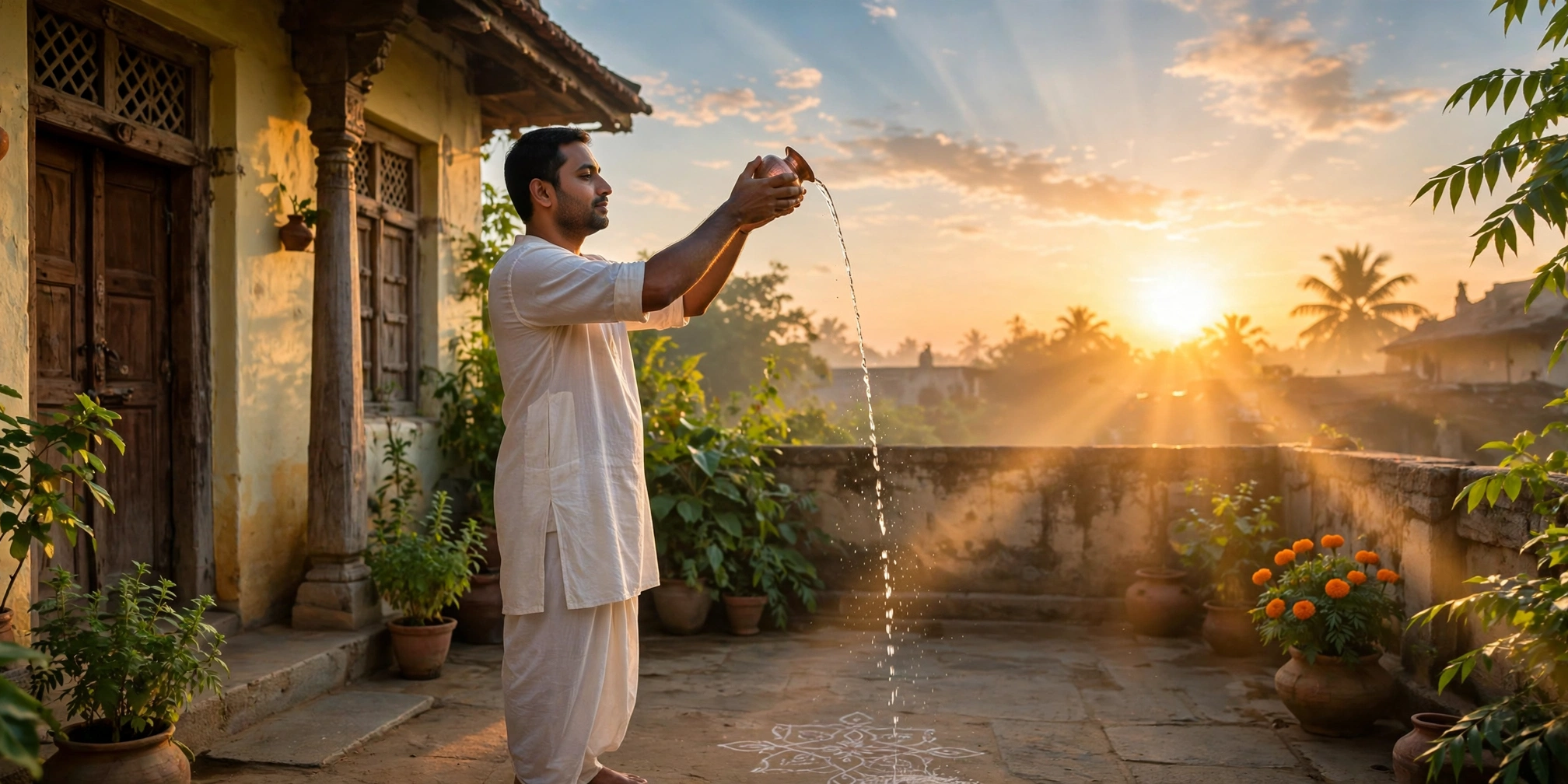
Many Indian families have a lovely habit that joins devotion with morning light, called Surya Arghya, which is the offering of water to the rising Sun. People stand facing the sun, offer water from a small vessel, and chant the Gayatri mantra or a prayer to Surya. This simple practice brings a few quiet minutes in the open air and morning sunlight, together with a prayer of thanks.
The Aditya Hridayam is a well known hymn to Surya. In the Ramayana, the sage Agastya teaches it to Bhagwan Rama before his great battle, as a source of courage and clarity. Many people recite it in the morning for strength of mind. You may listen to it softly, or read it slowly.
How Do the Mind and Community Support Wellbeing?
The tradition has always seen the mind and body as closely linked. A calm and thankful mind is a great support to the body, and a worried and restless mind makes everything feel harder.
A short daily prayer, gentle breathing, time with family and friends, and small acts of seva all help the mind. A satsang, a temple visit or a bhajan group gives a feeling of belonging. Gratitude, such as naming three good things before sleep, is a simple but powerful habit. If you feel low or anxious for a long time, please speak to a doctor or a counsellor, and do not wait.
Which Prayers and Mantras Can We Say for Wellbeing?
These prayers are for peace, strength and thankfulness. They are not meant to promise any result, and they work best as part of a balanced life.
- The Dhanvantari mantra. “Om Namo Bhagavate Vasudevaya Dhanvantaraye Amrita Kalasha Hastaya Sarva Amaya Vinashaya Trailokya Nathaya Dhanvantari Maha Vishnave Namah”, or the short form “Om Shri Dhanvantaraye Namah”. You can read the full meaning in our post on the Dhanvantari mantra.
- The Gayatri mantra. A prayer for a bright mind, often chanted at sunrise with Surya Arghya.
- The Aditya Hridayam. A hymn to Surya for courage and clarity.
- The Vishnu Sahasranama. The thousand names of Bhagwan Vishnu, which many families listen to or recite each morning for peace.
- The Maha Mrityunjaya mantra. “Om Tryambakam Yajamahe Sugandhim Pushtivardhanam, Urvarukamiva Bandhanan Mrityor Mukshiya Maamritat”. A prayer to Bhagwan Shiva for protection and courage.
- The Shanti prayer. “Om Sarve Bhavantu Sukhinah, Sarve Santu Niramayah, Sarve Bhadrani Pashyantu, Ma Kashchid Duhkha Bhag Bhavet, Om Shantih Shantih Shantih”. A prayer for the wellbeing of all.
Choose one or two that feel close to your heart, and let them become a part of your day.
What Else Do We Need, Besides Tradition?
Tradition and modern medicine work best together. Some basic habits that doctors recommend should not be skipped, because we are following an old routine. These include washing hands regularly, keeping food and water clean, following the vaccination schedule that your doctor advises for children and adults, going for regular health check ups, and taking prescribed medicines on time.
Please also see a doctor when you or a family member is unwell, especially if a child has a high fever, trouble breathing or looks very weak, or if an elder has sudden changes. A spiritual routine is a support for good health, and never a reason to delay care.
Can a Homam Support Family Wellbeing?
Many families choose to perform a Homam for the wellbeing of the household, for example at the start of a new year of life, after a time of illness, or when they are feeling worried. The Dhanvantari Homam is a Vedic fire ritual that honours Bhagwan Dhanvantari, the divine physician. It is traditionally performed to seek blessings for health, strength and peace of mind. The priests take a Sankalpa in the name of the person or the family, chant the Dhanvantari mantras and offer ghee and sacred herbs into the fire.
Please remember that a Homam is spiritual support. It does not promise protection from illness, and it should never take the place of medical care or healthy habits. The Homam can also be booked online, so you can join the prayer in your heart from anywhere. You can read more on our Dhanvantari Homam page.
How Should We See Tradition and Medical Care Together?
The ideas in this post are forms of spiritual and lifestyle support. They are not a replacement for medical advice, diagnosis or treatment. They do not promise any result, and they should never delay or replace the care of a doctor.
The best way to see them is as companions to good care. The doctor guides the treatment, the family offers love and support, and the daily routine and prayer give steadiness to the body and calm to the mind. Please continue to follow your doctor’s guidance, and never stop or change a treatment because of a ritual.
Key Takeaways
- No routine, herb, mantra or ritual can promise that a person will never fall sick, but a balanced way of living supports health.
- Ayurveda names food, sleep and regulated living as the three supports of life, and the Gita also teaches balance.
- A simple dinacharya, with a regular wake time, morning light, gentle movement, regular meals and a calm evening, is a good starting point.
- Ritucharya reminds us to adjust our clothes, food and rest to the season.
- Be careful with products that promise to boost immunity, and ask a doctor before taking any herb or supplement.
- A Homam is spiritual support and works alongside medical care and healthy habits, never in place of them.
Frequently Asked Questions
Q. What is Dinacharya in Ayurveda?
Dinacharya is the Ayurvedic idea of a regular daily routine. It includes a steady wake up time, personal cleanliness, prayer, movement, regular meals and a calm evening, to keep the body and mind in rhythm.
Q. What is Ritucharya?
Ritucharya means living in tune with the seasons. It suggests adjusting clothing, food and rest to the weather, such as extra care with water and cleanliness in the rainy season.
Q. Can mantras and puja strengthen the body?
Mantras and puja are spiritual practices that bring peace, calm and thankfulness. They do not claim to protect from illness, and they work best alongside medical care and healthy habits.
Q. Should I take herbs or immunity boosters?
Please speak to a doctor or a qualified Vaidya first. Some herbs and supplements can interact with medicines or cause side effects, and they may not suit children, pregnant women or elders.
Q. What is Surya Arghya?
It is the offering of water to the rising Sun, often with the Gayatri mantra or a prayer to Surya. It brings a few quiet minutes in the open air and morning light, together with a prayer of thanks.
Q. Can a Homam protect my family from illness?
No. A Homam is spiritual support, performed to seek blessings, strength and peace of mind. It does not promise protection from illness, and it should go along with proper medical care.
A Note on Health and Faith
Prayer, mantra chanting and the Dhanvantari Homam are forms of spiritual support. They are not a substitute for medical advice, diagnosis or treatment. Please continue to follow your doctor’s guidance and take care of your health along with your prayers.
Seek the Blessings of Bhagwan Dhanvantari
If you wish to pray for the health and wellbeing of your family with the full Vedic method, you can book the Dhanvantari Homam with Jyotirgamaya from anywhere in the world. Visit the Dhanvantari Homam page.