


Surya and Chandra Weakness: Vitality, Eyes and Mind in Vedic Astrology
By: Pratima Argade
4 November 2026 at 10:52 AM
In Vedic astrology, Surya, the Sun, stands for the soul, vitality, confidence and the eyes, while Chandra, the Moon, stands for the mind, emotions, sleep and comfort. A weak Sun or Moon in a horoscope is traditionally seen as a pointer to areas of low energy, low confidence or an unsettled mind that need care. It is a tool for reflection and not a medical diagnosis, and good routine, eye care and prayer can help together.
When people look at their horoscope, one of the most common remarks is that the Sun or the Moon is weak. It sounds worrying. Since these are the two lights of the sky and the two most important points of the chart, a word like weak can feel very heavy. Many people begin to wonder whether it explains tiredness, low confidence, poor sleep or an unsettled mind.
In this post, we will look at what Surya and Chandra stand for in Jyotish, what it means when they are called weak, and how these ideas link with vitality, the eyes and the mind. We will also share a few practical habits, traditional spiritual practices and some safety notes, especially about the eyes. If you wish to know more about Bhagwan Dhanvantari, you can read our post on who Bhagwan Dhanvantari is.
What Do Surya and Chandra Stand For in Jyotish?
In Vedic astrology, the Sun and the Moon are called the luminaries, since they are the two lights that guide us. Together, they are often described as the soul and the mind of the horoscope.
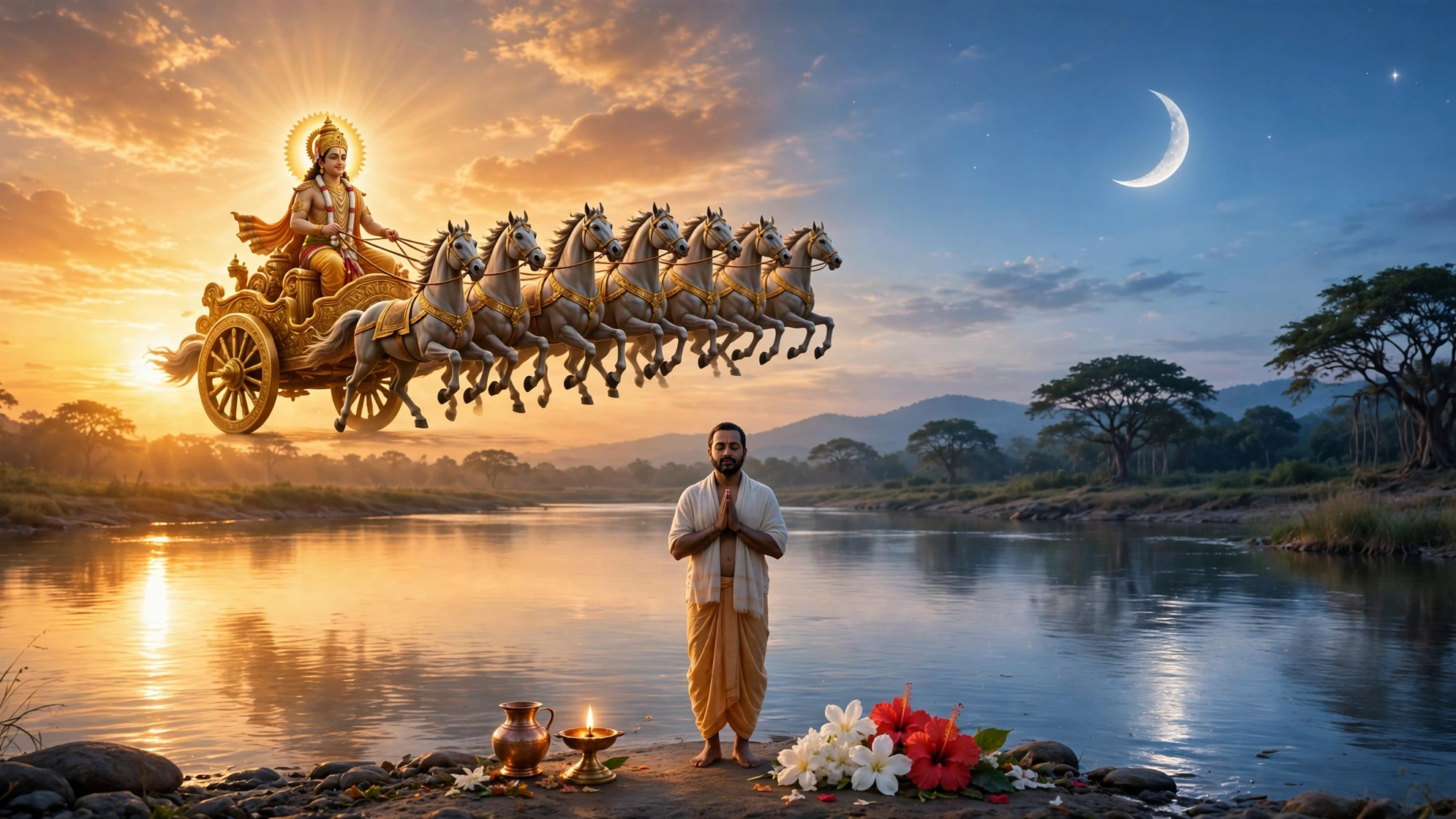
- Surya is the king of the Navagrahas, and the karaka of the Atma, which is the soul or the inner self. He stands for vitality, the life force, confidence, willpower, authority, leadership and the father. In terms of the body, he is traditionally linked with the heart region, the bones, the head and the eyes. He rules the sign Simha, and is said to be exalted in Mesha and debilitated in Tula. In the Vimshottari dasha system, the period of Surya lasts for six years.
- Chandra is the karaka of the Manas, which is the mind. He stands for emotions, comfort, sleep, nourishment, the mother, and the flow of feeling and fluid in the body. He rules the sign Karka, and is said to be exalted in Vrishabha and debilitated in Vrishchika. He moves quickly, spending only about two and a quarter days in each sign, and his period in the dasha system lasts for ten years.
The Moon is also unique because it changes with its phases. A waxing Moon in the bright fortnight, called Shukla Paksha, is traditionally seen as stronger, while a very thin or waning Moon near Amavasya is seen as weaker.
What Does Weak Surya Mean?
In Jyotish, a planet is called weak for several reasons. The Sun may be in the sign of debilitation, which is Tula. It may be too close to another planet, a state called combustion. It may be in a house like the 6th, 8th or 12th. It may be under the pressure of challenging planets such as Shani, Rahu or Ketu.
Traditional teachers describe a weak Surya through themes such as low confidence, a lack of drive, hesitation in taking a stand, tiredness or low energy, and difficulty with authority figures or with the father. In health terms, some people link it with themes of vitality and the eyes.
These are not predictions. They are gentle pointers, and many people with a weak Surya in the chart are confident, healthy and successful, and many people with a strong Surya still have to work on their energy and health.
What Does Weak Chandra Mean?
The Moon may be called weak when it is debilitated in Vrishchika, when it is very thin in the waning phase, when it is close to the Sun, when it is in the 6th, 8th or 12th house, or when it is under the pressure of difficult planets.
Traditional teachers describe a weak Chandra through themes such as emotional ups and downs, worry, overthinking, restless sleep, difficulty in feeling settled and a feeling of low comfort. Because Chandra is linked to the mother and to nourishment, some people also link it with matters of care and emotional security.
Again, these are not diagnoses. Emotional sensitivity is also a gift. Many sensitive and caring people, such as artists, teachers and healers, have prominent Moons in their charts.
How Does Ayurveda Look at the Sun and Moon?
Ayurveda has its own beautiful way of speaking about the same two forces. It speaks of Agni and Soma, the fiery principle and the cooling principle, as the two great energies of life. The Sushruta Samhita describes the world as made of both. Agni stands for heat, transformation and digestion, and Soma stands for coolness, nourishment and stability.
In this view, health is a kind of balance between the two. This fits nicely with the Jyotish idea of Surya and Chandra, the Sun and the Moon, as two lights that need to be in harmony. It is a thoughtful way of seeing that neither force is better than the other, and that both are needed.
How Should We Care for Our Eyes?
Since Surya is traditionally linked with the eyes, with the Sun for the right eye and the Moon for the left eye in some teachings, many people ask about eye health in astrology. We would like to be very clear. Astrology cannot diagnose any eye condition or replace an eye doctor.
Please get regular eye check ups, especially if you have any change in vision, pain, redness, headaches, or if you are over forty or have a family history of eye concerns. Please follow the advice of an ophthalmologist about glasses, drops and screen time. Take regular breaks from screens, and read in good light.
A very important safety note: please never stare at the Sun, at any time of the day and especially during an eclipse, as it can permanently damage the eyes. In Surya Arghya, the traditional offering of water to the rising Sun, a person may offer the water with a gentle, brief glance or with the eyes closed, and bow in respect. If you are unsure, simply close your eyes and offer the prayer. Please never use the idea of an eclipse or the Sun in a ritual to look directly at it.
What Habits Support Vitality and a Calm Mind?
Whatever the horoscope shows, a few simple habits support the energy of the Sun and the calm of the Moon.
For vitality, keep a regular time for waking and sleeping. Get a short time in the morning light and fresh air each day. Move your body gently, with a walk, stretches or yoga, as your doctor allows. Eat regular and wholesome meals, and drink enough water. Spend time on work that gives you a sense of purpose. If you feel tired all the time, please speak to your doctor, and do not assume that it is only astrological.
For the mind, give yourself a calm evening routine, limit late night screens and constant news, and keep a few minutes for prayer or silence each day. Share your feelings with someone you trust. Our post on Vedic practices for peace of mind during stress, worry and sleepless nights has a simple evening routine and bedtime mantras that you may find helpful. If worry, low mood or sleeplessness lasts for weeks, please speak to a doctor or a counsellor. If you ever have thoughts of harming yourself, please reach out for help right away, to a trusted person or a mental health professional, and in an emergency call your local emergency services.
Which Spiritual Practices Does the Tradition Suggest?
The tradition suggests simple and gentle practices for both luminaries.
- For Surya. Many people begin the day with Surya Arghya and the Gayatri mantra, which is addressed to the Sun as Savitr. The Aditya Hridayam, taught by the sage Agastya to Bhagwan Rama in the Ramayana, is a hymn to Surya for courage and clarity. Surya Namaskar, if your body and doctor allow, is another way to honour the Sun through movement. The simple mantras “Om Suryaya Namah” and “Om Hram Hreem Hroum Sah Suryaya Namah” are chanted, and Sunday is the day for Surya. There is also an ancient hymn called the Chakshushopanishad, traditionally recited as a prayer to Surya for the eyes. It is a devotional practice, and it should always go along with proper eye care.
- For Chandra. Many people worship Bhagwan Shiva, who wears the crescent Moon on his head and is called Chandrashekhara, particularly on Mondays. Offering water or milk at a Shiva temple, chanting “Om Namah Shivaya”, and simple Chandra mantras such as “Om Som Somaya Namah” are common. Quiet evening prayer under the moonlight is a gentle practice in itself.
- Please let your priest or Guru advise on the right form and number of any mantra.
How Can We Honour Parents as a Form of Seva?
In Jyotish, Surya is linked with the father and Chandra with the mother. One of the most loved and powerful remedies in the tradition is the loving service of one’s parents and elders. A kind word, a visit, a phone call, looking after their health and listening to their stories is seen as a most valuable offering to the Sun and the Moon. If your parents are no longer with you, remembering them with love and respect, and caring for other elders, serves the same purpose.
We have shared more ideas for this in our posts on how to support a parent with health worries and prayers for elderly parents.
Which Remedies Need Extra Care?
Please be careful with high priced gemstones, such as ruby, called Manikya, for Surya, and pearl, called Moti, for Chandra. In the tradition, they are powerful stones that may not suit everyone, and they are often sold with fear and at a high price. Please do not wear one without careful advice from a trusted Jyotishi, never spend beyond your means, and never use a gemstone in place of treatment.
Please also walk away from anyone who says that a weak Sun or Moon will cause serious trouble unless you do an expensive ritual at once, or who asks you to avoid doctors or stop treatment. A good Jyotishi will always encourage medical care alongside prayer.
Where Does the Dhanvantari Homam Fit In?
For families who feel low in energy or unsettled in mind, and who find that the horoscope points to Surya or Chandra, Jyotish teachers often suggest the Dhanvantari Homam as a supportive ritual. It is a Vedic fire ritual that honours Bhagwan Dhanvantari, the divine physician, and it is traditionally performed to seek blessings for health, strength and peace of mind. The priests take a Sankalpa in the name of the person, with their gotra and nakshatra, chant the Dhanvantari mantras and offer ghee and sacred herbs into the fire.
The Homam can also be booked online, so you can join the prayer in your heart from anywhere. You can read more on our Dhanvantari Homam page.
How Should We See Astrology and Medical Care Together?
Astrology and the Homam are forms of spiritual guidance and support. They are not a replacement for medical advice, diagnosis or treatment. They do not promise any result, and they should never delay or replace the care of a doctor, an eye doctor or a counsellor.
The best way to see them is as companions to good care. The doctor treats the body and the mind, the family looks after the person, and Jyotish and prayer give reflection, hope and calm. Please continue to follow your doctor’s guidance, and never stop or change a treatment because of an astrological remedy.
Key Takeaways
- Surya stands for the soul, vitality, confidence and the eyes, and Chandra stands for the mind, emotions, sleep and comfort.
- A weak Sun or Moon is a traditional pointer to areas that need care, and not a prediction or a diagnosis.
- Ayurveda speaks of Agni and Soma as two energies that need balance, which echoes the Sun and the Moon.
- Please get regular eye check ups, and never stare at the Sun, especially during an eclipse.
- Traditional practices include Surya Arghya, the Aditya Hridayam, Shiva worship on Mondays, simple mantras and loving service of parents.
- A Homam is spiritual support and works alongside medical care, never in place of it.
Frequently Asked Questions
Q. What does a weak Sun mean in astrology?
A weak Sun is traditionally linked with themes such as low confidence, low drive and tiredness. It is a pointer for reflection and not a prediction or a diagnosis, and many people with a weak Sun are confident and healthy.
Q. What does a weak Moon mean in astrology?
A weak Moon is traditionally linked with emotional ups and downs, worry and restless sleep. It is not a diagnosis. If worry or low mood lasts for weeks, please speak to a doctor or a counsellor.
Q. Is it safe to look at the Sun during Surya Arghya?
Please never stare at the Sun, at any time of day. You may offer the water with a gentle, brief glance or with your eyes closed, and bow in respect. During an eclipse, please never look directly at the Sun.
Q. Which mantra is chanted for Surya and Chandra?
Simple mantras are “Om Suryaya Namah” for Surya and “Om Som Somaya Namah” for Chandra. Many people also chant the Gayatri mantra, the Aditya Hridayam and “Om Namah Shivaya”. Please let your priest advise on the right form.
Q. Should I wear ruby or pearl for Surya and Chandra?
These stones are powerful and may not suit everyone, and they are often sold at a high price. Please do not wear them without careful advice from a trusted Jyotishi, and never use them in place of treatment.
Q. Can a Homam help with low energy or an unsettled mind?
Teachers often suggest the Dhanvantari Homam as a supportive ritual. It is spiritual support performed to seek blessings, strength and peace of mind, and it does not replace medical care.
A Note on Health and Faith
Astrology, prayer and the Dhanvantari Homam are forms of spiritual guidance and support. They are not a substitute for medical advice, diagnosis or treatment. Please continue to follow your doctor’s guidance and take care of your health along with your prayers.
Seek the Blessings of Bhagwan Dhanvantari
If you wish to pray for the health and wellbeing of your family with the full Vedic method, you can book the Dhanvantari Homam with Jyotirgamaya from anywhere in the world. Visit the Dhanvantari Homam page