Sugar, Blood Pressure or Weight Concerns in the Family: Vedic Wellbeing Practices and Prayer for Peace
By: Pratima Argade
27 October 2026 at 1:53 AM
When a family member lives with sugar, blood pressure or weight concerns, the first step is regular medical care and the doctor’s advice. Vedic tradition adds gentle support for the heart and mind, such as balance in daily life, mindful eating with gratitude, calm routines, family encouragement and prayer for peace. These practices do not treat any condition, and they always work alongside doctor led care.
In many Indian homes, concerns about sugar, blood pressure and weight are now part of everyday talk. A parent checks a reading each morning, a spouse is careful at every wedding feast, and a grandchild asks why Dadi cannot eat the sweet that she is making for everyone. These conditions need long term care, and they affect the whole family, not just the person who has them.
In this post, we will not talk about cures or special remedies. We will talk about the other side of the journey, which is the daily peace of mind, the family’s role, and the spiritual habits that can bring balance. We will cover mindful eating, festivals and prasadam, fasting, gentle movement, calming the mind and how family members can support each other without blame. If you wish to know more about Bhagwan Dhanvantari, you can read our post on who Bhagwan Dhanvantari is.
Why Do These Concerns Feel So Heavy for Families?
These conditions are long term, and they ask for steady attention every day. There are medicines to take on time, readings to check, food choices to think about and doctor visits to keep. Because there is no single day on which the work is finished, many people feel tired and a little discouraged.
Food is also deeply tied to love and culture in India. We show affection through meals, sweets and festival dishes. When a doctor advises changes in food, it can feel as if a part of family life is being taken away. Many people also carry worry about the future, or guilt about their past choices.
It is important to say clearly that no one is to blame. These conditions have many causes, and a person living with one is not at fault. The best response is care, patience and good support, and not shame.
What Comes First? Doctor Led Care
Please make sure that the person is under the regular care of a doctor, and follows the advice on medicines, check ups, monitoring and food. If a dietitian has given a plan, please follow that plan. Do not stop, reduce or change any medicine because of a ritual, a remedy or someone’s advice, without speaking to the doctor.
Please do not start any herb, powder, juice or home remedy for these conditions without asking the doctor, as some can interact with medicines, and some can cause harm. No mantra, puja or Homam can take the place of treatment. Everything in the rest of this post should be seen as a gentle companion to the doctor’s care.
What Does Vedic Wisdom Say About Balance?
The Bhagavad Gita speaks beautifully about balance in daily life. In the sixth chapter, Bhagwan Krishna says that yoga is not for the one who eats too much or who does not eat at all, nor for the one who sleeps too much or who stays awake too long. He then says that yoga becomes a remover of sorrow for the one who is balanced in food, recreation, effort and sleep.
This teaching fits very well with the situation of a family living with these concerns. It does not ask for harsh rules or extreme steps. It asks for steadiness and moderation. In the same spirit, Ayurveda speaks about wholesome food and moderate food, called hita ahara and mita ahara, as parts of a balanced life. Please let your doctor or dietitian guide what balance means for your family member.
How Can Mindful Eating and Gratitude Help?
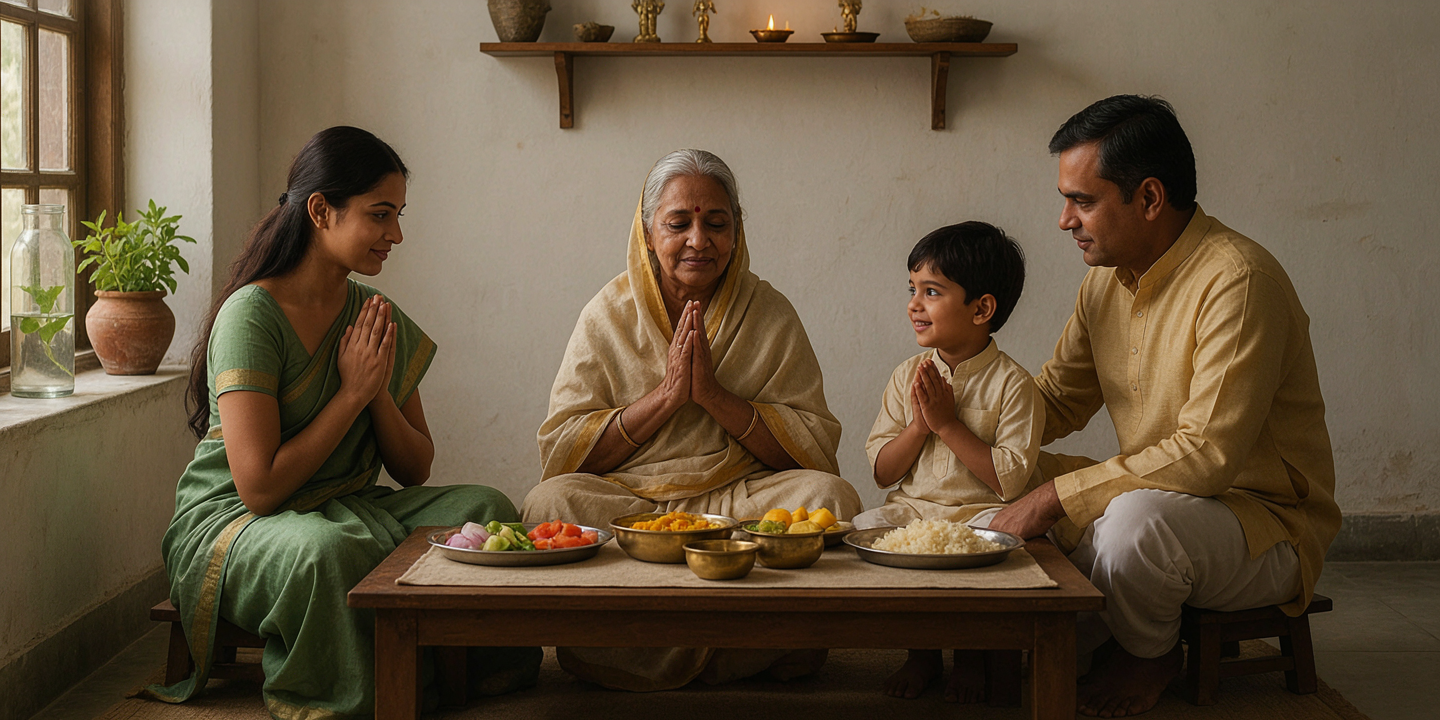
In Vedic tradition, a meal is not just food. It is a sacred act. Before a meal, many families say a short prayer of thanks, and this small pause can bring a lot of awareness to eating.
One well known verse is from the Gita, “Brahmarpanam Brahma Havir Brahmagnau Brahmana Hutam, Brahmaiva Tena Gantavyam Brahmakarma Samadhina”. It is often said before a meal. In simple English, it means that the act of offering is Brahman, the offering is Brahman, and it is offered by Brahman into the fire of Brahman, and the one who sees the divine in all action reaches the divine. For a family, this can be a reminder to see each meal as an offering and to eat with attention.
Another loved prayer is a verse to Devi Annapurna, the Devi of food, “Annapurne Sadapurne Shankara Pranavallabhe, Jnana Vairagya Siddhyartham Bhikshaam Dehi Cha Parvati”. It is a prayer to Annapurna, who is ever full, for the gift of knowledge and detachment. Chanting it before a meal can remind us that food is a gift, and not something to be rushed or fought over.
You can bring mindful eating into daily life with a few simple habits. Sit down to eat, without a phone or television. Take a moment of silence and gratitude before the first bite. Eat slowly, and notice the taste and the feeling of fullness. Follow your doctor’s guidance on what and how much to eat. These habits do not promise any result, but they bring calm and awareness to the table.
How Can We Handle Prasadam, Festivals and Feasts With Care?
Festivals, weddings and temple visits are a big part of Indian life, and they come with sweets and rich food. A person with a health concern does not have to stay away from these joyful occasions. A little planning helps.
Speak to your doctor or dietitian in advance about how to manage special occasions. When you receive prasadam, you may accept it with reverence and take a very small portion, or touch it to your forehead and share it with others. The spirit of prasadam is in the acceptance and not in the amount. When offering naivedya at home, you can choose simple offerings such as fruit, dry fruit or a lightly sweetened dish, in line with the doctor’s advice.
At family gatherings, hosts can make it easy by keeping a few suitable dishes on the table, and by not pressing anyone to eat more. A gentle and kind “No, thank you” should be respected. Please avoid comments such as “One piece will not hurt.” Let the person decide for themselves, in line with their doctor’s advice.
What About Fasting and Vrata?
Fasting is a common part of devotion in India, with fasts on Ekadashi, Mondays, Thursdays and festival days. For a person who has sugar or blood pressure concerns, or who takes regular medicines, fasting can sometimes be unsafe. A long gap between meals can cause problems, and some fasts also change the intake of salt, water and medicines.
Please speak to your doctor before keeping any fast. Ask what type and what length of fast, if any, is safe, and how to take medicines on fasting days. Do not skip or delay medicines to keep a vrata. Many scholars and teachers teach that devotion does not depend on hunger, and that Bhagwan is pleased by a sincere heart. A simple prayer, a lamp, a mantra and an act of seva can be a beautiful vrata in themselves. A gentle fast, if the doctor agrees, and always with a way to eat when you feel weak, is a better choice than a strict one.
How Can Gentle Movement and Routine Help?
Regular movement is often a part of a doctor’s advice. Within that advice, many families can find a gentle and spiritual way to walk. A morning walk in the open air, a walk to the nearby temple, or a slow pradakshina around the Tulasi plant or the temple are simple and pleasant ways to move the body, as the doctor allows.
Light stretching or gentle yoga may also help, if the doctor agrees. Please keep it comfortable, and never push through pain or dizziness. Keep a regular time for meals, sleep and walks, as a steady routine helps the body and the mind feel secure. If you have a heart concern, a joint problem or any other condition, please ask the doctor before starting any new activity.
How Can We Calm the Mind When Worry Is Heavy?
Long term health concerns can bring stress, and stress itself makes everything feel harder. Calming the mind is a worthy goal on its own.
A short daily prayer, a few minutes of slow and easy breathing, a mantra with a mala, and a bit of quiet time can help. Our post on Vedic practices for peace of mind during stress, worry and sleepless nights has a simple evening routine that you may find useful. Please ask the doctor before starting any breathing practice if you have a heart or blood pressure concern.
Staying connected also matters. A visit to a temple, a satsang, a talk with a friend or a bhajan group gives the heart a feeling of company. If worry feels too heavy, or if the mood stays low for weeks, please speak to the doctor or a counsellor.
How Can Family Members Support Without Blame?
A family can make a big difference in how a person feels about their health. Here are a few ways to offer support with love.
Do not blame. Avoid saying things like “This is because you ate too much” or “You never listened.” Do not shame anyone about their weight, their body or their food. Weight stigma hurts, and it often makes it harder for a person to look after themselves.
Do not play the food police. Constant watching and comments take away dignity. Instead, ask the person how you can help. Cook meals that the whole family can enjoy, so that the person does not eat alone. Walk together in the evening. Go with them to doctor visits when they wish. Celebrate small steps, such as keeping a routine or a check up, with warm words.
Please also watch for signs of an unhealthy relationship with food, such as extreme dieting, skipping meals, hiding food or deep guilt after eating. If you notice these in anyone in the family, please speak to a doctor or a qualified professional. Health is not served by harsh restriction.
Which Prayers and Mantras Can Bring Peace?
These prayers are for peace of mind and comfort, and not for treating any condition.
- The short Dhanvantari mantra. “Om Shri Dhanvantaraye Namah”. A salutation to Bhagwan Dhanvantari, the divine physician. You can read more in our post on the Dhanvantari mantra.
- The Brahmarpanam verse. Before meals, as described above.
- The Annapurna verse. Before meals, as described above.
- The Shanti prayer. “Om Sarve Bhavantu Sukhinah, Sarve Santu Niramayah, Sarve Bhadrani Pashyantu, Ma Kashchid Duhkha Bhag Bhavet, Om Shantih Shantih Shantih”. A prayer for the wellbeing of all.
- The Gayatri mantra. A prayer for a clear and bright mind.
- Om Namo Narayanaya. The eight syllable mantra of Bhagwan Vishnu, repeated for peace.
- The Hanuman Chalisa. Chanted for courage and inner strength.
Choose one or two that feel close to your heart, and make them a part of the day.
Can a Homam Support a Family Through This Journey?
Some families choose to perform a Homam for the wellbeing of a family member who lives with a long term health concern. The Dhanvantari Homam is a Vedic fire ritual that honours Bhagwan Dhanvantari, the divine physician. It is traditionally performed to seek blessings for health, strength and peace of mind. The priests take a Sankalpa in the name of the person, chant the Dhanvantari mantras and offer ghee and sacred herbs into the fire.
Please remember that the Homam is spiritual support. It is not a treatment for any condition, and it should never be used in place of medicines or doctor visits. The Homam can also be booked online, so you can join the prayer in your heart from anywhere. You can read more on our Dhanvantari Homam page.
How Should We See Spiritual Practice and Medical Care Together?
The practices in this post are forms of spiritual and emotional support. They are not a replacement for medical advice, diagnosis or treatment. They do not promise any result, and they should never delay or replace the care of a doctor or a dietitian.
The best way to see them is as companions to good care. The doctor guides the treatment, the family offers love and support, and the prayer gives peace and steadiness to the mind. Please continue to follow your doctor’s guidance, and never stop or change a treatment because of a ritual.
Key Takeaways
- Regular doctor led care comes first, and no practice, mantra or Homam can take its place.
- The Gita teaches balance in food, recreation, effort and sleep, which fits well with a steady and moderate way of life.
- Mindful eating, a short prayer before meals and gratitude bring calm to the table.
- Enjoy festivals and prasadam with care, take small portions and speak to your doctor about planning ahead.
- Always ask the doctor before fasting or starting a new activity, and never skip medicines for a vrata.
- Families can help most with kindness, patience and company, and not with blame or food policing.
Frequently Asked Questions
Q. Can prayer or mantras control sugar or blood pressure?
No. Prayer and mantras do not treat any health condition. They can bring calm and support for the heart and mind, and they should always go along with the doctor’s treatment and advice.
Q. Is it safe to fast on Ekadashi if I have sugar or blood pressure concerns?
Please ask your doctor first. Fasting can be unsafe for some people, especially if they take regular medicines. Devotion does not depend on hunger, and a simple prayer or a gentle, doctor approved fast can be enough.
Q. How should I accept prasadam if I have a health concern?
You may accept prasadam with respect and take a very small portion, or share it with others. The spirit of prasadam lies in acceptance and not in the amount. Speak to your doctor about special occasions.
Q. Which prayer can we say before meals?
Many families say the Gita verse “Brahmarpanam Brahma Havir” or the Annapurna verse “Annapurne Sadapurne”. They help us eat with gratitude and attention.
Q. How can I support a family member without nagging?
Do not blame or shame, and avoid watching every bite. Ask how you can help, cook meals that the whole family can share, walk together and celebrate small steps with kind words.
Q. Can a Homam help with these concerns?
A Homam is spiritual support, performed to seek blessings, strength and peace of mind. It does not claim to treat any condition, and it should never replace medicines or doctor visits.
A Note on Health and Faith
Prayer, mantra chanting and the Dhanvantari Homam are forms of spiritual support. They are not a substitute for medical advice, diagnosis or treatment. Please continue to follow your doctor’s guidance and take care of your health along with your prayers.
Seek the Blessings of Bhagwan Dhanvantari
If you wish to pray for the health and wellbeing of your family with the full Vedic method, you can book the Dhanvantari Homam with Jyotirgamaya from anywhere in the world. Visit the Dhanvantari Homam page.