Why Do Weddings Have 7 Pheras? The Scientific Meaning Behind Saptapadi
By: Pratima Argade
10 March 2026 at 5:28 AM
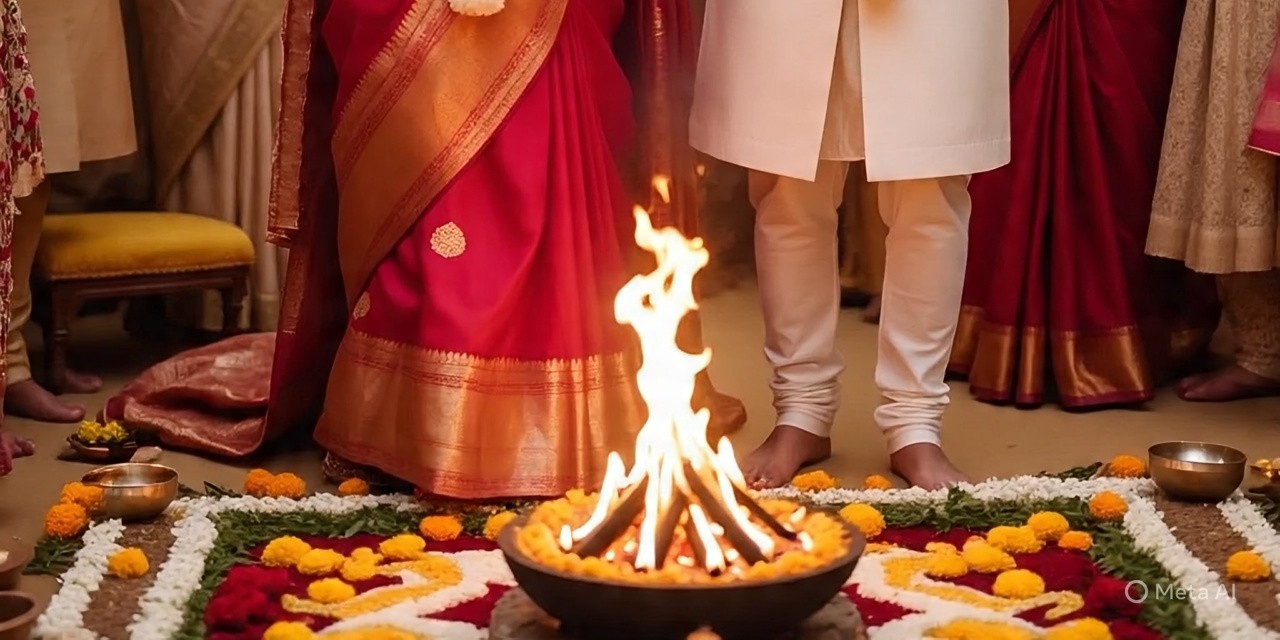
In a traditional Hindu wedding, there is a moment when everything around seems to pause. The music becomes softer, the conversations fade, and all eyes turn toward the sacred fire placed at the center of the mandap. The bride and groom slowly stand together, their garments tied in a sacred knot, and they begin walking around the glowing Agni. This beautiful ritual is known as Saptapadi, the seven steps or 7 Pheras, and it is considered the most important part of a Hindu marriage ceremony. Many people witness this moment with emotion and joy, yet few truly understand why exactly seven steps are taken and why this ritual has remained unchanged for thousands of years in Sanatana Dharma.
In the Vedic understanding of life, marriage is not merely a celebration or a legal bond between two individuals. It is one of the most sacred samskaras, a spiritual milestone where two souls promise to walk the path of life together. Our ancient rishis designed the marriage ceremony in a way that combines devotion, responsibility, and cosmic symbolism. The sacred fire, or Agni, plays a central role in this moment because Agni is believed to be the purest witness. Fire transforms everything it touches, and in the same way, marriage transforms two separate journeys into one shared destiny. When the couple takes the seven steps around the fire, they are making promises not only to each other but also before the divine forces of the universe.
The number seven itself carries deep significance in Vedic philosophy. If we observe nature and ancient wisdom carefully, the number appears again and again in meaningful ways. There are seven chakras in the human body, representing different levels of consciousness and energy. There are seven musical notes, which together create harmony and melody. Even in the natural rhythm of time, we follow seven days in a week. Our ancestors believed that the number seven represents balance, completeness, and harmony with the natural order of the universe. By walking seven steps together, the bride and groom symbolically align their union with this universal rhythm, acknowledging that their relationship is part of a much larger cosmic design.
Each step of the Saptapadi is accompanied by a vow that reflects an important aspect of life. These vows were carefully designed by ancient sages who deeply understood human relationships and social harmony. The first step focuses on nourishment and sustenance, where the couple promises to support each other in providing food and stability for their household. This may sound simple, but it reflects the understanding that the foundation of any family begins with shared responsibility for basic needs. Even today, modern relationship experts emphasize that cooperation in everyday duties strengthens trust and partnership between couples. The second step of the Saptapadi is connected with strength and well-being. Here, the couple promises to protect and care for one another, both physically and emotionally. Marriage is not always an easy journey, and life often brings unexpected challenges. By making this vow, the couple acknowledges that they must stand beside each other during both joyful and difficult times. This idea resonates strongly even in modern psychology, where researchers have found that emotional support between partners plays a key role in maintaining long-lasting relationships.
As the couple continues the remaining steps, the vows expand to include prosperity, happiness, and the nurturing of future generations. The fourth and fifth steps remind the couple to build a life filled with love, harmony, and positive values. They promise to raise their family with compassion, honesty, and respect for dharma. Our ancestors believed that marriage was not just about two individuals but also about creating a stable environment for future generations. In this way, the Saptapadi becomes a bridge that connects personal happiness with social responsibility and family wellbeing.
The sixth step brings another important promise, the commitment to walk together through every phase of life. Youth, middle age, and old age all come with their own joys and challenges. Through this vow, the couple promises that their companionship will not depend on circumstances or temporary emotions. Instead, it will be rooted in loyalty, patience, and understanding. When we think about it, this idea is incredibly powerful because it reflects the truth that lasting relationships are built on dedication rather than fleeting feelings.
The seventh and final step holds the deepest meaning. After completing the seventh step, the couple is considered spiritually united according to Vedic tradition. They promise to remain lifelong friends and partners, sharing not only responsibilities but also dreams, hopes, and spiritual growth. Friendship is often described as the strongest foundation of marriage because it brings trust, openness, and mutual respect. Even today, many relationship counselors say that couples who treat each other as true companions tend to enjoy more fulfilling and stable marriages. Beyond the spiritual and social meaning, the ritual of the 7 Pheras also has a powerful psychological impact. Modern research shows that meaningful rituals help strengthen emotional commitment between individuals. When two people publicly express their vows while performing symbolic actions, the experience creates a lasting memory that reinforces their sense of responsibility toward each other. Our ancestors may not have used scientific terminology, but they clearly understood the importance of shared rituals in shaping human relationships and strengthening emotional bonds.
There is also a deeper spiritual dimension to the Saptapadi that goes beyond the visible ceremony. In Vedic thought, marriage is not only about this lifetime but also about the journey of the soul. The presence of Agni during the vows symbolizes divine consciousness, and the seven steps represent a commitment to grow together not only in worldly success but also in dharma and spiritual awareness. By taking these steps together, the couple promises to support each other in becoming better human beings and progressing toward higher understanding. When we look at the ritual of the 7 Pheras from this perspective, it becomes clear that it is far more than a beautiful wedding tradition. It is a carefully designed moment that blends spiritual philosophy, social wisdom, emotional bonding, and cosmic symbolism into a single sacred act. What may appear as a simple walk around the fire actually carries thousands of years of cultural knowledge about love, partnership, and the responsibilities of building a meaningful life together.
Even in modern times, when lifestyles and societies continue to change, the essence of the Saptapadi remains deeply relevant. Relationships still require trust, shared goals, and mutual support, exactly the principles that these seven vows represent. Perhaps this is why the ritual has survived through countless generations without losing its meaning. The 7 Pheras remind us that marriage is not just about a single day of celebration but about a lifelong journey of companionship, growth, and harmony. And in that sacred moment when the bride and groom walk together around Agni, they are not simply following tradition - they are stepping into a timeless wisdom that has guided human relationships since the age of the Vedas.