Prayers for Elderly Parents: Strength, Comfort and Care
By: Pratima Argade
23 October 2026 at 11:17 AM
For elderly parents, families often chant the Dhanvantari mantra for health, the Maha Mrityunjaya mantra for courage, the Vishnu Sahasranama for peace, and the Vedic blessing “Jivema Sharadah Shatam” for a long and good life. These prayers work best when they are joined with respect, daily companionship and regular medical care.
Every child knows the moment when the roles slowly begin to change. The mother who once held your hand now needs yours on the stairs. The father who once took every decision now looks to you for advice. This is a tender turn in life, and it brings both love and worry. Many of us want to do something meaningful for our parents, beyond bringing medicines and taking them to the doctor.
In this post, we will look at what Vedic tradition says about the later years of life, share a set of prayers and mantras for elderly parents, and describe loving ways to include them in daily worship with dignity. We will also speak about pilgrimages, milestone birthdays, children who live far away, and how a Homam can offer support. If you wish to know more about Bhagwan Dhanvantari, you can read our post on who Bhagwan Dhanvantari is.
Why Do Elderly Parents Need Prayer, Comfort and Care Together?
As the years go by, the body becomes slower and the mind has more time to think. Many elderly people feel a quiet worry about their health, about being a burden, or about being left alone. At the same time, many of them also carry a deep calm, built from a lifetime of experience and faith.
Medical care looks after the body, and it is the first duty of a family. But the heart also needs care. Companionship, respect, familiar prayers and a sense of purpose all help an elderly person feel valued and at peace. This is why prayer and care are best seen as two hands of the same gesture of love.
What Does Vedic Tradition Say About the Later Years of Life?
Vedic tradition describes four stages of life, called the ashramas. These are Brahmacharya, the stage of the student, Grihastha, the stage of the householder, Vanaprastha, the stage of gradual withdrawal and reflection, and Sannyasa, the stage of renunciation. The later years of life are seen as a time for deepening one’s prayer, sharing wisdom and turning slowly towards what is lasting.
In this view, an elderly parent is not someone to be sidelined. They are a source of blessing and wisdom in the family. The Taittiriya Upanishad says “Matru Devo Bhava, Pitru Devo Bhava”, which means that we should honour our mother and father as Bhagwan. When children serve their parents with love, the whole household is lifted.
The Isha Upanishad also speaks of a life of action and contentment. It says that one may wish to live for a hundred years while performing good deeds. This is a very positive picture of long life, in which age does not mean the end of purpose.
Which Prayers and Mantras Can We Chant for Elderly Parents?
There is no single correct prayer. Families usually choose what their parents already love, and add one or two others. Here are some well known options.
- The Dhanvantari mantra. “Om Namo Bhagavate Vasudevaya Dhanvantaraye Amrita Kalasha Hastaya Sarva Amaya Vinashaya Trailokya Nathaya Dhanvantari Maha Vishnave Namah”. A prayer to Bhagwan Dhanvantari, the divine physician, for blessings of health. The short form is “Om Shri Dhanvantaraye Namah”. You can read the full meaning in our post on the Dhanvantari mantra.
- The Maha Mrityunjaya mantra. “Om Tryambakam Yajamahe Sugandhim Pushtivardhanam, Urvarukamiva Bandhanan Mrityor Mukshiya Maamritat”. A prayer to Bhagwan Shiva for protection, courage and a peaceful mind.
- The Vishnu Sahasranama. The thousand names of Bhagwan Vishnu, taught by Bhishma to Yudhishthira in the Mahabharata. Many elders love to hear it or recite it each morning.
- A Vedic blessing for a long and good life. The well known lines “Pashyema Sharadah Shatam, Jivema Sharadah Shatam, Shrinavama Sharadah Shatam, Prabravama Sharadah Shatam”. They mean, “May we see for a hundred autumns, may we live for a hundred autumns, may we hear for a hundred autumns, may we speak for a hundred autumns.” This is a traditional blessing for a full and active life, and it is often used on birthdays.
- The Hanuman Chalisa. Chanted for courage and inner strength.
- The Gayatri mantra. A prayer for a clear and bright mind.
- The Shanti prayer “Om Sarve Bhavantu Sukhinah”. A prayer for the wellbeing of all, which many elders find soothing.
- Rama Nama or Krishna Nama. The simple repetition of the name of Bhagwan, which an elderly person can do at any time, even while resting.
Please let your parents choose. A prayer that they know from childhood often brings the deepest comfort, because it carries the memory of their own parents and their own home.
How Can We Include Parents in Daily Prayer With Dignity?
Dignity is the heart of good care. A few simple habits help your parents feel respected, and not managed.
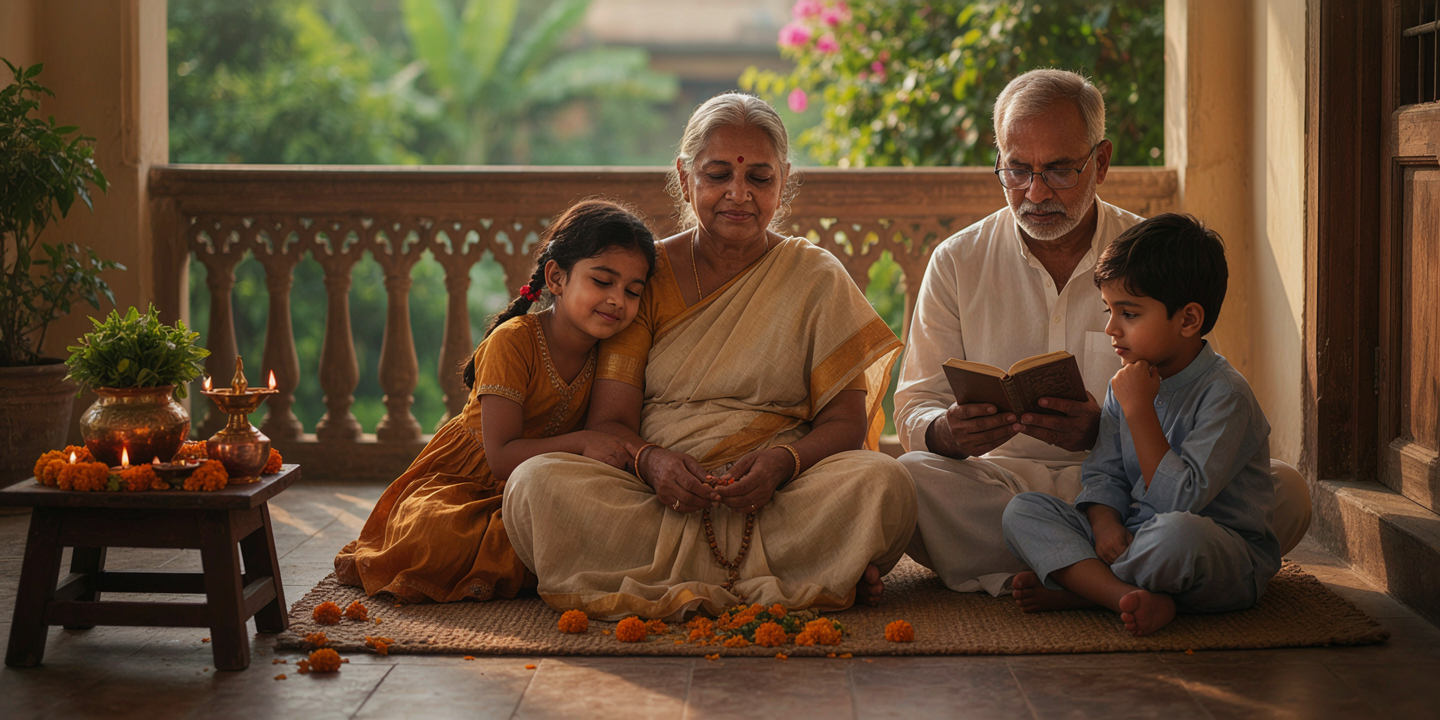
Ask them what they would like, instead of deciding for them. For example, “Would you like to sit for the evening prayer with us today?” Let them lead the prayer if they wish, even if it is a little slow. Let them choose the lamp, the flowers and the mantra. If their eyesight is weak, offer a printed book with large letters, or play a soft audio of the prayer. If they find it hard to sit on the floor, offer a chair, and do not make them feel that it is a problem.
Allow quiet time, too. Some elders prefer to pray alone, and that is perfectly fine. Respect their pace and their privacy.
What Practical Seva Can We Offer Besides Prayer?
The Vedic tradition values seva, which is loving service. For elderly parents, the most meaningful seva is often very simple.
Give them your time. Sit with them for a cup of tea, listen to their stories, and ask about their childhood. Keep a regular schedule for meals, rest and medicines, and use a simple pill box or a written list. Take them for regular health check ups as advised by their doctor, and write down their questions together. Keep the home safe and comfortable, with good lighting, non slip floors and easy access to the bathroom. If your parent seems unusually forgetful, confused or withdrawn, please speak to their doctor, as these can sometimes be signs that need medical attention.
Involve the grandchildren. A short visit, a drawing, a song or a hug from a grandchild often brings more joy than any gift.
Can Elderly Parents Go on Pilgrimages and Temple Visits?
Many elders cherish the wish to visit a sacred place. This can be a source of great joy, but it needs careful planning. Please ask their doctor first, especially about travel, altitude, long walks and climbing steps. Choose temples and routes that are easy and well served by facilities, and travel at a relaxed pace with enough rest. Carry medicines, a medical summary, water, snacks and a comfortable seat or a walking aid.
If travel is not possible, a visit to a nearby temple, a satsang at home or a virtual darshan of a favourite temple can bring much of the same comfort. A peaceful prayer in the home shrine is as dear to Bhagwan as a long journey.
How Do We Celebrate Milestone Birthdays?
Indian families have a beautiful custom of marking milestone ages with prayer and thanksgiving. Depending on the region and the family, these may include the Shashtipurti at the age of 60, the Bhimaratha Shanti at 70, and the Sahasra Chandra Darshana or Shatabhishekam at around 80. The names and the exact ages vary, so it is best to follow your family tradition.
These ceremonies are often performed with an Ayushya Homam, with the children and grandchildren around the parent. They are times of gratitude and joy, and a precious chance to gather the whole family. You can read about the Ayushya Homam in our post on Dhanvantari Homam vs Ayushya Homam vs Sudarshana Homam.
What If a Parent Feels Lonely or Afraid of Being a Burden?
Many elders carry these feelings silently. A gentle conversation can help. Tell your parent clearly that you love them and that caring for them is a joy and a privilege. Include them in family decisions, ask for their advice and thank them often. Help them stay connected with friends, relatives, a temple group or a community of elders.
If you see that your parent is low in mood for weeks, has lost interest in things that they enjoyed, or speaks about not wanting to live, please speak to their doctor or a mental health professional without delay. We have written more about this in our post on how to support a parent with health worries.
How Can Children Who Live Far Away Help?
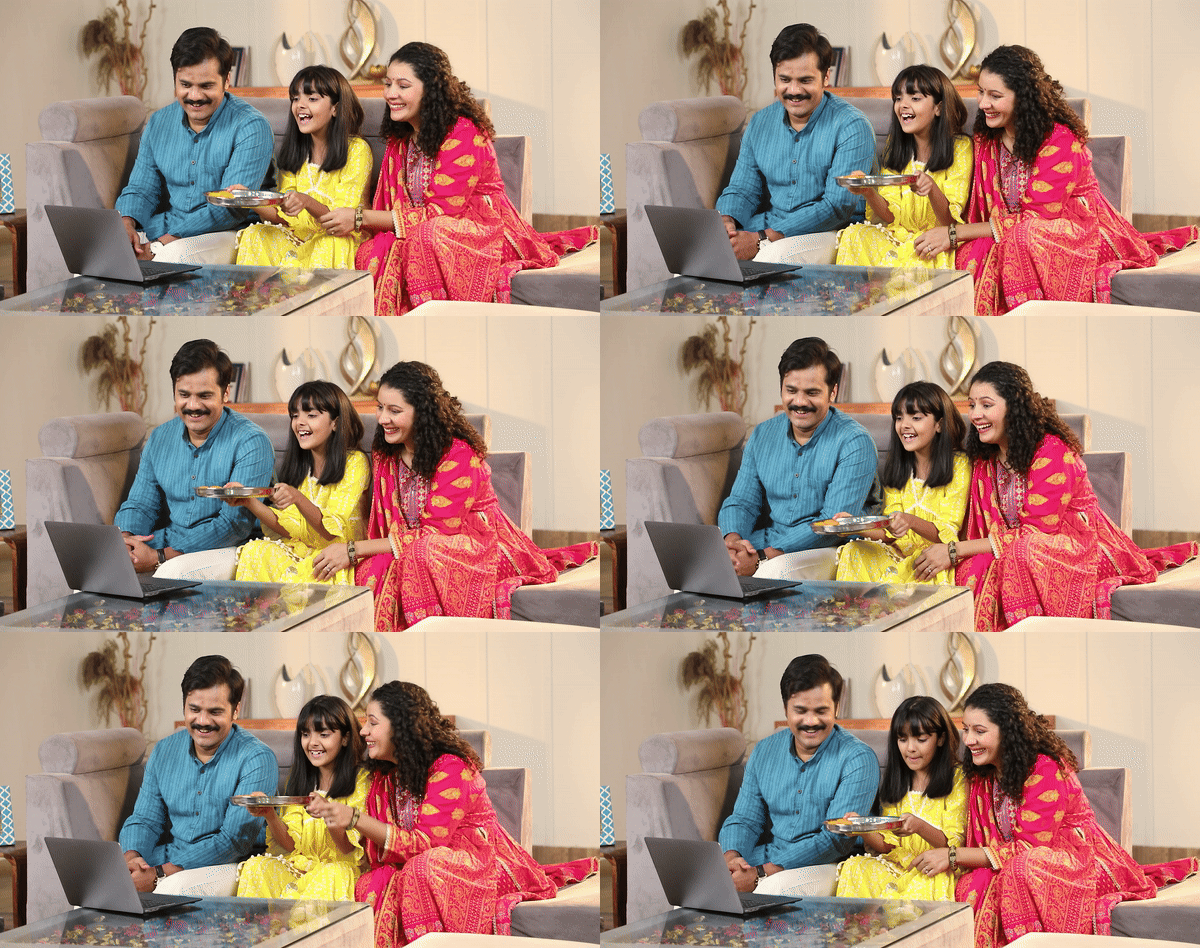
Many Indian families today are spread across cities and countries. If you live far from your parents, you can still be close in many ways. Keep a fixed time for a daily video call, and pray together for a few minutes during the call. Arrange a trusted neighbour, relative or helper who can check on your parents, and share your contact details with them. Keep a clear record of doctors, medicines and emergency numbers. Plan regular visits, and tell your parents about them in advance, as the thought of a visit is itself a comfort.
Another way is to arrange a Homam for your parents’ wellbeing, which can be done online. This is a beautiful way for an NRI family to take part in the blessings of a ritual at home, even from a long distance.
Can a Homam Support Elderly Parents?
Many children choose to perform a Homam for their parents. The Dhanvantari Homam is a Vedic fire ritual that honours Bhagwan Dhanvantari, the divine physician. It is traditionally performed to seek blessings for health, strength and peace of mind. The priests take a Sankalpa in the parent’s name, chant the Dhanvantari mantras and offer ghee and sacred herbs into the fire.
Some families also choose the Maha Mrityunjaya Homam for protection, or the Ayushya Homam for long life and milestone birthdays. If you are unsure, our post on Dhanvantari Homam vs Maha Mrityunjaya Homam may help. You can read more about the ritual on our Dhanvantari Homam page.
How Should We See Prayer and Medical Care Together?
Prayer, mantras and the Homam are forms of spiritual support. They are not a replacement for medical advice, diagnosis or treatment. They do not promise any result, and they should never delay or replace the care of a doctor, especially for an elderly person.
The best way to see prayer is as a companion to good care. The doctor treats the body, the family looks after the person, and the prayer gives strength, comfort and calm to the mind. Please continue to follow your doctor’s guidance, and never stop or change a treatment because of a ritual.
Key Takeaways
- Elderly parents benefit when prayer, respect, companionship and medical care go together.
- Vedic tradition sees the later years as a time of wisdom, and teaches us to honour parents as Bhagwan.
- Common prayers include the Dhanvantari mantra, the Maha Mrityunjaya mantra, the Vishnu Sahasranama and the blessing “Jivema Sharadah Shatam”.
- Let your parents choose their prayers and lead them if they wish, and keep their dignity at the centre.
- Ask their doctor before travel or pilgrimage, and plan for comfort and rest.
- A Homam is spiritual support and works alongside medical care, never in place of it.
Frequently Asked Questions
Q. Which mantra is best for the health of elderly parents?
Many families chant the Dhanvantari mantra for health, the Maha Mrityunjaya mantra for courage and the Vishnu Sahasranama for peace. The best mantra is the one that your parents love and know from childhood.
Q. What does “Jivema Sharadah Shatam” mean?
It is a Vedic blessing that means “May we live for a hundred autumns”, and is often joined with “Pashyema Sharadah Shatam”, which means “May we see for a hundred autumns”. It is a traditional blessing for a long and active life.
Q. How can I include my elderly parents in daily prayer?
Ask what they would like, let them choose the prayer and lead if they wish, offer a comfortable seat and clear books or audio, and respect their pace and privacy.
Q. Can elderly parents go on a pilgrimage?
Many can, with planning. Please ask their doctor first, choose easy routes and well served temples, travel at a relaxed pace, and carry medicines and a medical summary. If travel is hard, a nearby temple or a prayer at home is just as dear to Bhagwan.
Q. Which Homam is suitable for elderly parents?
Many families choose the Dhanvantari Homam for health, the Maha Mrityunjaya Homam for protection and the Ayushya Homam for long life and milestone birthdays. A priest can advise on what suits your situation.
Q. Can NRI children do something for their parents in India?
Yes. Keep regular calls, pray together over video, arrange a trusted helper nearby, keep a clear record of medicines and doctors, and consider booking a Homam online for your parents’ wellbeing.
A Note on Health and Faith
Prayer, mantra chanting and the Dhanvantari Homam are forms of spiritual support. They are not a substitute for medical advice, diagnosis or treatment. Please continue to follow your doctor’s guidance and take care of your health along with your prayers.
Seek the Blessings of Bhagwan Dhanvantari
If you wish to pray for the health and wellbeing of your parents with the full Vedic method, you can book the Dhanvantari Homam with Jyotirgamaya from anywhere in the world. Visit the Dhanvantari Homam page.