


Which Planets Are Linked to Health Concerns in a Horoscope? A Vedic Astrology Guide
By: Pratima Argade
29 October 2026 at 1:44 AM
In Vedic astrology, each of the nine grahas is traditionally linked with certain themes of the body and mind. Surya is linked with vitality, Chandra with the mind, Mangal with energy and blood, Budha with the nerves, Guru with growth, Shukra with comfort and reproduction, Shani with bones and endurance, and Rahu and Ketu with hard to explain concerns. This is a tool for reflection and spiritual practice, and never a medical diagnosis.
Many people look at their horoscope when someone in the family is unwell. They want to know why it is happening, how long it may last, and whether a planet is the reason. This is a very natural wish, and Jyotish has a long tradition of studying health through the horoscope, called medical astrology or Ayurvedic astrology.
At the same time, this is a subject that needs great care. Astrology can easily be used to frighten people, to sell expensive remedies or to push people away from proper treatment. In this post, we will explain what Vedic astrology says about the planets and health in a simple and balanced way, and also what it cannot and should not do. If you wish to know more about Bhagwan Dhanvantari, you can read our post on who Bhagwan Dhanvantari is.
Does Vedic Astrology Connect Planets With Health?
Yes, the classical texts of Jyotish, such as the Brihat Parashara Hora Shastra, speak about the link between the grahas, the houses of the horoscope and the parts and functions of the body. Jyotish also has a close link with Ayurveda, the Indian science of life, and in the old days a good Vaidya often knew some Jyotish, and a good Jyotishi often knew some Ayurveda.
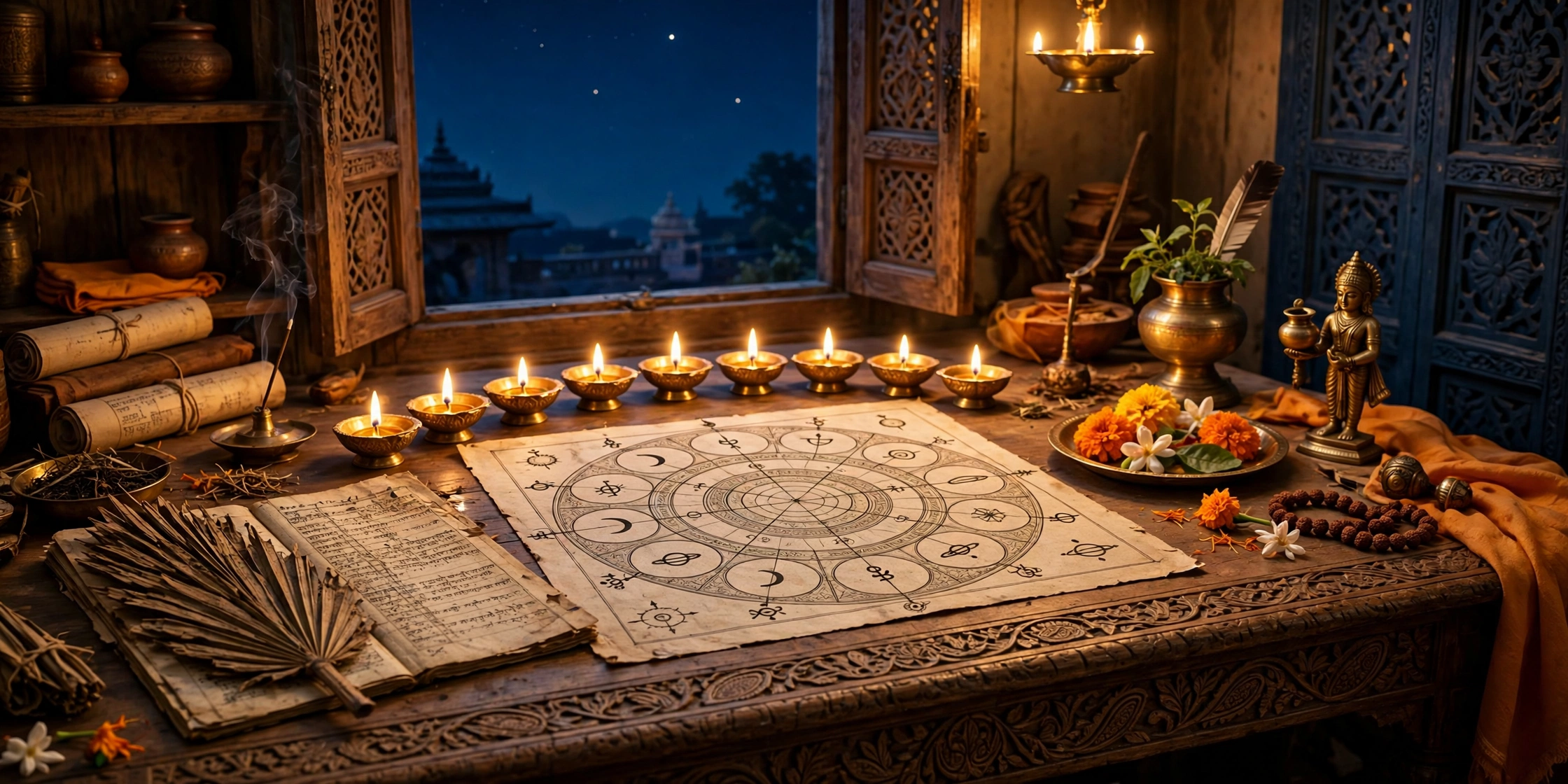
The basic idea is that the horoscope is a map of a person’s nature, strengths and tender areas at the time of birth, and that the movement of the planets through time can bring different themes into focus. The horoscope is seen as a mirror for reflection, and not as a verdict.
How Should We Read This Correctly?
Before we go into the planets, it is important to hold a few points in mind.
First, a planet does not “cause” an illness. In the Jyotish view, planets are indicators, like signs on a road. They point to themes and periods in life, and do not decide what will happen. Second, every horoscope is unique. The same planet can mean very different things depending on its sign, house, strength and the planets around it. Third, astrology cannot diagnose any condition. A diagnosis can only come from a doctor with proper tests.
If a Jyotishi ever tells you that a particular illness will definitely happen, or that you should stop a treatment, or that only an expensive ritual can save you, please step back and speak to your doctor. A good Jyotishi will always encourage you to continue medical care, and will see the horoscope as a gentle guide.
What Does Each Graha Traditionally Represent?
Different texts and teachers describe the planets in slightly different ways. These are the most common traditional themes, given in simple words. We have kept to body areas and themes, and we do not link any planet with a named illness.
- Surya (Sun). Vitality, the life force, the heart region, the eyes, bones and the overall sense of energy. A strong Surya is traditionally seen as a sign of confidence and vigour.
- Chandra (Moon). The mind, emotions, sleep and the fluids of the body. Since Chandra is the karaka of the mind, it is closely linked to mental peace and emotional balance.
- Mangala (Mars). Energy, muscles, blood, courage, and also injuries, cuts and accidents. It is linked to drive, and also to haste.
- Budha (Mercury). The nervous system, skin, speech and the way we think and process things. It is linked to nervous energy and communication.
- Guru (Jupiter). Growth, the liver area, fat and tissue, wisdom and general protection. It is generally seen as a supportive and expanding influence.
- Shukra (Venus). Comfort, the reproductive system, the kidneys and the throat, as well as beauty and pleasure. It is linked to the enjoyment of life.
- Shani (Saturn). Bones, joints, teeth, nerves, long lasting matters and endurance. It is seen as the graha of time and slow, steady processes.
- Rahu. Things that are unusual, hard to explain or hard to diagnose, as well as restlessness and unease. In Jyotish, Rahu is linked to the unfamiliar and to sudden changes.
- Ketu. Mysterious or hard to trace matters, wounds, detachment and inner searching. Ketu is also seen as a graha of the spiritual path.
These links are traditional, and not scientific. Please treat them as themes for reflection, and not as a list of diseases.
Which Houses Matter for Health?
Besides the planets, the houses of the horoscope are important. A few are usually studied for health.
The Lagna, or the first house, represents the body, the overall vitality and the nature of the person. The strength of the Lagna and its lord is seen as a sign of general resilience. The sixth house is linked to daily health habits, illness and the capacity to recover. The eighth house is linked to long lasting matters, sudden changes and longevity. The twelfth house is linked to rest, hospitals, losses and the use of energy.
We will explain these houses in detail in our next post on the 6th, 8th and 12th houses and health in Vedic astrology.
How Do Planets Link to the Three Doshas?
Jyotish and Ayurveda meet in the idea of the doshas, Vata, Pitta and Kapha. Traditional teachers link the planets to the doshas in different ways. A common view is that Surya and Mangala are connected with the Pitta nature, Chandra and Shukra with Kapha and a part of Vata, Shani and Rahu with Vata, and Guru with Kapha. Budha is often seen as a balancing planet that touches all three.
These correlations are not exact, and different schools have different views. What is useful for the average reader is the larger idea, that Indian tradition always saw the body, the mind and the cosmos as linked. Please do not use this to decide your own diet or treatment. Only a qualified doctor or Vaidya can advise that.
What Does a Strong or Weak Planet Mean?
In Jyotish, a planet is called strong or weak depending on its sign, its house, its dignity, the aspects it receives and its time period. A planet in a favourable position is said to give its themes with ease, while a planet under pressure may bring its themes into focus as areas to take care of.
It is helpful to see this in a positive way. For example, if the Moon seems under pressure in a chart, it may be a gentle reminder to look after sleep, emotional balance and rest. If Mars seems prominent, it may be a reminder to be careful about haste and injury. These are not predictions of trouble. They are pointers for self care.
What Can Jyotish Not Do?
It is important to be honest about the limits of astrology. Jyotish cannot diagnose any condition, name a disease, predict an exact illness or its timing, or promise a cure. It cannot replace a doctor, a test, a medicine or a surgery. It also cannot tell you that an illness is a punishment or a result of a mistake, and it should never be used to blame a patient or a family.
If anyone, including an astrologer, creates fear in you about your health or a loved one’s, please take it as a sign to talk to your doctor. A balanced Jyotishi will encourage you to keep up all the medical care and to use prayer and remedies as a support for the mind.
What Traditional Remedies Does Jyotish Suggest?
Jyotish often suggests simple devotional practices linked to the grahas. These are traditional, and they work as a source of peace and discipline, and not as a promise of any outcome.
Common examples are the worship of Surya with Surya Arghya or the Aditya Hridayam on Sundays, the worship of Bhagwan Shiva on Mondays for Chandra, prayers to Bhagwan Hanuman or Kartikeya on Tuesdays for Mangala, prayers to Bhagwan Vishnu on Wednesdays for Budha, the worship of one’s Guru or Bhagwan Dakshinamurthy on Thursdays for Guru, the worship of Devi Lakshmi on Fridays for Shukra, prayers to Bhagwan Hanuman or Shani on Saturdays for Shani, and prayers to Devi Durga, Bhagwan Ganesha or Bhagwan Narasimha for Rahu and Ketu. Acts of seva, such as helping the needy or caring for elders, are also seen as a very powerful remedy in the tradition.
Please be careful with expensive gemstones, yantras, amulets and special rituals that are sold as health remedies. Gemstones are sometimes pushed with a lot of fear and a high price, and they are not a medical treatment. If you are advised to wear one, please speak to a trusted and honest Jyotishi, never spend beyond your means, and never use it in place of treatment.
How Can We Choose an Astrologer Wisely?
Good Jyotishis are a gift, and there are many honest and caring ones. Here are a few signs to look for. A good astrologer speaks calmly and does not create panic. They tell you clearly that Jyotish is guidance and not a medical opinion. They encourage you to follow your doctor’s advice. They do not insist on a single costly remedy. They are open about their fees, and they respect your privacy and your choices.
Please walk away from anyone who promises a cure, predicts a death or a serious illness with certainty, asks you to stop medicines, demands large payments, or says that a ritual must be done at once or something terrible will happen. These are warning signs.
Where Does the Dhanvantari Homam Fit In?
In the Jyotish tradition, when the horoscope shows worries about health, such as strain on the sixth house or a hard planetary period, teachers often suggest the Dhanvantari Homam as a supportive ritual. The Dhanvantari Homam is a Vedic fire ritual that honours Bhagwan Dhanvantari, the divine physician. It is traditionally performed to seek blessings for health, strength and peace of mind. The priests take a Sankalpa in the name of the person, with their gotra and nakshatra, chant the Dhanvantari mantras and offer ghee and sacred herbs into the fire.
Some families also choose the Maha Mrityunjaya Homam or the Ayushya Homam. Our posts on Dhanvantari Homam vs Maha Mrityunjaya Homam and on Dhanvantari Homam vs Ayushya Homam vs Sudarshana Homam may help you decide. The Homam can also be booked online, so you can join the prayer in your heart from anywhere. You can read more on our Dhanvantari Homam page.
How Should We See Astrology and Medical Care Together?
Astrology and the Homam are forms of spiritual guidance and support. They are not a replacement for medical advice, diagnosis or treatment. They do not promise any result, and they should never delay or replace the care of a doctor.
The best way to see them is as companions to good care. The doctor treats the body, the family looks after the person, and Jyotish and prayer give reflection, hope and calm to the mind. Please continue to follow your doctor’s guidance, and never stop or change a treatment because of an astrological remedy.
Key Takeaways
- Vedic astrology links each graha with themes of the body and mind, such as Surya with vitality and Chandra with the mind, as a tool for reflection.
- Planets are indicators and not causes, every horoscope is unique, and astrology cannot diagnose any condition.
- The Lagna, 6th, 8th and 12th houses are the ones studied most for health.
- Traditional remedies are devotional practices like Surya Arghya, prayers on the graha days and acts of seva.
- Be careful with expensive gemstones and special rituals sold as health remedies, and choose a calm and honest astrologer.
- A Homam is spiritual support and works alongside medical care, never in place of it.
Frequently Asked Questions
Q. Which planet is responsible for health in astrology?
No single planet is responsible. Surya is linked with vitality, Chandra with the mind, and the Lagna and its lord with the body, but all nine grahas and the houses together are read for a full picture. They are indicators and not causes.
Q. Can astrology predict illness?
No. Astrology cannot diagnose any condition or predict an illness with its timing. It can point to themes for reflection and self care, and it should never replace medical advice.
Q. Which house in a horoscope shows health?
The first house, called the Lagna, shows the body and vitality, and the sixth house is linked with health habits and recovery. The eighth and twelfth houses are also studied. We explain them in our next post.
Q. Should I wear a gemstone for good health?
Gemstones are not a medical treatment. Please be careful with high priced gemstones sold as health remedies, speak to an honest Jyotishi if you wish, and never use a gemstone in place of treatment.
Q. What are the remedies for weak planets in health matters?
Traditional remedies include prayers on the day of the graha, Surya Arghya, mantras, and acts of seva. They are a support for the mind and not a medical treatment.
Q. Which Homam is suggested when the horoscope shows health worries?
Teachers often suggest the Dhanvantari Homam as a supportive ritual, and some also suggest the Maha Mrityunjaya Homam or the Ayushya Homam. It is spiritual support and does not replace medical care.
A Note on Health and Faith
Astrology, prayer and the Dhanvantari Homam are forms of spiritual guidance and support. They are not a substitute for medical advice, diagnosis or treatment. Please continue to follow your doctor’s guidance and take care of your health along with your prayers.
Seek the Blessings of Bhagwan Dhanvantari
If you wish to pray for the health and wellbeing of your family with the full Vedic method, you can book the Dhanvantari Homam with Jyotirgamaya from anywhere in the world. Visit the Dhanvantari Homam page.