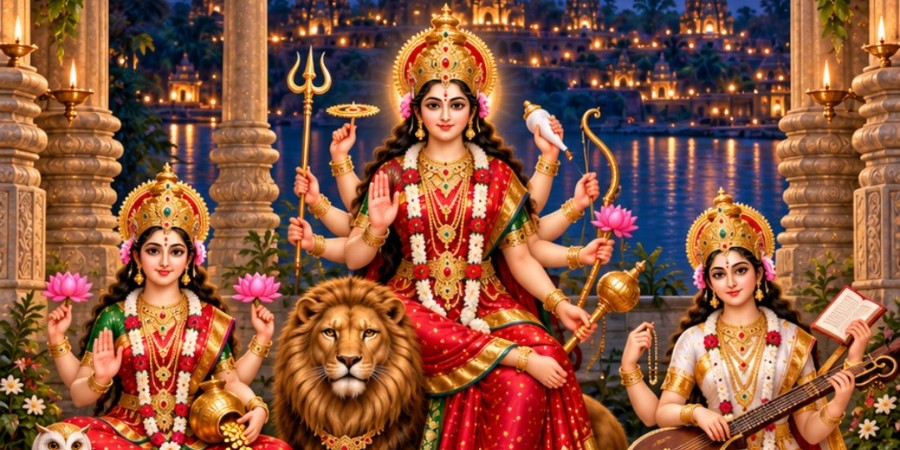
Navratri Homa: Durga Homa and Saraswati Homa Meaning, Benefits and How to Choose
By: Pratima Argade
14 October 2026 at 10:04 AM
A Navratri homa is a sacred fire ritual done during the nine nights of Navaratri to worship Devi. Durga Homa is offered for protection, courage and removal of obstacles. Saraswati Homa is offered for knowledge, focus and clear speech. Both are done with sankalpa, mantras and offerings into Agni.
Every year, when Navaratri arrives, families across India and across the world prepare to welcome Devi. Homes are cleaned, diyas are lit, and prayers fill the air. Many devotees also look for something deeper than daily puja, and this is where the homa comes in.
Two homas are especially popular during these nine nights: Durga Homa and Saraswati Homa. People often ask what each one means, how they are different, and which one is right for them. This guide answers these questions in simple words, using the teachings of our Puranas and Vedic tradition.
What Is a Navratri Homa and Why Is It Done?
A homa, also called a havan, is a Vedic ritual in which a trained Pandit lights a sacred fire and offers ghee, samidha and other havan dravya into it while chanting mantras. In our tradition, Agni is the messenger between humans and the Devatas. What we offer into Agni, along with the mantra, is believed to reach the Devata we are worshipping.
A Navratri homa is a homa done during Navaratri, the nine nights dedicated to Devi Shakti. It is usually done for a purpose, such as protection, learning, peace in the family or a fresh start. This purpose is spoken aloud in the sankalpa at the beginning of the ritual.
Why Is a Homa Special During Navaratri?
Navaratri is called the time of Shakti. Devi is worshipped in her nine forms, known as Navadurga: Shailaputri, Brahmacharini, Chandraghanta, Kushmanda, Skandamata, Katyayani, Kalaratri, Mahagauri and Siddhidatri. The Sharad Navaratri in autumn is called Maha Navaratri, because it is considered the most important of the four Navaratris in a year.
The Devi Mahatmya, which is part of the Markandeya Purana, speaks of the great yearly worship of Devi in the Sharad season. The Devi Bhagavata Purana also describes the Navaratri vrata and tells how Bhagwan Shri Rama worshipped Devi before his battle with Ravana. Because these nights are so closely linked with Devi, many devotees believe that a homa done in this period carries special power.
What Is Durga Homa and What Are Its Benefits?
Durga Homa is a homa offered to Devi Durga, the Devi who protects her devotees and removes fear. In the Devi Mahatmya, Devi Durga destroys Mahishasura, Shumbha and Nishumbha. These stories are seen as symbols of ego, greed and darkness being destroyed by divine strength. When a devotee offers a Durga Homa, the prayer is to receive the same protection in daily life.
Devotees traditionally offer Durga Homa for these purposes:
- Protection from fear, worry and negative energy
- Courage to face challenges at work and at home
- Relief from repeated delays and obstacles
- Strength during difficult planetary periods
- Peace and safety for the whole family
Ashtami and Navami are widely seen as very important days for Durga worship, and many families choose these days for Durga Homa. A Durga Shanti Homa is a related seva focused on bringing peace and removing obstacles. It is traditionally preferred when someone feels that problems keep repeating.
What Is Saraswati Homa and What Are Its Benefits?
Saraswati is the Devi of knowledge, speech, music and the arts. Her worship is very old. The Rigveda has hymns praising Saraswati, and in the Devi Suktam, Devi herself speaks as Vak, the power behind all speech and all knowledge. In the Devi Mahatmya tradition, the third episode of the text, which tells of the destruction of Shumbha and Nishumbha, is linked with Mahasaraswati.
Saraswati Homa is traditionally offered for:
- Better focus and memory
- Clear and confident speech
- Growth in learning and skills
- Success in creative work such as music, writing and art
- Good values and wisdom for children
It is a lovely seva for students, teachers, speakers, artists and professionals who are beginning a new learning journey. Parents also offer it on behalf of their children.
Durga Homa or Saraswati Homa: Which One Should You Choose?
Both homas honour Devi, so there is no wrong choice. The difference lies in your prayer.
Choose Durga Homa if your heart is asking for protection, strength and relief from fear or obstacles. Choose Saraswati Homa if you are asking for knowledge, focus, speech and creative growth.
Some families offer both, because strength and wisdom go together. A person with courage but without clarity may struggle, and a person with knowledge but without courage may hesitate. In the Devi Mahatmya tradition too, the three Devis, Mahakali, Mahalakshmi and Mahasaraswati, are worshipped together as aspects of one Shakti. If you are unsure, a Pandit can guide you after seeing your birth details.
What Is a Homa on Janma Nakshatra Day?
Janma Nakshatra is the star in which the Moon was placed at the time of your birth. In Jyotish, the day when this nakshatra comes again is considered personally strong for you. Many devotees choose to do a homa on this day because it matches their own cosmic energy.
In a Samoohik Seva, many devotees join one homa on a fixed festival day. In an individual homa, the Pandit performs the homa only for you and your family, planned around your Janma Nakshatra. The mantras, sankalpa and offerings are focused on your needs. Devotees who want a more personal seva, or who cannot join on the festival day, often prefer this option.
How Is a Navratri Homa Performed?
A homa follows a clear Vedic vidhi. While details can differ by tradition, the main steps are usually these:
- Sankalpa: The Pandit says your name, gotra, nakshatra and purpose aloud.
- Ganapati Puja: Bhagwan Ganapati is worshipped first to remove obstacles.
- Kalasha Sthapana and Devi Avahana: A sacred kalasha is set up and Devi is invited with mantras.
- Agni Pratishtha: The sacred fire is lit as per Vedic vidhi.
- Main Homa: Durga or Saraswati mantras are chanted, and offerings of ghee, samidha and havan dravya are made into Agni.
- Purnahuti: The final offering completes the homa.
- Mangalaarti and Naivedya: Aarti is done and the naivedya offering is made to Devi.
- Ashirvada: Blessings are given for the Sevakartha and family.
What Is Sankalpa and Why Is It Important?
Sankalpa is a solemn resolve made at the start of every Vedic ritual. The Pandit states the place, the time, your name, your gotra, your nakshatra and the purpose of the homa. This is why the same homa can be offered for many people, yet each person’s prayer is clearly named.
Sankalpa is also the reason you can take part even when you are not sitting next to the havan kund. When your name and family details are spoken in the sankalpa, the homa is offered on your behalf. Your own devotion, silent prayer and good thoughts during that time add to the seva.
Can You Take Part in a Navratri Homa Online From Abroad?
Yes. Many devotees living in the USA, UK, Canada, Australia and the Gulf countries take part in homas online. You share your name, gotra and Janma Nakshatra, and the Pandit takes the sankalpa for you and your family. You can then watch the puja live and see the recording later with your family. Being far from India does not stop you from taking part in Navaratri with devotion.
What Can You Do at Home During Navratri?
You do not need a large ritual to worship Devi. Simple daily practices are also powerful:
- Wake up early, bathe and keep your puja space clean
- Light a ghee diya and offer fresh flowers to Devi
- Chant a Devi mantra, such as “Om Dum Durgayai Namah”, or the mantra of the day
- Eat sattvic food and avoid onion, garlic and non vegetarian food during your vrat
- Speak kindly and keep your mind calm
- Wear the colour of the day if it feels right, as this is a tradition and not a rule
Even five minutes of sincere prayer each morning can bring peace to the whole day.
What Do the Scriptures Say About Devi Worship?
- Devi Mahatmya (Durga Saptashati), Markandeya Purana: The main text of Devi worship. It tells how Devi Durga destroyed Mahishasura, Shumbha and Nishumbha, and it praises the yearly worship of Devi in the Sharad season.
- Devi Bhagavata Purana: Describes the Navaratri vrata and the worship of Devi, including how Bhagwan Shri Rama worshipped Devi before his victory over Ravana.
- Skanda Purana: Praises Devi worship, homa and mantra japa as a path to protection and fulfilment of sincere wishes.
- Rigveda, Devi Suktam: The ancient hymn in which Devi speaks as Vak, the power behind speech and knowledge. It is the root of Saraswati worship.
Key Takeaways
- A Navratri homa is a sacred fire ritual done with sankalpa and mantras during the nine nights of Devi worship
- Durga Homa is offered for protection, courage and removal of obstacles
- Saraswati Homa is offered for knowledge, focus, speech and creative growth
- Both can be offered together, as strength and wisdom support each other
- A homa on Janma Nakshatra day is a more personal seva
- You can take part online from anywhere in the world
- A homa is spiritual support, and it works best alongside sincere effort and sound advice
Frequently Asked Questions
Q. What is the difference between Durga Homa and Saraswati Homa?
Durga Homa is offered to Devi Durga for protection, courage and removal of obstacles. Saraswati Homa is offered to Devi Saraswati for knowledge, focus, speech and creative growth. Both honour Devi, and the choice depends on what you are praying for.
Q. Which homa is best for students?
Saraswati Homa is traditionally offered by students and parents for focus, memory and learning. Some families also offer Durga Homa for confidence and courage. A homa supports your efforts, and regular study and hard work remain important.
Q. Can I take part if I cannot fast during Navratri?
Yes. Fasting is a personal choice and is not required to take part in a homa. Many devotees who cannot fast choose to eat sattvic food, chant a Devi mantra and keep their mind calm.
Q. Do I need to be present in person for the homa?
No. The Pandit takes the sankalpa in your name and offers the homa on your behalf. Many devotees watch the puja live online, and your devotion at home adds to the seva.
Q. When is the best time to do a Durga Homa?
Navaratri is considered the best time, especially Ashtami and Navami. A Durga Homa can also be done on your Janma Nakshatra day, which many devotees find more personal.
Q. Can the whole family be included in one homa?
Yes. In the sankalpa, the names of family members can be included along with the Sevakartha. This is why many families offer one homa for the peace and wellbeing of everyone at home.
This blog shares traditional beliefs and practices. A homa is spiritual support and does not replace medical, legal, financial or educational guidance.
Take Part in Navratri Havan With Jyotirgamaya
If you would like to take part in a Durga Homa or Saraswati Homa this Navratri, visit our Navratri Havan page to see the sevas available. Every seva includes sankalpa for the Sevakartha and family, a live puja and recording, an energised coin and free prasadam delivery.