Navgrah Shanti Puja for Marriage Complete Guide - How Balancing Nine Planets Removes All Marriage Obstacles
By: Pratima Argade
23 June 2026 at 12:09 AM
Navgrah Shanti Puja - How Balancing All Nine Planets at Once Clears the Path to Marriage
Most people who come to Vedic Jyotish for guidance about their marriage challenges come looking for the single thing that is wrong.
The single dosha. The single planet that is causing all the problems. The single remedy that will fix everything.
And experienced Jyotishis understand why people think this way. It is simpler. It is more actionable. It gives the mind something specific to address rather than the more complex and more accurate reality of how kundalis actually work.
The reality is this. A kundali is a complete system. All nine grahas interact with each other constantly. They aspect each other. They occupy each other's signs. They create yogas with each other. And their combined influence on any specific area of life, including marriage, is always the result of multiple planetary interactions rather than the single, isolated action of one planet.
This means that when marriage is being delayed or disrupted, it is almost always because multiple planets are creating multiple challenges in multiple ways simultaneously. One planet may be creating a specific dosha in the seventh house. Another may be in an unfavorable dasha period. Another may be creating a Paap Kartari condition. Another may be weak or combust.
Addressing only one of these while the others continue unchecked is why people often find that a single dosha-specific puja gives partial improvement but not the complete resolution they were hoping for.
Navgrah Shanti Puja is the solution to this fundamental complexity. It is the comprehensive planetary harmonisation ritual that addresses all nine grahas together, creating a foundation of overall planetary balance from which marriage and all other important life events can proceed with the maximum possible divine support.
Who Are the Navgrahas and Why Do All Nine Matter for Marriage
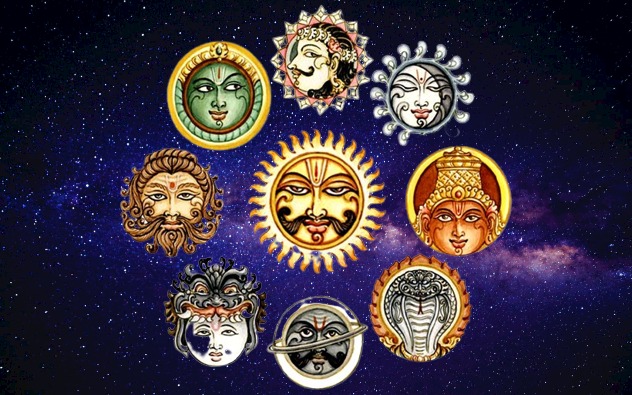
The nine grahas of Vedic Jyotish are Surya (Sun), Chandra (Moon), Mangal (Mars), Budha (Mercury), Guru (Jupiter), Shukra (Venus), Shani (Saturn), Rahu (North Lunar Node) and Ketu (South Lunar Node).
Each of these nine grahas governs specific dimensions of human life and experience. In the context of marriage specifically, here is what each graha governs and why its harmonious functioning matters for the marriage path:
- Surya governs the soul, self-expression, authority and dignity. A troubled Surya creates ego conflicts in marriage and can create specific challenges with the paternal lineage's role in the marriage process.
- Chandra governs the mind, emotions, the mother and the domestic environment. A troubled Chandra creates emotional inconsistency that makes sustained intimate partnership genuinely difficult.
- Mangal governs energy, passion, courage and conflict. A troubled Mangal in marriage-related positions creates the Mangal Dosha condition and its specific pattern of proposals falling through and marital friction.
- Budha governs communication, intellect, discrimination and the nervous system. A troubled Budha creates communication difficulties in marriage and can affect the clarity needed for good marriage decisions.
- Guru governs wisdom, dharma, abundance, children and auspiciousness. As the karak of the husband for women, Guru's condition is among the most important single factors in marriage timing and quality.
- Shukra governs love, beauty, harmony, pleasure and intimate relationships. As the karak of marriage for all and of the wife for men, Shukra's condition is the most fundamental single indicator of marriage capacity.
- Shani governs karma, discipline, delay and the patient working out of consequences. A challenging Shani in marriage-related positions creates the significant marriage delay that we have discussed at length in earlier blogs.
- Rahu governs desire, illusion, transgression and karmic intensity. A challenging Rahu in marriage-related positions creates the pattern of near-misses, illusion and sudden reversals in the marriage path.
- Ketu governs detachment, past life karma and spiritual dissolution. A challenging Ketu in marriage-related positions creates the specific quality of emotional distance and disinterest in conventional marriage.
When all nine grahas are functioning harmoniously and are mutually supportive in a kundali, the path to marriage flows with a natural ease and grace. When multiple grahas are creating challenges simultaneously, the cumulative weight of those challenges creates the persistent, multi-dimensional marriage obstacle that many people experience but cannot fully explain.
Navgrah Shanti Puja creates the harmonious functioning of all nine grahas together.
The Scriptural Foundation of Navgrah Worship
The worship of the nine grahas as a collective divine system is one of the most ancient and most consistently practised elements of the Vedic tradition. Its scriptural roots go very deep.
- The Rigveda contains hymns to Surya and to the various celestial divinities that form the precursors of the full Navgrah system. The understanding that celestial bodies are living divine intelligences whose influence on human life is both real and respectfully addressable through worship is foundational to the entire Vedic worldview.
- The Yajurveda contains the complete Navgrah Sukta, the hymn specifically dedicated to the nine grahas, which is recited as a central element of Navgrah Shanti Puja. This Sukta addresses each of the nine grahas individually and collectively, seeking their blessing and their harmonious support for the one performing the puja.
- The Brihat Parashara Hora Shastra devotes extensive sections to the nature of each graha, their mutual relationships, the conditions under which they create challenges, and the specific remedies including puja that address those challenges. Sage Parashara consistently teaches that the harmonious functioning of the graha system as a whole is the foundation of a happy and dharmic life.
- The Skanda Purana and the Agni Purana both contain detailed descriptions of the Navgrah Mandala, the sacred geometric arrangement of the nine grahas that forms the central yantra of Navgrah worship, and the specific rituals through which their collective blessings are invoked.
- The Navagraha Stotra, attributed to Vyasa Muni, is the most widely recited hymn to the nine planets and is included in most Navgrah Shanti Puja proceedings. Its recitation creates a specific field of collective graha harmony that directly supports the intention of the puja.
The Nine Presiding Deities of the Navgrahas
One of the most important dimensions of Navgrah Shanti Puja that distinguishes it from a purely astrological remedial practice and establishes it as a genuine spiritual worship is the understanding that each graha has a presiding deity whose grace is the ultimate source of the graha's positive blessings.
The nine presiding deities and their relationships to the nine grahas are:
- Surya is presided over by Bhagwan Vishnu in his solar aspect as the sustainer and illuminator of all creation.
- Chandra is presided over by Bhagwan Shiva in his aspect as Chandrashekhara, the one who wears the Moon and protects its light.
- Mangal is presided over by Bhagwan Kartikeya (Murugan), the commander of the divine army and the deity who governs righteous action and courage.
- Budha is presided over by Bhagwan Vishnu in his avatar as Bhagwan Ram, the embodiment of righteous speech and clear communication.
- Guru is presided over by Bhagwan Brahma in his aspect as the cosmic teacher and the origin of all sacred wisdom.
- Shukra is presided over by Maa Lakshmi, the goddess of beauty, abundance and genuine love.
- Shani is presided over by Bhagwan Yama and more popularly by Bhagwan Shiva in his aspect as the great lord of karma and time.
- Rahu is presided over by Maa Durga in her most fierce and protective aspect.
- Ketu is presided over by Bhagwan Ganesha as the remover of obstacles and the keeper of the threshold between dimensions.
When Navgrah Shanti Puja is performed with this understanding, it becomes not just a planetary remedial ritual but a comprehensive act of divine worship that invokes the grace of multiple divine presences simultaneously.
The Navgrah Mandala and Its Sacred Geometry
At the heart of Navgrah Shanti Puja is the Navgrah Mandala, the sacred geometric arrangement in which the nine grahas are represented and worshipped.
The mandala is typically drawn on a clean surface or on a copper plate with specific materials including turmeric, rice flour, kumkum and other sacred substances. The arrangement follows a specific spatial logic that reflects the cosmological understanding of the nine grahas and their mutual relationships.
The Sun, Surya, is placed at the center of the mandala, reflecting his status as the primary luminary and the central governing force of the solar system.
The Moon, Mangal, Mercury, Jupiter, Venus and Saturn are arranged in a specific pattern around Surya, each in their designated position within the sacred geometry.
Rahu is placed in the northwest and Ketu in the southwest of the mandala, reflecting their shadowy and directional qualities within the Vedic cosmological framework.
The entire mandala is then activated through specific mantras, through the establishment of the sacred fire and through the ritual invocation of each graha's divine presence within the sacred geometric form.
This activation of the Navgrah Mandala is not merely symbolic. In the Vedic understanding of sacred geometry, a properly established and properly activated yantra is a genuine channel of divine energy. The mandala becomes, through the puja, a living energetic field through which the collective harmonising energy of all nine grahas is concentrated and directed toward the specific intention of the puja.
The Complete Vidhi of Navgrah Shanti Puja
A properly performed Navgrah Shanti Puja follows a specific and complete sequence. Its performance by a learned pandit with genuine knowledge of the complete vidhi is essential for its full effectiveness. Here is an overview of the major elements:
1. Preparation. The puja space is thoroughly cleaned. The Navgrah Mandala is drawn or a copper Navgrah plate is placed in the puja space. Specific materials for each of the nine grahas are gathered. Each graha has specific associated materials, colors, flowers, grains and offerings that resonate with its energy and that are used in the havan and archana specific to each planet.
The materials associated with each graha are:
- Surya: Red flowers, wheat, copper vessel, red sandal paste, red cloth.
- Chandra: White flowers, white rice, silver vessel, white sandal paste, white cloth.
- Mangal: Red flowers, red lentils (masoor dal), copper vessel, red sandal paste, red cloth.
- Budha: Green flowers, green gram (moong dal), bronze vessel, green sandal paste, green cloth.
- Guru: Yellow flowers, yellow lentils (chana dal), gold or yellow vessel, yellow sandal paste, yellow cloth.
- Shukra: White flowers, white rice, silver vessel, white sandal paste, white cloth.
- Shani: Blue or black flowers, black sesame seeds, iron vessel, blue or black sandal paste, blue or black cloth.
- Rahu: Blue flowers, black sesame, iron vessel, blue sandal paste, blue cloth.
- Ketu: Multicolored flowers, horse gram (kulthi dal), iron vessel, grey sandal paste, grey cloth.
2. Sankalpa. The formal intention statement is made before the puja begins. For Navgrah Shanti Puja for marriage, the Sankalpa specifically states the intention of seeking the combined blessings of all nine grahas for the removal of all planetary obstacles to vivah and for the auspicious and timely completion of marriage.
3. Punyahavachana. The ritual purification of the space, the materials and the participants through specific mantras and water sprinkling.
4. Kalash Sthapana. The establishment of the sacred Kalash as the seat of divine energy for the puja.
4. Ganapati Puja. The invocation and worship of Bhagwan Ganesha as the remover of obstacles and the bestower of auspicious beginnings.
5. Navagraha Avahana. The formal invocation of all nine grahas into the mandala through specific mantras. Each graha is invoked individually and their collective presence in the mandala is established.
6. Individual Graha Puja. Each of the nine grahas is worshipped individually in sequence with their specific offerings, specific mantras and specific ritual actions. The pandits performing the puja chant the specific mantras for each graha, offer the specific materials and seek each graha's specific blessings.
7. Navgrah Stotra recitation. The Navagraha Stotra is recited, addressing all nine grahas together and seeking their collective harmonious blessings.
8. Navgrah Havan. A sacred fire is established and offerings are made to each of the nine grahas in sequence. The havan for each graha uses the specific materials associated with that graha. The total number of havan offerings in a standard Navgrah Shanti Puja is typically 1008 or a multiple thereof.
For a more powerful puja, particularly when significant doshas across multiple planets are present, 10008 or 27008 havan offerings are performed. The increased number of offerings increases the karmic merit generated and the intensity of the harmonising effect.
9. Dana. After the havan, specific charitable donations are made for each graha. These donations are typically given to Brahmins as representatives of the divine and they represent a form of karmic balancing through generous giving.
10. Prasad distribution. The puja concludes with the distribution of prasad that has been blessed through the complete ritual.
The Nine Beej Mantras for Daily Practice
While the complete Navgrah Shanti Puja requires a learned pandit and the full ritual context, a daily practice of the nine graha beej mantras is one of the most accessible and most effective ongoing planetary harmonisation practices available for those seeking marriage.
The nine beej mantras are:
- Surya: Om Hram Hreem Hroum Sah Suryaya Namah
- Chandra: Om Shram Shreem Shroum Sah Chandraya Namah
- Mangal: Om Kram Kreem Kroum Sah Bhaumaya Namah
- Budha: Om Bram Breem Broum Sah Budhaya Namah
- Guru: Om Gram Greem Groum Sah Guruve Namah
- Shukra: Om Dram Dreem Droum Sah Shukraya Namah
- Shani: Om Pram Preem Proum Sah Shanaischaraya Namah
- Rahu: Om Bhram Bhreem Bhroum Sah Rahave Namah
- Ketu: Om Shram Shreem Shroum Sah Ketave Namah
Chanting each of these mantras 108 times in sequence daily, ideally at sunrise facing east, creates a sustained daily harmonisation of all nine graha energies. While not a substitute for the formal Navgrah Shanti Puja, this daily practice creates a consistent foundation of planetary balance that supports the formal puja's effects.
The Navgrah Colors, Days and Directions
Understanding the correspondence between the nine grahas, their associated colors, days of the week and spatial directions provides additional practical tools for daily planetary harmonisation.
- Surya: Color red or orange. Day Sunday. Direction east. Wearing red or orange on Sundays and facing east during prayer and mantra practice resonates with Surya's energy.
- Chandra: Color white or silver. Day Monday. Direction northwest. Wearing white or silver on Mondays resonates with Chandra's energy.
- Mangal: Color red. Day Tuesday. Direction south. Wearing red on Tuesdays and making offerings at Bhagwan Hanuman temples resonates with Mangal's energy.
- Budha: Color green. Day Wednesday. Direction north. Wearing green on Wednesdays resonates with Budha's energy.
- Guru: Color yellow or golden. Day Thursday. Direction northeast. Wearing yellow or golden on Thursdays and fasting for Guru resonates with his energy.
- Shukra: Color white or cream. Day Friday. Direction southeast. Wearing white or cream on Fridays and offering white flowers to Maa Lakshmi resonates with Shukra's energy.
- Shani: Color blue, black or dark purple. Day Saturday. Direction west. Wearing dark blue or black on Saturdays and making offerings at Bhagwan Shani temples resonates with Shani's energy.
- Rahu: Color blue or dark grey. Day Saturday (shared with Shani in most traditions). Direction southwest. Feeding ants and birds on Saturdays resonates with Rahu's energy.
- Ketu: Color multicolored or grey. Day Tuesday (shared with Mangal in most traditions). Direction south. Making donations of grey cloth and sesame on Tuesdays resonates with Ketu's energy.
When to Perform Navgrah Shanti Puja for Marriage
The timing of Navgrah Shanti Puja significantly affects its power. The following periods and occasions are considered most auspicious:
- During a favorable transit of Guru. When transiting Guru is in a favorable position relative to the natal chart, the harmonising energy of Guru's beneficial transit amplifies the effect of Navgrah Shanti Puja performed during this period.
- At the beginning of a new Mahadasha. Performing Navgrah Shanti Puja at the transition from one Mahadasha to the next creates a harmonious energetic foundation for the new period. This is particularly important when the incoming Mahadasha lord is a challenging planet like Shani or Rahu.
- During Navratri periods. The divine feminine energy of Navratri, when Maa Durga's power is most concentrated and most accessible, amplifies the effect of all pujas performed during this period including Navgrah Shanti Puja.
- On auspicious tithis. The Purnima, Amavasya, Ekadashi and specific auspicious tithis as recommended by a learned Jyotishi based on the individual's kundali are favorable times for Navgrah Shanti Puja.
- When multiple doshas have been identified. When a kundali assessment reveals multiple planetary challenges affecting marriage simultaneously, the most effective first step is often a comprehensive Navgrah Shanti Puja before or alongside the specific dosha-targeted pujas. This creates the overall planetary harmony that makes the specific remedies more effective.
Navgrah Shanti Puja for Couples
When both partners in a marriage are experiencing the relationship challenges described across this blog series, performing Navgrah Shanti Puja together as a couple is one of the most powerful practices available.
The couple performs the puja together with a shared Sankalpa that includes both their names, their natal nakshatras and the specific intention of seeking the combined blessings of all nine grahas for the harmony, protection and flourishing of their marriage.
The act of performing a sincere collective worship together creates a specific quality of shared spiritual intention that directly strengthens the marriage's energetic foundation. The nine grahas are propitiated not just individually but as they influence the relationship between two specific people, and their collective harmonisation at the level of the couple creates conditions of genuine mutual support that individual-level pujas alone cannot.
The Navgrah Shanti Puja and the Navamsa Chart
The comprehensive effect of Navgrah Shanti Puja extends to the Navamsa chart as well as the Rashi chart. Since the Navamsa chart represents the deeper karmic layer of the marriage destiny, a puja that harmonises the nine grahas at the fundamental level naturally creates positive shifts at both the Rashi and the Navamsa levels simultaneously.
This is one of the key advantages of Navgrah Shanti Puja over single-dosha-specific pujas. While a Mangal Dosha Nivaran Puja addresses Mangal's specific challenge in the Rashi chart, Navgrah Shanti Puja harmonises the entire graha system including the Navamsa implications of each planet's condition. The depth of its remedial effect therefore extends to the deepest karmic layer of the marriage destiny.
What to Expect After Navgrah Shanti Puja
A sincerely and properly performed Navgrah Shanti Puja creates a comprehensive shift in the energetic conditions of a person's life. The specific effects in the marriage area are:
A general improvement in the overall quality and flow of marriage-related circumstances. Proposals that were stagnant begin to move. New and more genuinely promising connections arrive. A quality of clarity about the right direction in the marriage search arrives.
A reduction in the specific patterns of difficulty associated with the most challenging planetary placements in the kundali. The harshest edges of a difficult Shani placement or a challenging Rahu condition are softened.
An improvement in the overall quality of daily life beyond the marriage area, since harmonised grahas support all areas of life simultaneously. This broader life improvement creates conditions of general wellbeing that indirectly support the marriage path by removing the stress and difficulty that challenging life circumstances create.
A sustained quality of planetary balance that, when maintained through the daily beej mantra practice and regular puja, continues to strengthen over time.
How Jyotirgamaya Can Help
At Jyotirgamaya, we perform Navgrah Shanti Puja with complete Vedic vidhi by a team of experienced and learned pandits. The puja is performed with the full Navgrah Mandala setup, individual archana and havan for each of the nine grahas, complete Sankalpa in the commissioning person's name and the appropriate number of havan offerings based on the severity of the planetary challenges identified.
We offer Navgrah Shanti Puja as a standalone comprehensive remedy and as part of our marriage-focused puja packages that combine it with the most relevant specific dosha-targeted pujas for the individual's astrological situation.
For NRIs and those unable to be physically present, the puja is performed on your behalf with your Sankalpa formally included, your natal details used in the individual graha invocations and the puja photographs and prasad sent to you.
Book your Navgrah Shanti Puja here
A Final Thought
There is a beautiful teaching in the Skanda Purana about the nature of the nine grahas and their relationship to human life.
The sage Sanatkumara tells his disciples that the nine grahas are not enemies of human beings. They are teachers. They are the specific cosmic forces through which the accumulated karma of each soul is worked out, refined and ultimately resolved. Their challenges are not punishments. They are precisely calibrated lessons.
And the offering of sincere worship to the nine grahas, he says, does not change the lessons. The karma that needs to be worked through will be worked through. But sincere worship of the grahas changes the quality of the student's relationship with the teacher. It transforms the adversarial quality of challenging planetary periods into the quality of a genuine student-teacher relationship where the learning happens with grace, with support and with the genuine goodwill of the teacher toward the student's growth.
This is what Navgrah Shanti Puja creates in a person's life. Not the removal of all challenge. Not the magical bypassing of the karma that needs to be addressed. But the transformation of the relationship between the soul and its nine planetary teachers into one of genuine mutual goodwill, genuine support and the specific grace that makes even the most difficult lessons bearable and ultimately transformative.
When all nine teachers are at peace with you, and when you are at genuine peace with all nine of them, the path to marriage, like the path to all the important destinations of your life, becomes clearer, more supported and more genuinely open to the grace that Bhagwan is always ready to bestow.
Om Navagraha Devaya Namah.