





Nakshatra and Marriage Compatibility Complete Guide - What Your Moon Star Reveals About Your Marriage
By: Pratima Argade
1 July 2026 at 2:10 AM
Nakshatra and Marriage Compatibility - The Deeper Star Map That Reveals What Your Moon Sign Cannot
When two people's kundalis are matched for marriage, the rashi, the moon sign, is what most families focus on first. The Ashtakoot score is calculated based on the rashi. The Bhakoot, the Nadi and the Gana kootas are all rashi-based assessments.
But experienced Jyotishis know that the rashi is the container and the nakshatra is the content.
Two people born with Taurus as their moon sign may appear similar in the rashi-based assessment. Both have Shukra as their moon sign lord. Both share the earth element quality of the Taurus rashi. Both may have broadly similar sensory orientations and material values.
But if one of them has the Moon in Krittika nakshatra and the other has the Moon in Rohini nakshatra, both of which fall within Taurus, they are actually profoundly different people at the level that most matters for marriage. The Krittika Moon carries a quality of fierce, purifying and critical energy associated with the god of fire, Agni. The Rohini Moon carries a quality of deep sensory beauty, emotional richness and the most intensely loving relational nature of any of the twenty-seven nakshatras.
These two people, despite their shared rashi, will approach love, marriage and intimate relationship in ways that are fundamentally, practically and profoundly different.
The nakshatra is the deeper map. And for marriage, the deeper map is the one that matters most.
What Is a Nakshatra - The Foundation
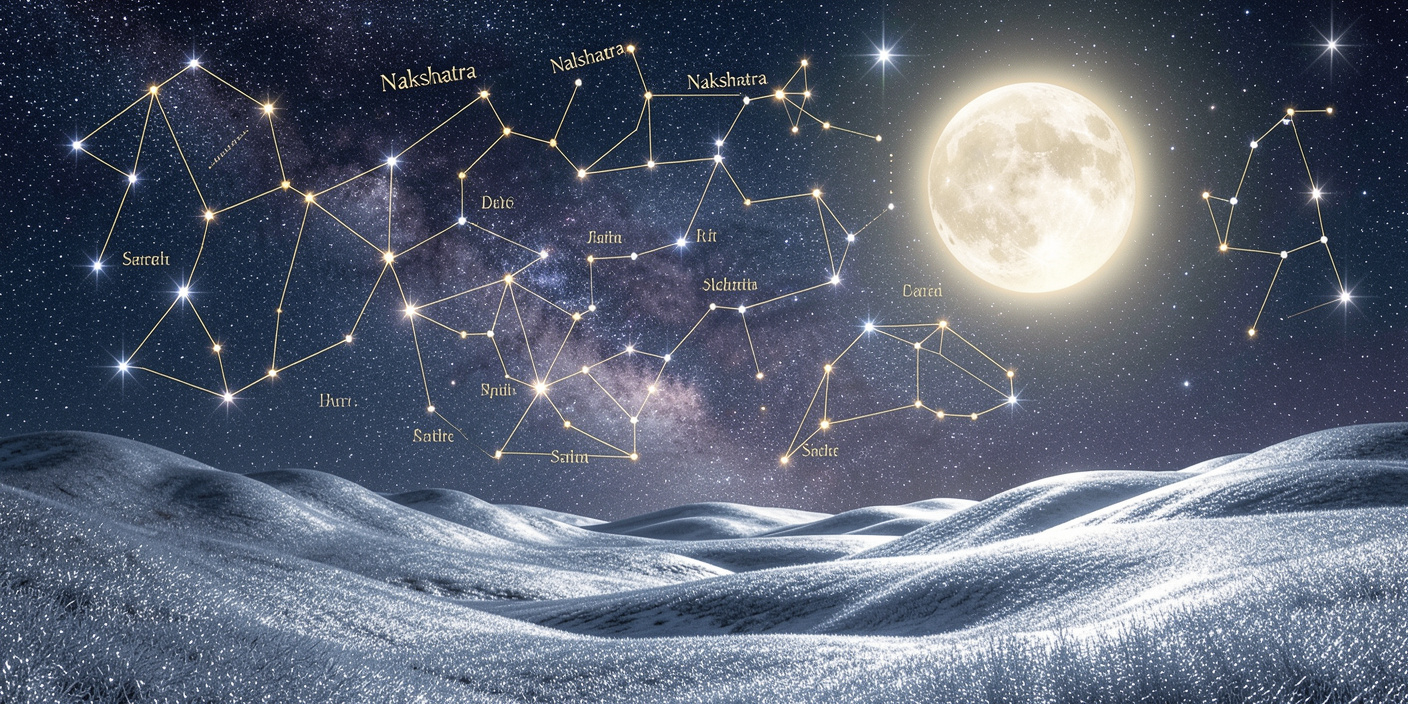
The word Nakshatra comes from two Sanskrit roots. Naksha means to approach or to map and Tara means star. The Nakshatras are therefore the stars of the sky that map the Moon's journey through the heavens.
The Moon moves through the entire zodiac in approximately twenty-seven and a half days. The Vedic tradition divided the zodiac into twenty-seven equal divisions of thirteen degrees and twenty minutes each, corresponding to the twenty-seven primary stations of the Moon's journey. Each of these stations is a nakshatra, named after the most significant star or star cluster in that section of the sky.
A twenty-eighth nakshatra, Abhijit, is sometimes included in certain Vedic calculations but the twenty-seven nakshatra system is the primary framework for most kundali-based assessments including marriage compatibility.
Each nakshatra is governed by a specific planetary lord. This planetary lord is the primary factor in the Vimshottari Dasha system discussed in an earlier blog. The nakshatra of the natal Moon determines which planet's dasha the person begins their life with.
Each nakshatra also has a presiding deity, an associated animal symbol, a governing element, a guna quality and a specific psychological and spiritual orientation. These qualities together create the deeply individual fingerprint of each nakshatra and its influence on the person born under it.
The Twenty-Seven Nakshatras and Their Governing Planets
The twenty-seven nakshatras are distributed across the twelve rashis of the zodiac and each is governed by a specific planet:
- Ketu governs: Ashwini, Magha, Moola
- Shukra governs: Bharani, Purva Phalguni, Purva Ashadha
- Surya governs: Krittika, Uttara Phalguni, Uttara Ashadha
- Chandra governs: Rohini, Hasta, Shravana
- Mangal governs: Mrigashira, Chitra, Dhanishtha
- Rahu governs: Ardra, Swati, Shatabhisha
- Guru governs: Punarvasu, Vishakha, Purva Bhadrapada
- Shani governs: Pushya, Anuradha, Uttara Bhadrapada
- Budha governs: Ashlesha, Jyeshtha, Revati
This planetary governance is critically important for marriage compatibility because the nakshatra lord of the bride and the groom's birth nakshatras creates a specific planetary relationship between the two people that goes deeper than their rashi lords' relationship.
The Three Nadi Groups and Their Nakshatra Composition
As discussed extensively in the blog on Nadi Dosha, each nakshatra belongs to one of three Nadis: Adi Nadi (Vata), Madhya Nadi (Pitta) and Antya Nadi (Kapha).
- Adi Nadi nakshatras: Ashwini, Ardra, Punarvasu, Uttara Phalguni, Hasta, Jyeshtha, Moola, Shatabhisha, Purva Bhadrapada
- Madhya Nadi nakshatras: Bharani, Mrigashira, Pushya, Purva Phalguni, Chitra, Anuradha, Purva Ashadha, Dhanishtha, Uttara Bhadrapada
- Antya Nadi nakshatras: Krittika, Rohini, Ashlesha, Magha, Swati, Vishakha, Uttara Ashadha, Shravana, Revati
When both partners share the same Nadi, the Nadi Dosha condition arises. This foundational division of the nakshatras into three energetic groupings based on the Ayurvedic understanding of Vata, Pitta and Kapha constitution is one of the most deeply rooted of all nakshatra-based compatibility assessments.
The Three Gana Groups and Their Nakshatra Composition
As discussed in the blog on Gana Dosha, each nakshatra belongs to one of three Ganas: Deva, Manava and Rakshasa.
- Deva Gana nakshatras: Ashwini, Mrigashira, Punarvasu, Pushya, Hasta, Swati, Anuradha, Shravana, Revati
- Manava Gana nakshatras: Bharani, Rohini, Ardra, Purva Phalguni, Uttara Phalguni, Purva Ashadha, Uttara Ashadha, Purva Bhadrapada, Uttara Bhadrapada
- Rakshasa Gana nakshatras: Krittika, Ashlesha, Magha, Chitra, Vishakha, Jyeshtha, Moola, Dhanishtha, Shatabhisha
The Gana assessment is one of the six directly nakshatra-based kootas in the Ashtakoot system. Understanding which nakshatras belong to which Gana allows for a direct understanding of the temperament dimension of marriage compatibility.
The Yoni Koota and Its Animal Symbolism
The Yoni koota is one of the most fascinating and most consistently misunderstood elements of nakshatra-based marriage compatibility. Each of the twenty-seven nakshatras is associated with a specific animal, and the Yoni koota assesses the physical and energetic compatibility between partners based on the relationship between their respective animal symbols.
The fourteen animal pairs of the Yoni system are:
- Ashwini and Shatabhisha: Horse
- Bharani and Revati: Elephant
- Pushya and Krittika: Goat
- Rohini and Mrigashira: Serpent
- Moola and Ardra: Dog
- Magha and Purva Phalguni: Rat
- Purva Ashadha and Shatabhisha: Monkey (some traditions vary)
- Uttara Phalguni and Uttara Bhadrapada: Cow
- Hasta: Buffalo
- Swati and Vishakha: Tiger
- Jyeshtha and Anuradha: Hare
- Dhanishtha and Purva Bhadrapada: Lion
- Uttara Ashadha: Mongoose
- Punarvasu and Ashlesha: Cat
- Chitra and Mrigashira: Tiger (some traditions)
The compatibility between the animal pairs follows specific rules. Naturally friendly animals in the same pair create the highest Yoni compatibility. Neutral animals create moderate compatibility. Natural enemies, such as the dog and the hare, the cat and the rat, the serpent and the mongoose, create Yoni Dosha when paired in a marriage.
While Yoni koota is often discussed in limited and sometimes reductive ways in popular Jyotish discussions, it was originally and at its most sophisticated level a comprehensive assessment of the physical and pranic compatibility between two people's fundamental life energies.
The Tara Koota and Its Nakshatra Counting System
The Tara koota, also called Dina koota, assesses the compatibility between partners by counting the number of nakshatras between their birth nakshatras. This counting creates a nine-fold cycle, with each position in the cycle having a specific name and a specific quality.
The nine Tara positions are:
- Janma: Birth star, neutral
- Sampat: Wealth, favorable
- Vipat: Danger, unfavorable
- Kshema: Health, favorable
- Pratyak: Obstruction, unfavorable
- Sadhana: Achievement, favorable
- Naidhana: Death, most unfavorable
- Mitra: Friendly, favorable
- Ati Mitra: Best friend, most favorable
The Tara koota is calculated by counting from the bride's nakshatra to the groom's nakshatra and dividing the count by nine. The remainder determines which Tara position the groom's nakshatra occupies relative to the bride's. The same calculation is then performed in reverse, from the groom's to the bride's.
For full points (three out of three), both the calculation from bride to groom and from groom to bride should yield favorable Tara positions. When one or both calculations fall in unfavorable positions, particularly the Vipat or Naidhana positions, the Tara koota is challenging.
The Naidhana Tara, the death star position, is the most seriously concerning unfavorable Tara result. When the groom's nakshatra falls in the Naidhana position from the bride's, or vice versa, it indicates a potentially serious challenge to health and wellbeing within the marriage. This is one of the Tara-based concerns that overlaps with the broader concerns of Nadi Dosha.
The Twenty-Seven Nakshatras and Their Marriage Orientations
Understanding each nakshatra's specific orientation toward love, intimacy and marriage helps in both self-understanding and in understanding a potential partner. Here is a brief but accurate overview of each nakshatra's characteristic approach to marriage:
- Ashwini. Governed by Ketu. The horse's energy of speed, independence and healing. Ashwini Moon people are adventurous, quick to decide and may need more personal freedom within marriage than most partners expect. They are healers by nature and bring vitality to relationships.
- Bharani. Governed by Shukra. The elephant's energy of strength and the creative force associated with Yama, the lord of karma. Bharani Moon people experience love intensely, sometimes overwhelmingly. They need partners who can handle the full force of their feeling without withdrawing.
- Krittika. Governed by Surya. The goat energy associated with Agni, the fire deity. Krittika Moon people bring a quality of purifying, critical and perfectionistic energy to relationships. They have high standards and need partners who genuinely meet them. They are deeply loyal but can be demanding.
- Rohini. Governed by Chandra. The serpent energy associated with Brahma, the creator. Rohini is considered the most sensually beautiful and emotionally rich of all nakshatras for love. Rohini Moon people are deeply devoted, emotionally expressive and create an extraordinary quality of domestic beauty and warmth. Marriage with a Rohini Moon person tends toward genuine emotional richness.
- Mrigashira. Governed by Mangal. The serpent energy associated with Soma, the deity of nectar. Mrigashira Moon people are seekers. They are eternally looking for the perfect relationship, the perfect partner, the perfect love. This seeking quality can create a pattern of dissatisfaction in relationships as no actual person fully matches the ideal being sought.
- Ardra. Governed by Rahu. The dog energy associated with Rudra Shiva. Ardra Moon people experience emotions with a tempestuous, sometimes destructive intensity. Their relationships tend to be transformative and sometimes turbulent. They need partners who can remain stable through their emotional storms.
- Punarvasu. Governed by Guru. The cat energy associated with Aditi, the mother of the devas. Punarvasu Moon people are natural givers and natural renewers. They bring a quality of optimistic renewal to relationships. Their challenge is the Mrigashira-like quality of an ideal in mind that actual relationships struggle to fully satisfy.
- Pushya. Governed by Shani. The goat energy associated with Brihaspati, the divine teacher. Pushya Moon people are the most naturally nurturing of all nakshatras. Their challenge in marriage is giving too much and not knowing how to receive. They may attract partners who take more than they give.
- Ashlesha. Governed by Budha. The cat energy associated with the Nagas, the serpent deities. Ashlesha Moon people are psychologically intense, perceptive and sometimes possessive in relationships. They see very deeply into others and can be profoundly loyal or profoundly dangerous depending on how they have been treated.
- Magha. Governed by Ketu. The rat energy associated with the Pitrus, the ancestral spirits. Magha Moon people carry a strong sense of ancestral identity and dignity. They need partners who respect their lineage and their sense of inherited worth. Pride is both their strength and their marriage challenge.
- Purva Phalguni. Governed by Shukra. The rat energy associated with Bhaga, the deity of marital happiness. Purva Phalguni is among the most naturally romance-oriented of all nakshatras. People born under it tend to be deeply romantic, love pleasure and beauty and bring a quality of genuine enjoyment to marriage.
- Uttara Phalguni. Governed by Surya. The cow energy associated with Aryama, the deity of marriage contracts and social unions. Uttara Phalguni is among the most marriage-oriented nakshatras in the entire system. People born under it have a natural capacity for commitment, loyalty and the creation of stable, dharmic partnership. Marriage tends to come more naturally and more successfully to Uttara Phalguni Moon people than to those of most other nakshatras.
- Hasta. Governed by Chandra. The buffalo energy associated with Savitar, the deity of skillful creation. Hasta Moon people bring a quality of practical intelligence, skillfulness and genuine care to relationships. They are natural makers of harmonious domestic spaces.
- Chitra. Governed by Mangal. The tiger energy associated with Vishwakarma, the divine craftsman. Chitra Moon people are aesthetically sophisticated and may have very specific requirements about the quality of their environment and their partner. They are attracted to beauty in all its forms.
- Swati. Governed by Rahu. The buffalo energy associated with Vayu, the deity of wind. Swati Moon people are independent, socially connected and may need more personal space within marriage than most partners naturally provide. They are adaptable and social but value their autonomy.
- Vishakha. Governed by Guru. The tiger energy associated with Indra and Agni together. Vishakha Moon people are goal-oriented and intense about getting what they want. In marriage they can be demanding, single-minded and sometimes difficult to satisfy. Their positive quality is an extraordinary determination to achieve what they set their heart on.
- Anuradha. Governed by Shani. The hare energy associated with Mitra, the deity of friendship. Anuradha Moon people are among the most devoted and most genuine friends in the nakshatra system. Their approach to marriage is through sincere friendship first. They need partners who are also genuinely their friend.
- Jyeshtha. Governed by Budha. The hare energy associated with Indra, the king of the devas. Jyeshtha Moon people carry a quality of leadership, protectiveness and sometimes possessiveness in relationships. They are deeply loyal but need to be the protector and may struggle in partnerships where they feel their role is challenged.
- Moola. Governed by Ketu. The dog energy associated with Nirriti, the deity of dissolution. Moola Moon people go to the very root of everything, including relationships. They are not satisfied with surface connection and may create crises in relationships to force the deeper connection they seek. Marriage with a Moola Moon person tends to be deeply transformative.
- Purva Ashadha. Governed by Shukra. The monkey energy associated with Apas, the deity of water. Purva Ashadha Moon people are passionate and convincing in love. They have genuine enthusiasm for life and bring this enthusiasm to relationships. Their challenge is a tendency toward overconfidence that can create difficulty when relationships do not meet their enthusiastic expectations.
- Uttara Ashadha. Governed by Surya. The mongoose energy associated with the Vishvadevas, the universal deities. Uttara Ashadha Moon people take their commitments very seriously and hold themselves to high standards. They may be slow to commit but once committed are among the most steadfast partners of any nakshatra.
- Shravana. Governed by Chandra. The monkey energy associated with Bhagwan Vishnu. Shravana Moon people are extraordinary listeners and learners. They bring a quality of deep listening to relationships that makes their partners feel genuinely heard. Marriage with a Shravana Moon person tends to be one where both partners feel their inner world is genuinely acknowledged.
- Dhanishtha. Governed by Mangal. The lion energy associated with the Ashta Vasus, the eight elemental deities. Dhanishtha Moon people are naturally abundant, musical and rhythmically attuned. They bring a quality of prosperity and celebration to relationships. Their challenge is a tendency toward emotional self-sufficiency that can create distance.
- Shatabhisha. Governed by Rahu. The horse energy associated with Varuna, the deity of cosmic order and the waters. Shatabhisha Moon people are independent thinkers, healers and researchers. They may be unconventional in their approach to relationships and may need partners who honor their need for intellectual and emotional independence.
- Purva Bhadrapada. Governed by Guru. The lion energy associated with Aja Ekapada, the one-footed god. Purva Bhadrapada Moon people are spiritually intense and may oscillate between ascetic withdrawal and passionate engagement. Their marriages can be complex and are usually deeply meaningful.
- Uttara Bhadrapada. Governed by Shani. The cow energy associated with Ahirbudhnya, the serpent of the deep. Uttara Bhadrapada Moon people carry a quality of profound depth, patience and compassionate wisdom in relationships. They are among the most naturally dharmic marriage partners of any nakshatra.
- Revati. Governed by Budha. The elephant energy associated with Pushan, the deity of safe journeys. Revati Moon people are nurturing, creative and naturally kind in relationships. They bring a quality of gentle completion to whatever they touch, including relationships. Marriage tends to be a natural and fulfilling context for them.
The Nakshatra Lords and Marriage Timing
Beyond the compatibility implications of the nakshatras, the nakshatra lord's dasha period, as explained in the Vimshottari Dasha blog, is among the most important timing factors for marriage.
A person whose natal nakshatra is governed by Shukra will tend to experience their most active and most fruitful marriage search period during Shukra Mahadasha. A person whose natal nakshatra is governed by Guru will similarly find Guru Mahadasha most favorable for marriage.
Conversely, a person whose natal nakshatra is governed by Shani will have their first Mahadasha as a Shani-governed period, which creates the specific pattern of late marriage and significant delay that has been discussed in multiple earlier blogs.
This nakshatra-dasha connection is one of the most practically important dimensions of nakshatra knowledge for those seeking marriage. Understanding which planet governs your birth nakshatra and what that planet's dasha period means for marriage timing gives you genuinely useful information about when the most favorable marriage windows in your life are most likely to occur.
Nakshatra-Based Pujas and Remedies
Many of the pujas discussed throughout this blog series have specific nakshatra-based dimensions that enhance their effectiveness when performed in alignment with the nakshatra of the person commissioning them.
Nakshatra Shanti Puja is a specific puja performed for the individual's birth nakshatra, seeking the harmonious and auspicious expression of that nakshatra's energy in the person's life including their marriage.
Each nakshatra's presiding deity has a specific puja that is most directly beneficial for those born under that nakshatra. For example, people born under Rohini nakshatra benefit most from Chandra Puja and Bhagwan Brahma Puja. People born under Pushya nakshatra benefit most from Shani Shanti and Guru Puja. People born under Jyeshtha nakshatra benefit most from Budha Puja and Indra Puja.
Nakshatra Homa is a larger-scale ritual specifically designed to propitiate the person's birth nakshatra deity and to seek the most auspicious and harmonious expression of the nakshatra's energy across all areas of life including marriage.
The Nakshatra Padas and Their Fine Distinctions
Each nakshatra is further divided into four padas, quarters, of three degrees and twenty minutes each. Each pada falls in a specific navamsa sign and carries qualities of that navamsa sign alongside the qualities of the nakshatra itself.
The pada of the birth nakshatra creates fine distinctions within the nakshatra's general energy that can be significant for marriage compatibility. Two people born under the same nakshatra but in different padas can have meaningfully different expressions of that nakshatra's energy.
For example, within Rohini nakshatra:
- The first pada of Rohini falls in Aries navamsa and gives the Rohini Moon an added quality of initiative and directness alongside its natural emotional richness.
- The second pada falls in Taurus navamsa and is considered the purest expression of Rohini's sensory beauty and emotional depth.
- The third pada falls in Gemini navamsa and gives the Rohini Moon a more intellectually engaged and communicative quality.
- The fourth pada falls in Cancer navamsa and gives the Rohini Moon an especially deep and emotionally empathic quality, very close to the Moon's own natural expression.
These pada distinctions are the finest level of nakshatra analysis available in the standard Vedic Jyotish framework and they provide the most precise possible picture of a person's emotional nature and their specific approach to marriage and intimate relationship.
How to Use Nakshatra Knowledge in Your Marriage Search
Understanding your own nakshatra and your potential partner's nakshatra gives you several practically useful pieces of information for the marriage search.
First, it helps you understand your own fundamental emotional nature more accurately than the rashi alone reveals. Are you a Rohini type who needs deep emotional warmth and sensory beauty in a relationship? Are you an Anuradha type who needs genuine friendship as the foundation of marriage? Are you a Vishakha type who brings great intensity and singular focus to relationships? This self-knowledge helps you communicate your genuine needs more clearly and helps you recognise partners whose fundamental nature is genuinely compatible with yours.
Second, it gives a more accurate picture of potential partners beyond the rashi-level assessment. A potential partner whose rashi matches yours may have a nakshatra that is fundamentally more or less compatible with yours than the rashi alone would suggest.
Third, it helps in timing your marriage search and your remedial practices more accurately. Knowing your nakshatra lord's dasha periods helps you identify the most favorable windows for your marriage search and for the pujas that will be most effective during each period.
How Jyotirgamaya Can Help
At Jyotirgamaya, our Jyotish consultation services include a comprehensive nakshatra-based analysis of your birth chart that goes beyond the standard rashi-based assessment. Our experienced Jyotishis assess your birth nakshatra's qualities, its pada, its compatibility implications and its dasha-based timing for your marriage search.
Our nakshatra-specific puja recommendations ensure that the remedies commissioned for your specific situation resonate with the particular quality of your birth nakshatra's energy and its presiding deity's grace.
Explore our Nakshatra-Based Jyotish Consultation and Puja Services here
A Final Thought
The Vedic tradition's development of the twenty-seven nakshatra system was not an act of astronomical cataloguing. It was an act of profound psychological and spiritual observation. The sages who developed this system spent lifetimes studying the connection between the Moon's position among the stars at the moment of a person's birth and the specific quality of that person's emotional nature, their relationship patterns and their karmic orientation toward the most important dimensions of human life.
What they created is one of the most sophisticated systems of personality and compatibility assessment ever developed. One that goes far deeper than the rashi-level picture that most kundali matching processes utilize.
When you know not just your moon sign but your nakshatra, not just your nakshatra but its pada, not just its pada but its lord's nature and its presiding deity's specific qualities, you have a map of your own emotional nature and your marriage destiny that is extraordinarily precise.
And when you use that map with wisdom, seeking partners whose nakshatra qualities genuinely complement your own, performing remedies that specifically resonate with your nakshatra's presiding deity, timing your marriage search in alignment with your nakshatra lord's dasha periods, you are working with one of the most sophisticated and most genuinely insightful tools that the Vedic tradition has given to the human search for genuine love and genuine partnership.
The stars are not your destiny. But they are the most precise map of your karmic starting point that exists.
Use the map wisely.
Om Chandraya Namah.