Mantras to Chant During Shani Sade Sati for Relief
By: Pratima Argade
31 August 2026 at 11:45 AM
Mantras to Chant During Shani Sade Sati
The Simplest Remedy With the Deepest Reach
Of every remedy discussed throughout this series, mantra chanting is perhaps the most accessible. It requires no elaborate ritual setup, no specific items to gather, no temple visit and no financial investment. All it truly requires is a quiet moment, a sincere heart and consistent practice. Yet despite this simplicity, mantra chanting is considered one of the most powerful and consistently recommended remedies for Shani Sade Sati, precisely because sound itself is understood in Vedic tradition to carry genuine spiritual and vibrational significance.
This post looks in detail at the most commonly recommended mantras for Shani Sade Sati, the correct way to chant them, and why this simple daily practice can offer such meaningful support throughout this seven and a half year period.
Why Mantra Chanting Holds Such Significance
Within Vedic tradition, mantras are understood as more than simply words. Each syllable is believed to carry a specific vibrational quality, and consistent repetition of a correctly formed mantra is believed to gradually align a person's inner state with the specific energy the mantra invokes. In the case of Shani mantras, this alignment is understood to help ease friction with this graha's testing influence while inviting his protective, disciplined blessings.
The Brihat Parashara Hora Shastra and related classical texts consistently describe mantra practice as a foundational remedial tool, one accessible to virtually every devotee regardless of financial circumstance, location or access to a temple or purohit.
The Shani Beej Mantra
The Shani Beej Mantra is generally considered the most powerful and most commonly recommended mantra specifically for Shani. A beej mantra, meaning seed mantra, is understood to carry a particularly concentrated and potent form of a devta's energy within a short, precise sound structure.
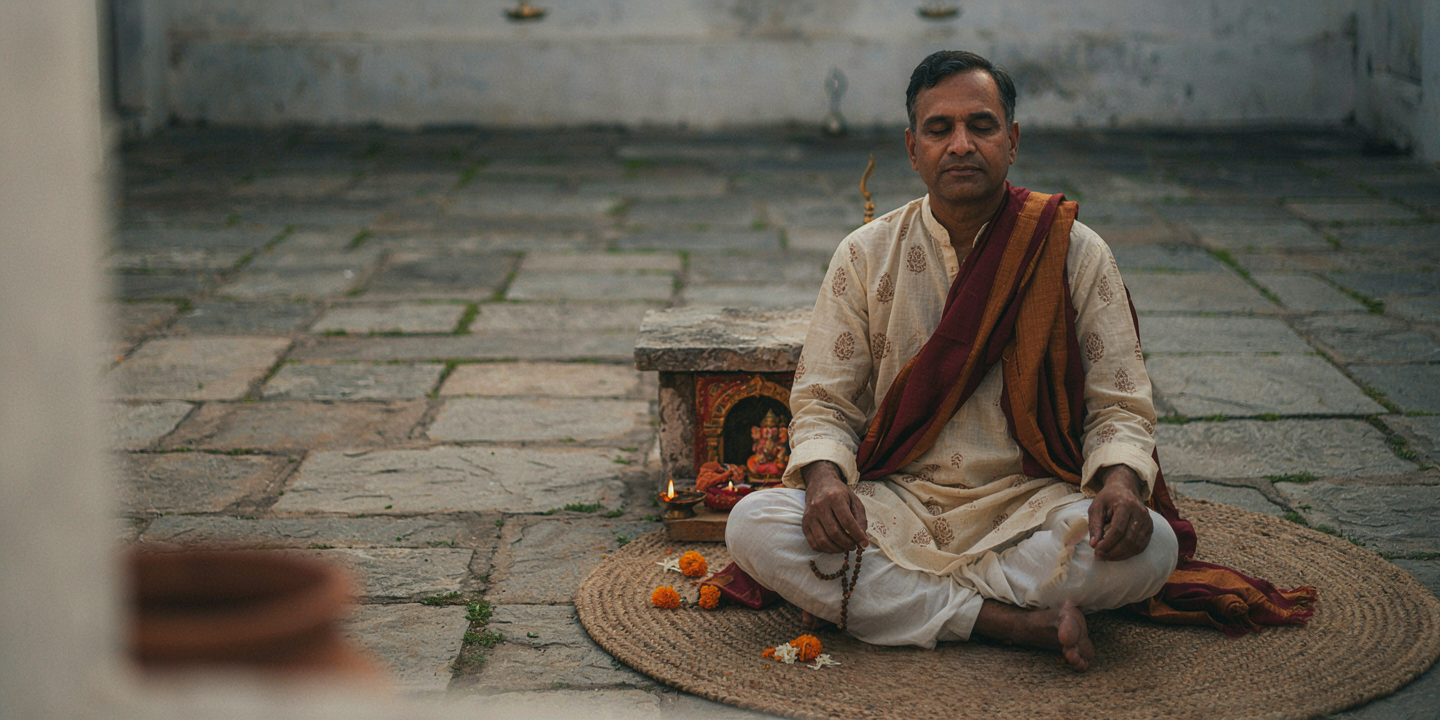
This mantra is traditionally chanted in sets, often in multiples of one hundred and eight, using a mala, or prayer beads, to help maintain accurate count. Many devotees aim to complete at least one full round of one hundred and eight repetitions daily throughout their Sade Sati period, though even a smaller, consistent daily practice is considered genuinely valuable.
The Shani Gayatri Mantra
The Shani Gayatri Mantra offers a slightly different structure compared to the beej mantra, following the broader Gayatri format used across various devotional traditions within Hinduism. This mantra is often chosen by devotees seeking a slightly more elaborate, reflective chanting practice, sometimes incorporated alongside the beej mantra as part of a more complete daily routine.
The Dashopanishad Mantra and Other Traditional Chants
Beyond the beej and Gayatri mantras, several other traditional chants are associated with Shani worship, often recited during formal puja rather than daily personal practice. These longer, more elaborate mantras are generally recited with the guidance of a purohit during significant rituals such as Shani Shanti Puja, discussed in an earlier post in this series, rather than forming part of a devotee's independent daily practice.
Correct Timing for Mantra Chanting
- Early Morning Hours: The early morning period, particularly during Brahma Muhurta, the hours just before sunrise, is traditionally considered the most auspicious time for mantra chanting across Vedic tradition generally. Many devotees specifically choose this quiet, undisturbed time for their daily Shani mantra practice, believing the mind's natural stillness during these hours supports deeper spiritual focus.
- Saturdays as a Particularly Significant Day: While daily chanting throughout the week is generally recommended for genuine consistency, Saturday holds particular significance for Shani mantra practice specifically, and many devotees increase the intensity of their chanting on this day, sometimes completing multiple rounds rather than their usual daily count.
- During Pradosh Kaal: As discussed in an earlier post on Shani Pradosh Vrat, combining mantra chanting with Pradosh Kaal, particularly when this falls on a Saturday, is considered especially auspicious, allowing devotees to align their chanting practice with this particularly significant window of time.
How to Chant Correctly
- Using a Mala: Traditional mantra practice typically involves using a mala of one hundred and eight beads, moving from one bead to the next with each repetition of the mantra, allowing devotees to maintain accurate count without needing to consciously track numbers throughout the practice. Some devotees specifically use a mala made from rudraksha beads for Shani mantra chanting, given rudraksha's broader association with disciplined spiritual practice.
- Maintaining Focus and Sincerity: Classical guidance consistently emphasizes that the quality of attention brought to each repetition matters considerably more than simply completing a mechanical count. Chanting with genuine focus, ideally with an understanding of the mantra's meaning and purpose, is considered far more valuable than rushing through repetitions without real presence or intention.
- Pronunciation and Guidance: Since Sanskrit pronunciation carries specific vibrational significance within this tradition, learning the correct pronunciation of any mantra, ideally from a knowledgeable source such as a purohit or experienced teacher, is generally recommended for those new to this practice, ensuring the mantra is chanted as accurately as possible.
How Many Repetitions Are Recommended
While one full round of one hundred and eight repetitions is a commonly recommended daily target, classical guidance generally emphasizes consistency over intensity. A smaller, genuinely sustainable daily practice maintained faithfully throughout the full seven and a half years of Sade Sati is considered more valuable than an ambitious but inconsistent practice that devotees struggle to maintain over time.
Some devotees choose to complete a larger, more intensive chanting commitment, sometimes involving many thousands of repetitions completed over a structured period, particularly at the beginning of a new Sade Sati phase. This more intensive practice, sometimes called a mantra sadhana, is generally undertaken with guidance from an experienced astrologer or spiritual teacher to ensure it is approached correctly.
Chanting Silently Versus Aloud
Mantras can be chanted aloud, in a soft whisper, or silently within the mind, depending on personal preference and circumstance. Each approach is considered valid within classical tradition, though many practitioners find that chanting aloud, particularly during dedicated practice time, helps maintain focus and discipline more easily than purely silent repetition, especially for those newer to the practice.
Combining Mantra Practice With Daily Life
Beyond dedicated chanting sessions, some devotees choose to incorporate brief mantra repetition into ordinary daily activities, such as during a commute, while walking, or during quiet moments throughout the day. While dedicated, focused practice is generally considered more spiritually significant than casual repetition during other activities, this kind of integration can help reinforce the overall spirit of the practice throughout daily life, particularly during the more emotionally testing Peak Phase discussed in earlier posts in this series.
Why Consistency Matters More Than Perfection
As with fasting and daan, classical tradition consistently emphasizes that sustained, sincere consistency over the full course of Sade Sati matters considerably more than occasional, intensive bursts of practice. A devotee who chants a modest, sustainable number of repetitions daily throughout their entire seven and a half year cycle is generally considered to receive more genuine benefit than one who chants intensively for a short period before abandoning the practice entirely.
Combining Mantra Chanting With Other Remedies
Mantra chanting works particularly well alongside the other remedies discussed throughout this series, including Shani puja, Pradosh Vrat and daan. Many devotees specifically incorporate mantra chanting into their existing puja practice, or use their Saturday fasting day as an opportunity for more extended chanting, creating a naturally integrated devotional routine throughout their Sade Sati years.
A Practice Available to Every Devotee
Perhaps the greatest strength of mantra chanting as a remedy is its universal accessibility. Regardless of financial circumstance, location, access to a temple, or ability to observe strict fasting, virtually every devotee can incorporate some form of consistent mantra practice into their daily routine. This accessibility, combined with the genuine spiritual depth this practice offers, makes it one of the most consistently recommended remedies across every phase of Shani Sade Sati.
If you would like personalized guidance on which specific mantras and chanting practices are best suited to your birth chart and current phase of Sade Sati, our astrologers can provide detailed recommendations alongside the puja and remedies most relevant to your situation.