How an Online Homam Works: Sankalpa, Live Stream and Prasadam Explained
By: Pratima Argade
23 November 2026 at 1:16 AM
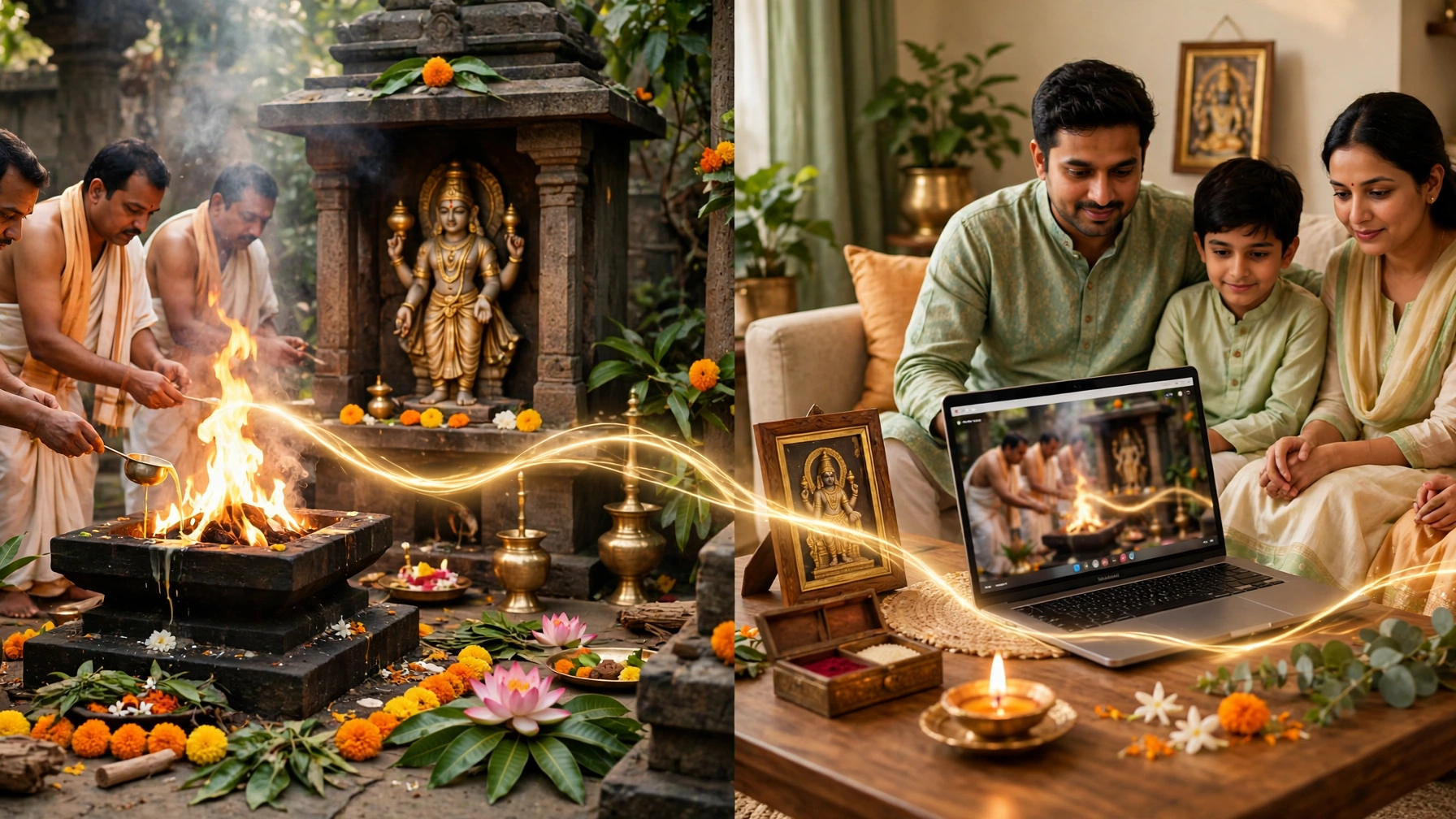
An online Homam is a Vedic fire ritual performed by trained priests at a temple or sacred place on your behalf, with a Sankalpa taken in your name, gotra and nakshatra. You book it online, share your details, and join the prayer from home, often through a live stream or recording where offered, and in many cases you can receive prasadam. It is spiritual support, and it works alongside medical care.
Many people are curious about online Homams, but also a little unsure. What really happens after you click the booking button? Who says the Sankalpa? How do you take part from far away? What is the prasadam, and how does it reach you? These are fair questions, since a Homam is a sacred ritual, and we want to be sure that it is done with care and respect.
In this post, we will explain the full journey of an online Homam in simple words, from booking to completion. We will describe the meaning of the Sankalpa, how you can join the ritual, what prasadam is and how to use it, and what to ask before you book. We will use the Dhanvantari Homam as our example. If you wish to know more about the ritual itself, you can read our post on what the Dhanvantari Homam is.
What Is an Online Homam?
A Homam, also called Homa or Havan, is a Vedic ritual in which offerings such as ghee and sacred herbs are made into a consecrated fire while mantras are chanted. In an online Homam, the ritual is performed by trained priests at a temple, a yajnashala or another sacred place, while the person for whom it is done, called the Sevakartha, takes part from a distance.
This is helpful for many people. NRI families can arrange a Homam for their parents in India. People who are unwell or elderly can take part without travelling. Those who live far from a good priest or a temple can still offer a prayer in the Vedic way. We have shared more about the NRI side of this in our post on Dhanvantari Homam for NRI families.
The tradition has always accepted that a ritual can be done through a priest on behalf of a devotee. The Sankalpa, which is the spoken resolve, is what connects the ritual to the person. For this reason, many families and teachers accept the practice of an online Homam. If your family follows a particular tradition or Guru, you may wish to ask for their advice.
How Does an Online Homam Work, Step by Step?
Here is the typical journey. The details may differ a little between providers, so please check with the one you choose.
- You choose the Homam and the day. On the booking page, you select the Homam, such as the Dhanvantari Homam, and the date that suits you. You can read about good days in our post on why Ekadashi is a special day for Dhanvantari Homam.
- You share your details. You provide the name, gotra and nakshatra of the Sevakartha, and the purpose of the prayer in simple words. We explain this in the next sections.
- The priests prepare. The priests arrange the sacred materials, such as ghee, samidha, sacred herbs, flowers and a kalash, and prepare the homa kunda and the place of worship.
- The Ganapati puja is done. As in every Vedic ritual, the Homam begins with a prayer to Bhagwan Ganesha, so that the work goes ahead without obstacles.
- The Sankalpa is taken. The priest says the Sankalpa, naming the day, the place, your details and the purpose.
- The kalash is placed. A kalash is installed and worshipped as the seat of the divine presence, standing for the Amrit Kalash of Bhagwan Dhanvantari.
- The fire is invoked. The sacred fire is lit and welcomed with mantras, and Bhagwan Dhanvantari is invited.
- The mantras and offerings begin. The priests chant the Dhanvantari mantras, and after each mantra, they offer ghee and sacred herbs into the fire with the word Swaha.
- The final offering is made. The Homam ends with the Purnahuti, the final full offering, which marks completion.
- The aarti and blessings. The ritual closes with the aarti and a prayer for the wellbeing of all.
- You receive the updates and the prasadam. Depending on the provider, you may receive photos, a video or prasadam. Please check what is included in your booking.
What Is the Sankalpa and Why Does It Matter?
The Sankalpa is the heart of the connection between you and the ritual. The word means a resolve, a determination made with the mind and the heart. At the start of any Vedic puja or Homam, the priest says the Sankalpa aloud, so that the ritual is offered with a clear purpose and for a particular person.
A traditional Sankalpa has several parts. It names the time, such as the day, the tithi and the nakshatra. It names the place, such as the sacred spot where the ritual is held. It names the Sevakartha, with their name, gotra and nakshatra. It names the deity to whom the Homam is offered, here Bhagwan Dhanvantari. And it states the purpose, such as seeking blessings for health and peace of mind.
In simple English, the idea may sound like this. "On this day, at this sacred place, for this person of this gotra and nakshatra, we offer this Homam to Bhagwan Dhanvantari, to seek blessings for health, strength and peace of mind." The wording in Sanskrit is chanted by the priests.
This is why you are asked for the name, gotra and nakshatra. If the person is a family member, such as a parent, their details are used. If you do not know the gotra or nakshatra, you can ask an elder, or tell the priest, who can guide you. You can read about the nakshatra in our post on Janma Nakshatra and health.
You can also take your own Sankalpa at home, in your own words, at the time of the Homam, such as "Bhagwan, I offer this prayer for the health and peace of my family. Please bless us." This makes your participation personal and sincere.
How Can You Join the Homam Online?
Depending on the provider, there are a few ways that you can take part. Some online Homam services offer a live stream of the ritual, so that you can watch it as it happens. Some share a recorded video or photos after the Homam. Some give only a confirmation. Please check with Jyotirgamaya or your chosen provider about what is offered for your booking, since this can vary.
If there is a live stream, you will usually receive a link or a time before the Homam. A few tips can help.
Check the time in your own time zone, and set an alarm. Test your internet and your device a little ahead of time. Choose a quiet corner and switch off notifications. Take a bath, wear clean clothes and sit comfortably, on a mat or a chair. Place a lamp, a picture of Bhagwan Dhanvantari and a photo of the person for whom the Homam is done before you. Join in by chanting along softly, or by repeating a short mantra such as "Om Shri Dhanvantaraye Namah".
If the Homam is early in the morning in India and late at night for you, you do not need to stay awake. A short prayer at a time that suits you, with the same intention, is also a lovely way to join. If you are unwell or elderly, you may watch lying down or sitting back, and there is no need to push yourself.
How Can You Prepare at Home?
You do not need any special items to join a Homam online. A few simple preparations bring a feeling of sacredness.
Clean a corner of your home, light a ghee lamp, and offer a few fresh flowers or Tulasi leaves. Keep a small vessel of clean water nearby. Have a mala ready if you wish to chant. Keep the photo of the person for whom the Homam is done close to you. If you have a short time, simply sit quietly, close your eyes and bring Bhagwan Dhanvantari to mind.
If you would like a fuller home practice on the same day, you can follow the steps in our post on how to do Dhanvantari Puja at home. Please take care with fire safety, and keep the lamp away from children, curtains and pets.
What Is Prasadam and How Does It Reach You?
Prasadam means the blessed offering that is received after a ritual. In a Homam, the prasadam may include items such as the sacred ash from the homa kunda, called Homa Bhasma, kumkum, blessed rice called akshata, and sometimes other blessed items. In some places, it may also include a small food offering.
Some providers send prasadam by post or courier to your home, in India or abroad. Others share only photos and videos of the Homam. Please check with your provider whether prasadam is included, how long it takes to arrive, and whether it can be sent to your country.
If you live abroad, please remember that customs rules differ from country to country. Some items, such as food, plant material and ash, may be restricted or may need special handling. A good provider will tell you what can be sent. If prasadam cannot reach you, you can still receive the blessing of the Homam through your prayer and your participation.
How Should You Use the Prasadam?
Treat the prasadam with respect. Keep it in a clean place, such as your home shrine, and handle it with clean hands.
In many traditions, the sacred ash and kumkum are applied as a small tilak on the forehead. Please keep them away from open wounds, the eyes and the mouth. Please do not eat sacred ash, powders or herbal items, and do not give them to infants, patients or elders, unless you are sure that it is a food offering that is meant to be eaten and that it suits the person's diet and medicines. If you are not sure, please ask your doctor.
If the prasadam includes food, please share it in small portions, and keep in mind family members who are on special diets or medicines. A person with a health condition may accept it with respect and take a very small portion, or simply touch it to the forehead. Do not let the prasadam replace any medicine or treatment.
If you receive a thread or an amulet, it is meant as a symbol of blessing. It does not act as a medical treatment, and it should not take the place of care.
What Should You Ask Before You Book?
A little care helps you to choose well. These are some good questions to ask.
- Who performs the Homam, and what is their training and experience?
- Where is it performed, and at what time?
- Is the Sankalpa taken with my details, and will the priest mention the name, gotra and nakshatra?
- Which mantras are chanted, and how many times?
- Will I get a live stream, a recording, photos or only a confirmation?
- Is prasadam included, and can it be sent to my country?
- What is the total cost, and what does it include?
- What is the process if the date has to change?
- How can I contact the team if I have a question?
A good provider will answer these questions clearly and politely.
What Red Flags Should You Watch For?
Please be careful with any provider who promises a cure or a guaranteed result, predicts illness, death or misfortune, creates fear or urgency, pushes you to pay more for a bigger ritual, refuses to explain the process, or asks for sensitive personal documents. A Homam is spiritual support, and no honest priest or organisation can promise a medical result. Please keep a record of your booking and payment, and trust your instincts if something feels wrong.
How Is Your Privacy Protected?
When you book a Homam, you usually share the name, gotra and nakshatra of the person, and a general purpose. You do not need to share any diagnosis, medical report or private health detail, and it is better not to. A simple purpose, such as "health and wellbeing" or "a smooth recovery period", is enough. Please also avoid sharing identity documents, bank details or passwords with anyone, other than through a secure payment page.
What Can You Do After the Homam?
After the Homam, take a moment to offer thanks. Share the news and the blessings with your family, and, if the Homam was for a parent, call them and chat. Continue with a small daily prayer, such as the Dhanvantari mantra. You may like to offer a little seva, such as helping someone in need or giving food. Please remember to keep up with your medical care, take medicines as advised and go for regular check ups. Prayer and medical care go hand in hand.
How Should We See a Homam and Medical Care Together?
A Homam is a form of spiritual support. It is not a replacement for medical advice, diagnosis or treatment. It does not promise any result, and it should never delay or replace the care of a doctor.
The best way to see it is as a companion to good care. The doctor treats the body, the family looks after the person, and the prayer gives strength, hope and calm to the mind. Please continue to follow your doctor's guidance, and never stop or change a treatment because of a ritual.
Key Takeaways
- An online Homam is performed by trained priests at a sacred place on your behalf, with a Sankalpa taken in your name, gotra and nakshatra.
- The steps include the Ganapati puja, the Sankalpa, the kalash, the invocation of the fire, the mantras and offerings, the Purnahuti and the aarti.
- The Sankalpa names the time, place, person, deity and purpose, and it is what connects the ritual to you.
- Depending on the provider, you may join by live stream, recording, photos or prayer at home, so please check what is offered.
- Prasadam may include sacred ash, kumkum and blessed rice, and customs rules may limit what can be sent abroad.
- A Homam is spiritual support and works alongside medical care, never in place of it.
Frequently Asked Questions
Q. How does an online Homam work?
You book the Homam, share the name, gotra and nakshatra of the person, and the trained priests perform the ritual at a sacred place with a Sankalpa in that name. You join the prayer from home and may receive updates or prasadam.
Q. What is Sankalpa in a Homam?
The Sankalpa is a spoken resolve at the start of the ritual. The priest names the time, place, person, deity and purpose, so that the Homam is offered for you.
Q. Do I need to be present or awake during the Homam?
No. You do not need to be present, and you do not need to stay awake at an odd hour. You can join through the stream if offered, or offer a short prayer at a time that suits you.
Q. Will I receive prasadam?
It depends on the provider and your booking. Prasadam may include sacred ash, kumkum and blessed rice. Please check whether it is included and whether it can be sent to your country.
Q. Is it safe to eat the prasadam from a Homam?
Please do not eat sacred ash, powders or herbal items. Food prasadam can be taken in small portions if it suits your diet and medicines. If you have any doubt, please ask your doctor.
Q. Can I do an online Homam for someone else?
Yes, many families do this for parents and relatives. Please speak to the person first and respect their wishes, and share only the name, gotra, nakshatra and a general purpose.
A Note on Health and Faith
The Dhanvantari Homam is a form of spiritual support. It is not a substitute for medical advice, diagnosis or treatment. Please continue to follow your doctor's guidance and take care of your health along with your prayers.
Seek the Blessings of Bhagwan Dhanvantari
If you wish to pray for the health and wellbeing of your family with the full Vedic method, you can book the Dhanvantari Homam with Jyotirgamaya from anywhere in the world. Visit the Dhanvantari Homam page.