Donation (Daan) Remedies for Shani Dev Explained
By: Pratima Argade
28 August 2026 at 10:10 AM
Donation (Daan) Remedies for Shani Dev Explained
Why Giving Holds Such Power in This Tradition
Of all the remedies discussed throughout this series, daan is perhaps the most accessible, requiring no elaborate ritual setup, no specialized purohit, and no significant financial investment beyond the items being donated themselves. Yet despite this simplicity, daan is considered one of the most consistently powerful remedies for easing the effects of Shani Sade Sati, precisely because the act of giving itself embodies qualities that Bhagwan Shani is believed to value deeply, humility, selflessness and genuine concern for those less fortunate.
This post looks in detail at the specific items traditionally associated with Shani daan, the best timing for this practice, and why this simple act carries such meaningful weight within Vedic remedial tradition.
Why Daan Is Considered So Effective for Shani
Shani's core themes in Vedic astrology center around karma, fairness and the natural consequences of one's own conduct. Daan, as an act of genuine generosity performed without expectation of return, is considered one of the purest expressions of good conduct within this framework. The Brihat Parashara Hora Shastra and related texts consistently describe daan as a practice that helps balance karmic accounts, offering a meaningful counterbalance to whatever difficult karma a person may be working through during their Sade Sati years.
Beyond its karmic significance, daan also directly embodies the humility that Shani is believed to value so highly. Where Sade Sati often tests a person's ego, patience and attachment to material comfort, as discussed in earlier posts covering its effects on different Rashis, the act of willingly giving away something of value, without seeking recognition or reward, directly counters these tendencies, aligning a person's conduct with exactly the qualities this graha is understood to reward.
Items Traditionally Associated With Shani Daan
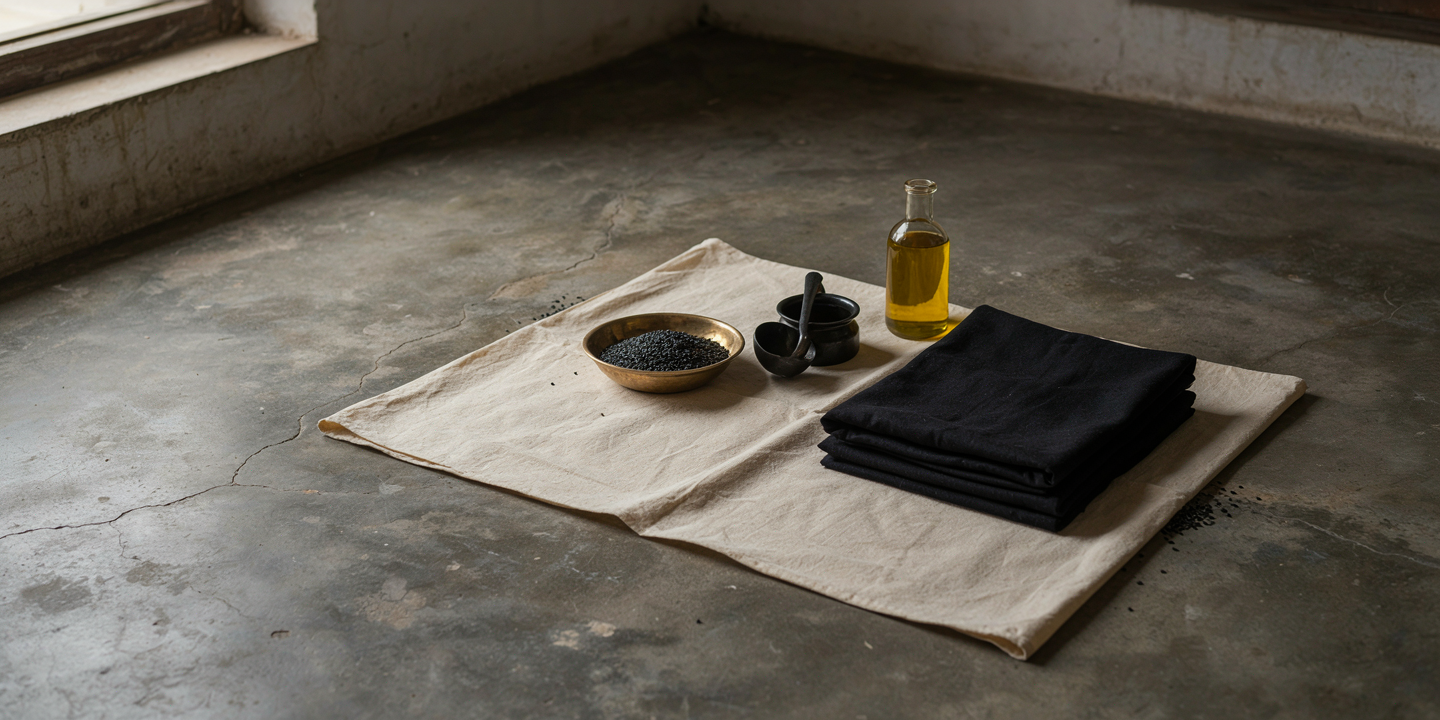
- Black Sesame Seeds: Black sesame seeds are perhaps the single most classically recommended item for Shani daan. Traditionally associated with Shani directly, donating these seeds, particularly on Saturdays, is one of the most widely practiced remedies across Vedic tradition.
- Mustard Oil: Mustard oil holds similar significance, often donated alongside black sesame seeds or used to light a diya at a Shani temple. Some devotees also choose to donate mustard oil directly to those in need, particularly for cooking purposes, combining the remedy with genuinely practical benefit for the recipient.
- Iron Items: Since Shani is associated with iron within classical texts, donating iron items, such as tools, utensils or other practical iron goods, is considered a meaningful remedy, particularly when given to laborers or tradespeople who can put these items to genuine practical use.
- Black Clothing: Black clothing, reflecting Shani's traditional association with this color, is commonly donated to the underprivileged, particularly on Saturdays. Some devotees specifically choose warm black clothing during colder months, combining the remedy with genuinely useful, practical giving.
- Black Lentils (Urad Dal): Black lentils, or urad dal, are another item traditionally connected to Shani, sometimes donated alongside sesame seeds or offered as part of a simple meal given to those in need.
- Leather Items: Some traditional sources also associate leather goods with Shani, and donating items such as leather footwear, particularly to laborers who spend long hours on their feet, is considered a meaningful and practically useful form of this remedy.
- Food Donation: Offering food, whether a simple meal or basic grocery items, to those in genuine need is considered a broadly beneficial remedy during Sade Sati, aligning with the compassionate conduct that classical texts consistently associate with easing karmic difficulty, regardless of whether the specific food items carry a direct traditional association with Shani.
- Money and Coins: Donating money, particularly to temples, underprivileged individuals or charitable causes, is also a widely practiced remedy, often performed alongside other item based daan as part of a broader act of Saturday giving.
The Significance of Feeding Crows
Since crows are traditionally understood as Shani's vahana, offering food to crows, particularly on Saturdays, holds a distinct place among Shani related remedies. Many devotees make it a regular practice to set aside a small portion of food specifically for crows on this day, viewing the act as a direct offering to Shani through his associated vehicle.
Best Timing for Shani Daan
- Saturdays as the Primary Day: Saturday, being the day most closely associated with Shani in Vedic astrology, is considered the most auspicious day for this particular form of daan. Many devotees specifically reserve their Shani related giving for this day throughout their Sade Sati period, creating a consistent, recurring rhythm of practice.
- During Pradosh Kaal: As discussed in the previous post on Shani Pradosh Vrat, combining daan with Pradosh Kaal, particularly when Pradosh falls on a Saturday, is considered especially auspicious, allowing devotees to combine fasting, worship and giving within a single, spiritually significant window of time.
- At the Beginning of Each Sade Sati Phase: Some astrologers recommend a more significant act of daan specifically at the beginning of each new Sade Sati phase, the Rising, Peak and Setting Phases, treating this as a meaningful way of marking each transition with renewed devotional commitment.
Who Should Receive This Daan
Traditional guidance generally recommends directing Shani related daan toward those who are genuinely underprivileged, elderly, or engaged in labor intensive work, reflecting the humility and service orientation this practice is meant to embody. Some traditional sources also specifically mention giving to those who work with iron, leather or oil, professions traditionally associated with Shani himself, as a particularly meaningful form of this daan.
Why Sincerity Matters More Than Quantity
A common misconception around daan is that greater quantity or higher monetary value automatically produces greater spiritual benefit. Classical tradition consistently emphasizes that sincerity and genuine intention matter considerably more than the material value of what is given. A small, humble donation offered with genuine humility and devotion is generally considered more meaningful than a large donation given without real sincerity or, worse, given specifically for public recognition.
This is part of why some traditional guidance specifically recommends anonymous giving, where possible, as a way of ensuring the act remains genuinely selfless rather than becoming, even unconsciously, an opportunity for social recognition.
Building a Consistent Daan Practice During Sade Sati
Given daan's accessibility and the relatively low barrier to consistent practice, many astrologers recommend building a simple, sustainable weekly routine around this remedy throughout the full Sade Sati period, rather than treating it as an occasional or one time gesture. A modest, consistent Saturday practice, even something as simple as offering food to crows or donating a small amount of black sesame seeds, maintained sincerely over the full seven and a half years, is generally considered more valuable than sporadic, larger gestures performed inconsistently.
Combining Daan With Other Remedies
As discussed throughout this series, daan works particularly well as part of a broader remedial routine, complementing practices such as Shani puja, Pradosh Vrat and mantra chanting. Many devotees specifically combine their Saturday daan with a brief period of mantra chanting or a visit to a Shani temple, creating a more complete devotional practice within a single, dedicated day each week.
A Practice Within Reach of Everyone
One of the most valuable aspects of daan as a remedy is its accessibility. Unlike gemstone remedies, which require careful professional guidance, or elaborate pujas, which may require a purohit's involvement, daan can be practiced by anyone, regardless of financial circumstance, simply by giving what they genuinely can, with sincere intention. This accessibility makes it one of the most consistently recommended remedies across every phase of Sade Sati, suitable for devotees at every stage of life and every financial situation.
If you would like personalized guidance on which daan practices are best suited to your specific birth chart and current phase of Sade Sati, our astrologers can provide detailed recommendations alongside the puja and remedies most relevant to your situation.