Can Puja Be Done in India While Devotee Is Abroad?
By: Pratima Argade
15 September 2026 at 11:59 AM
Can Puja Be Done in India While Devotee Is Abroad
A Question That Deserves an Honest Answer
Throughout this series, particularly in the recent posts addressing NRI concerns, sankalp based puja has been mentioned repeatedly as the primary way devotees living abroad can access authentic remedial rituals. But behind this practical solution sits a deeper question that many NRIs quietly carry, does a puja performed thousands of miles away, while the devotee sits in a completely different country and time zone, genuinely carry the same spiritual weight as one attended in person?
This is a fair and important question, and it deserves a thoughtful, honest answer rather than simple reassurance. This post looks closely at what classical tradition actually says about remote participation in ritual, how sankalp functions within this framework, and what devotees can realistically expect from a puja performed on their behalf while they are abroad.
The Short Answer
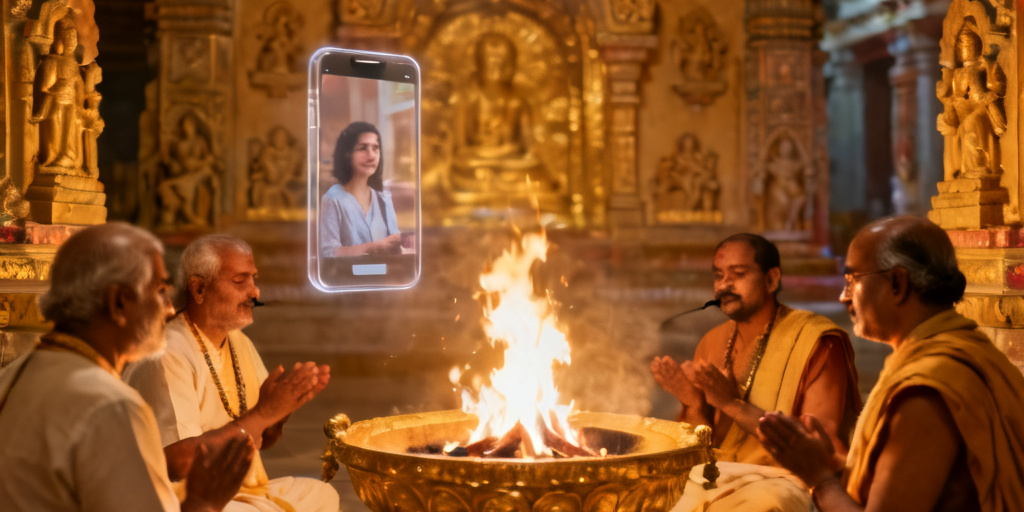
Yes, classical tradition supports the practice of a qualified purohit performing puja on behalf of a devotee who is not physically present, provided the ritual includes a proper sankalp formally dedicating the puja to that specific individual. This is not a modern convenience invented for the diaspora era, but a practice with genuine roots in traditional ritual understanding, long predating international travel or digital communication.
Understanding Sankalp in Depth
Sankalp, as mentioned throughout this series, refers to the formal declaration of intention that begins any significant Hindu ritual. During sankalp, the purohit states aloud specific details identifying who the ritual is being performed for, typically including the devotee's name, their father's name, their gotra, their current location, and the specific purpose or intention behind the ritual.
This declaration is not merely administrative. Within traditional ritual understanding, sankalp is what establishes the spiritual connection between the ritual being performed and the specific individual it is intended to benefit. It is precisely this mechanism that allows a puja to carry genuine spiritual weight for someone who is not physically present, since the connection is established through the formal declaration rather than through physical proximity alone.
Historical Precedent for This Practice
This practice is not a recent adaptation. Traditional Hindu ritual has long accommodated situations where a person seeking spiritual benefit could not be physically present at the location where a ritual was being performed. Rituals performed on behalf of family members who were traveling, ill, or otherwise unable to attend have been part of established practice across generations, well before modern international migration created the specific circumstances many NRIs now face.
Similarly, rituals performed on behalf of deceased ancestors, as discussed in the earlier post on Pitra Dosha, rest on the same underlying principle, that the spiritual connection established through proper sankalp does not require the physical presence of the person the ritual is intended to benefit.
What Makes a Remote Puja Genuinely Effective
- A Properly Performed Sankalp: The most essential factor is that the sankalp is performed correctly and includes accurate details about the devotee. This means devotees should take care to provide accurate information, including their full name, father's name and gotra where known, ensuring the ritual is genuinely connected to them rather than performed with incomplete or incorrect details.
- A Qualified and Sincere Purohit: The purohit performing the ritual should be genuinely qualified, familiar with the correct vidhi for the specific puja being performed, and sincere in their own approach to the ritual. This is part of why choosing a trustworthy service, as discussed in the earlier posts on booking puja from the USA, UK and Canada, matters so significantly.
- The Devotee's Own Sincere Participation: While physical presence is not required, classical tradition consistently emphasizes that the devotee's own genuine intention and devotion remain important. A devotee who arranges a puja purely as a transactional arrangement, giving it no further thought or personal attention, engages with the practice quite differently than one who sets aside time for their own prayer and reflection around the time the ritual is being performed.
How Devotees Can Participate Meaningfully From Abroad
- Setting Aside Time for Personal Prayer: Even when unable to watch a live stream due to time zone constraints, devotees can set aside a few quiet minutes, either at the corresponding time in their own location or at another convenient moment that same day, to offer their own prayers and hold the intention of the puja in their heart.
- Observing a Simple Personal Practice on the Same Day: Some devotees choose to observe a fast, perform simple home worship, or chant relevant mantras on the same day their puja is being performed in India, creating a personal connection to the ritual even without physical presence.
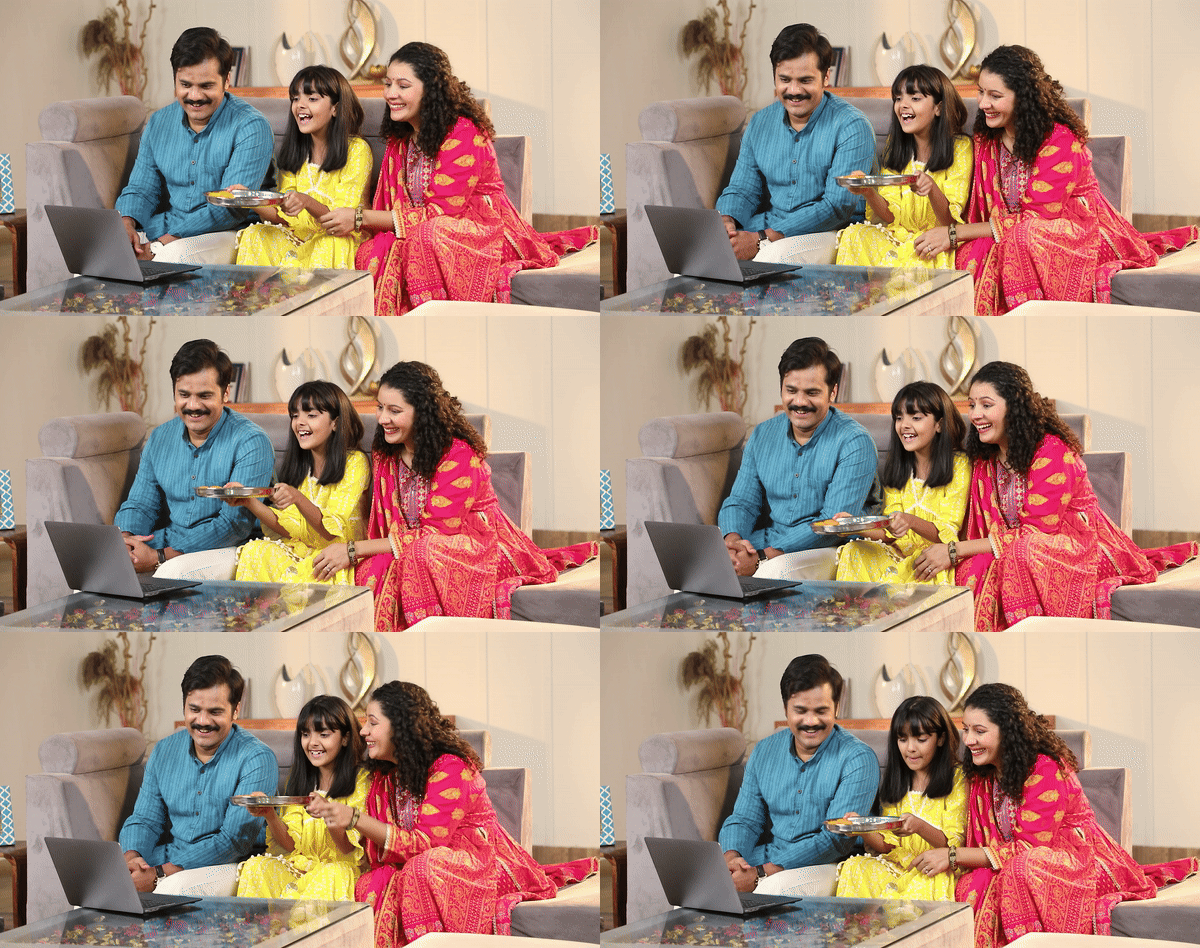
- Watching a Live Stream Where Practical: For devotees in time zones where live viewing is genuinely feasible, such as those in the UK as discussed in the earlier post, watching the puja as it happens can offer a meaningful sense of participation and connection to the ritual taking place.
- Reflecting on the Recorded Documentation: For those unable to watch live, taking time to genuinely watch recorded video or view photographs of the completed puja afterward, rather than simply filing them away without attention, helps maintain personal connection to the ritual performed on their behalf.
Addressing Common Doubts Honestly
Q. Does Physical Presence Add Anything at All
It would be inaccurate to claim that physical presence offers absolutely no additional value. Being present at a ritual allows for a direct sensory and emotional experience, the sounds, the fire, the atmosphere of a temple, that a video stream cannot fully replicate. However, this experiential difference is distinct from the question of whether the ritual's spiritual effectiveness itself requires presence, which classical tradition consistently indicates it does not, provided proper sankalp is performed.
Q. What About Devotees Who Feel Disconnected Despite Booking a Puja
Some NRIs describe feeling a lingering sense of disconnection even after arranging a remote puja, as though the ritual happened somewhere distant and unrelated to their daily life. This is a genuinely understandable emotional response, and the practices discussed above, personal prayer, simple home observance, genuine attention to documentation, can help bridge this emotional gap, even though the ritual's spiritual effectiveness is not diminished by this feeling.
Q. Is It Better to Wait Until Visiting India
For devotees who travel to India regularly, arranging a puja during a visit certainly offers the added experiential benefit discussed above. However, given that Sade Sati spans seven and a half years, as discussed throughout this series, and that remedial practice benefits from timeliness rather than indefinite postponement, waiting for a future visit rather than arranging a properly performed remote puja in the present is generally not considered a spiritually necessary trade off.
Combining Remote Puja With Ongoing Personal Practice
As emphasized throughout this series, formal puja, whether performed in person or remotely, works best as part of a broader, consistent remedial approach. The daily habits, mantra chanting, fasting and daan practices discussed in earlier posts remain equally important for NRIs, ensuring that a remote puja forms one meaningful part of an ongoing devotional practice rather than functioning as an isolated, one time transaction.
Trusting the Process While Remaining Discerning
While classical tradition genuinely supports remote puja as spiritually effective, this does not mean every service offering such arrangements is equally trustworthy. As discussed in earlier posts, taking care to choose a service with verifiable credentials, transparent processes and genuine documentation remains important, ensuring the ritual arranged is actually performed properly rather than simply promised.
A Practice That Genuinely Bridges Distance
Puja performed in India on behalf of a devotee living abroad is not a compromise or a lesser substitute for in person participation. Grounded in the traditional mechanism of sankalp, this practice offers genuine spiritual connection and benefit, allowing devotees anywhere in the world to access authentic remedial rituals during significant periods such as Shani Sade Sati, without distance diminishing the sincerity or effectiveness of what is performed on their behalf.
If you are living abroad and would like to arrange a properly performed Shani Puja or Shani Shanti Puja with an experienced purohit in India, our team can guide you through the sankalp process and ensure your ritual is conducted with full traditional accuracy and genuine personal dedication.