9 Fascinating Hindu Wedding Rituals That Actually Have Scientific Meaning
By: Pratima Argade
17 March 2026 at 1:23 AM
Indian weddings are often described as grand, colorful, and full of rituals that seem to flow endlessly from one moment to the next. To someone observing from the outside, it may feel like a series of beautiful customs followed simply because “that’s how it has always been done. ” But when you slow down and look closely, each ritual begins to reveal a deeper layer of meaning. Our ancestors were not just creating ceremonies for celebration; they were weaving together science, psychology, Ayurveda, astronomy, and spiritual wisdom into experiences that would guide two people into married life with clarity and balance.
One of the most powerful moments in a Hindu wedding is the Saptapadi, where the couple takes seven steps around the sacred Agni. At first glance, it appears symbolic, but there is a strong psychological foundation behind it. Modern behavioral science explains that when people make commitments while performing meaningful physical actions, those promises become deeply rooted in their memory. Walking together, step by step, while repeating vows creates a strong emotional imprint. The number seven itself appears in many natural and human systems, suggesting a sense of completeness. Our rishis used this understanding to create a ritual that binds the couple not just socially, but mentally and emotionally as well.
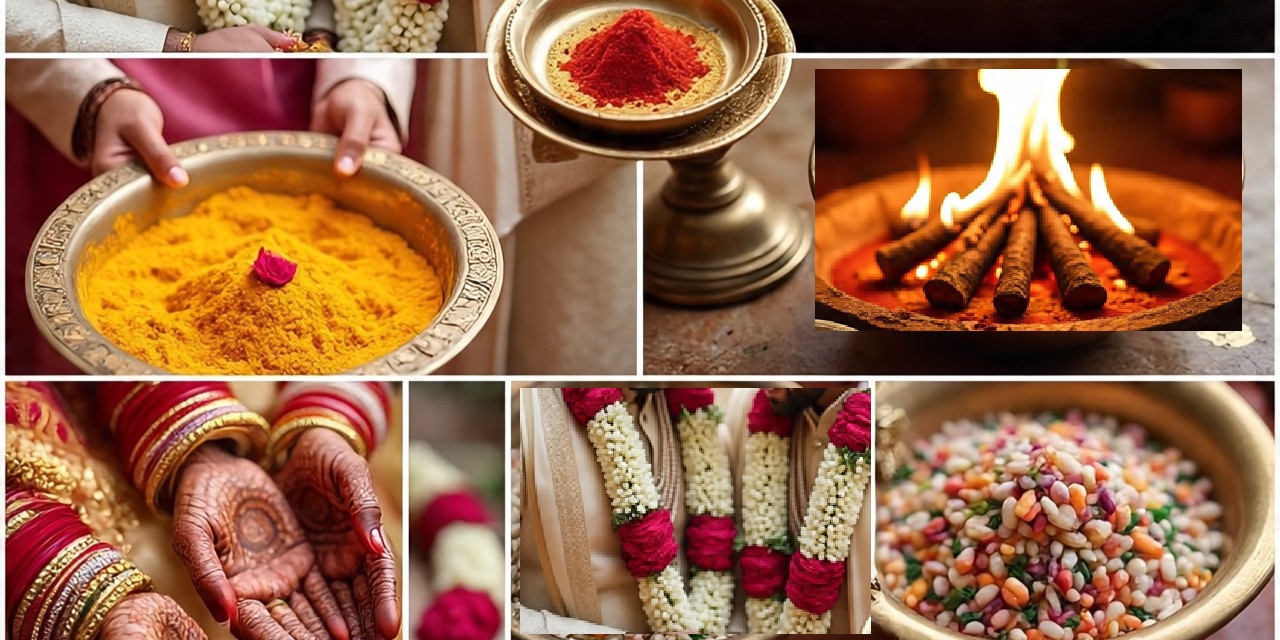
Before the wedding day even arrives, the Haldi ceremony prepares the bride and groom in a way that blends joy with practical health benefits. Turmeric has been used in Ayurveda for centuries as a natural antiseptic and anti-inflammatory agent. When applied to the skin, it helps cleanse, heal, and brighten the body naturally. At a time when weddings involve long hours, travel, and physical stress, this ritual acts as a protective layer for the skin and body. But beyond the physical, the ceremony itself is filled with laughter and affection, reducing anxiety and helping the couple feel emotionally supported.
Closely following this is the Mehendi ceremony, where intricate henna designs decorate the bride’s hands and feet. While the beauty of the designs captures attention, the science lies in the cooling properties of henna. The palms and soles contain important nerve endings connected to various parts of the body. Applying henna to these areas helps regulate body temperature and calm the nervous system. Weddings can be overwhelming, and this natural cooling effect helps the bride remain relaxed and balanced. It is a simple yet effective way of managing stress, something that modern wellness practices are only now beginning to emphasize. Another deeply emotional ritual is Kanyadaan, often misunderstood in today’s context. When seen from its original perspective, it reflects a profound understanding of responsibility and trust. The parents are not “giving away” their daughter as an object, but rather entrusting her future to a partner who promises to respect and support her. From a social point of view, this ritual strengthens the bond between families and establishes a shared sense of responsibility. It creates a moment where values like respect, care, and commitment are clearly expressed in front of the community.
During the wedding ceremony, you may notice family members showering the couple with rice, known as Akshata. This simple act carries layers of meaning. Rice, being a staple food, represents nourishment and abundance. In agricultural societies, a good harvest meant prosperity and stability, so rice naturally became a symbol of a fulfilling life. When people shower Akshata on the couple, they are expressing a wish that their life together will always be abundant. The act also creates a shared moment of blessing, where everyone present participates in wishing the couple well.
Another important element often overlooked is the role of Agni as the witness to the marriage. Fire is one of the most powerful natural elements, known for its ability to transform and purify. Scientifically, fire changes the state of whatever it touches, turning it into something new. In the same way, marriage transforms two individuals into partners on a shared journey. Sitting near a sacred fire also creates a focused environment, where the mind naturally becomes more attentive and present. This helps the couple fully absorb the importance of the vows they are taking.
The timing of the wedding, known as the Muhurat, is another fascinating aspect where ancient knowledge meets science. In Vedic astrology, the positions of planets and stars are believed to influence human life. While modern science may interpret this differently, it does recognize that timing can affect outcomes in various ways. Choosing a specific moment for marriage creates a sense of intention and alignment. It ensures that the ceremony is conducted with awareness and preparation, rather than randomness. This idea of choosing the “right time” is something that exists even in modern decision-making processes. A lesser-discussed yet meaningful ritual is the showing of the Arundhati–Vashistha stars to the newly married couple. These stars are seen as a symbol of an ideal partnership, representing loyalty and equality between partners. From an astronomical perspective, Arundhati is a faint star that requires focus and patience to see, often located near the brighter Vashistha star. This act teaches the couple an important lesson: true relationships are not always obvious or easy, but with attention and understanding, they reveal their depth. It is a beautiful example of how astronomy and philosophy come together in a simple ritual.
Even the application of Sindoor and Mangalsutra carries meaning beyond appearance. Sindoor is applied along the hairline, close to an important energy point in the body, while the Mangalsutra is worn near the heart. These placements are not random. They reflect an understanding of how symbols and physical objects can influence the mind and emotions. Wearing these symbols serves as a constant reminder of commitment, helping reinforce the bond between partners. In modern psychology, such reminders are known to strengthen identity and emotional connection. When all these rituals are seen together, a clear pattern begins to emerge. Each one addresses a different aspect of life—physical health, emotional stability, social responsibility, spiritual growth, and even environmental awareness. None of them exist in isolation. Instead, they form a complete system designed to prepare two individuals for the journey ahead. This is what makes Hindu weddings unique; they are not just celebrations but carefully structured experiences that guide people into a new phase of life.
In today’s fast-paced world, it is easy to dismiss rituals as outdated or unnecessary. However, when we understand their deeper meaning, they begin to feel surprisingly relevant. Modern relationships still face challenges related to communication, stress, and expectations. The rituals of a Hindu wedding, when understood properly, offer solutions that are both practical and meaningful. They encourage mindfulness, connection, and a sense of purpose—qualities that are essential for any lasting relationship. What makes these traditions truly fascinating is that they were designed thousands of years ago, yet they continue to align with ideas that modern science and psychology are only now beginning to validate. Our ancestors may not have used scientific language, but their observations of life, nature, and human behavior were incredibly accurate. They created rituals that not only celebrate love but also strengthen it in subtle and lasting ways.
As the wedding comes to an end and the celebrations slowly fade, what remains are not just memories of music and decoration, but the impact of these rituals on the minds and hearts of the couple. Each step taken, each blessing received, and each symbol worn becomes part of their journey together. The beauty of these traditions lies in their ability to combine joy with wisdom, making every moment meaningful. In the end, Hindu wedding rituals are not just about following customs; they are about understanding life itself. They remind us that relationships require effort, balance, and intention. And in their own unique way, they show that the path to a happy marriage is not something we need to invent—it has already been thoughtfully laid out by those who came before us.